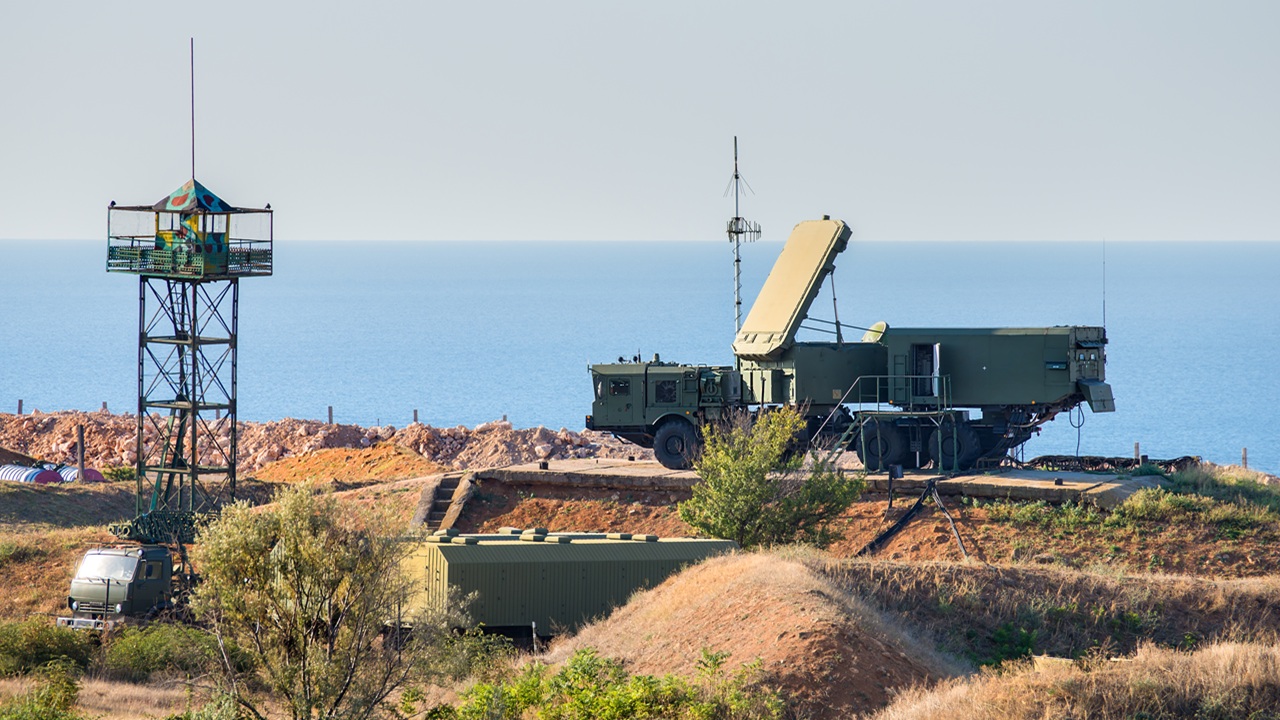
To rid itself of the S-400 air defense systems obstructing its purchase of the F-35, Turkey has a number of options—but all of them would be politically or financially costly.
Reports are circulating again that the NATO member Turkey is yet again exploring options to rejoin the F-35 program.
As in similar past efforts, the feasibility of this effort hinges on Ankara’s adoption of the Russian-made S-400 “Triumf” air defense system. As long as the Turkish government remains committed to the S-400, there is likely no way for it to be readmitted into the fifth-generation aircraft effort. NATO officials and the US military have maintained that the two platforms are incompatible and Turkey’s adoption of the S-400 would jeopardize the security of the multirole fighter, which is in service with multiple alliance members.
Turkey was expelled from the F-35 Joint Strike Fighter program under the “Countering America’s Adversaries Through Sanctions Act” (CAATS) following its refusal to cancel the planned acquisition of the S-400, which strained relations between Ankara and Washington.
However, after years of starts and stops, progress on resolving the matter may finally be coming. Last week, the US Ambassador to Turkey (formally known as Türkiye) told reporters, “These issues will be resolved within the next four to six months.”
What Will Turkey Do About Its S-400s?
Ankara had paid approximately $1.4 billion to purchase 100 Lockheed Martin F-35 Lightning II fighters before it was expelled from the program during the first Trump administration in 2017.
Almost immediately after Turkey purchased the S-400 systems in 2017, there were signs of second thoughts from Ankara. Of note, although they own the S-400s, the Turkish Armed Forces have so far refrained from actually activating them—a clear sign of a break between Turkey and the United States.
Moreover, there has been repeated speculation that Ankara has sought ways to rejoin the program. This has included calls for Turkey to sell the S-400 to a foreign partner, such as India, which already operates two batteries of the Triumf anti-aircraft platform, with New Delhi now waiting for further deliveries. However, such a transfer to India or another country requires Moscow’s approval.
There had been reports earlier this year that the Kremlin might be willing to buy back the S-400s to replace batteries lost in the ongoing war in Ukraine. Such an option solves the problem, but the United States has expressed discontent toward this option, given the edge it would give the Kremlin on the battlefield in Ukraine. Washington is trying to end the fighting, and Kyiv wouldn’t likely be happy to see Moscow further rewarded.
The flip side of the equation is true of a possible transfer of the systems to the United States or Ukraine, options that Moscow certainly wouldn’t want to see happen.
Moving the S-400 systems to the Incirlik Air Base near Adana, Turkey, and placing them under US control has also been floated as an option—but Russia has loudly denounced this idea, reasoning that it could expose the platform’s capabilities to the Americans.
One possibility that hasn’t gotten much discussion, due in large part to the large financial loss involved, would be for Ankara to abandon its attempts to resell the platforms to a third party and simply destroy them, with US and NATO officials witnessing. Turkey paid 45 percent of the $2.5 billion for four batteries, of which two have been delivered. The remaining 55 percent was from a loan provided by Russia.
Turkey Is Keeping Its Options Open
For now, Turkey will have to consider those options, and little word has emerged in public about what it will do to solve the conundrum.
Still, it is relatively clear that Ankara regrets adopting the air-defense platform and is looking for a way to dispose of it. Even as efforts continue on an indigenously developed stealth fighter, Turkey would like to operate the F-35—but as long as the S-400 batteries are on its soil, it is caught with few options.
About the Author: Peter Suciu
Peter Suciu has contributed over 3,200 published pieces to more than four dozen magazines and websites over a 30-year career in journalism. He regularly writes about military hardware, firearms history, cybersecurity, politics, and international affairs. Peter is also a contributing writer for Forbes and Clearance Jobs. He is based in Michigan. You can follow him on Twitter: @PeterSuciu. You can email the author: [email protected].
Image: Shutterstock / Yuri Tuchkov.