The decision to bomb Iran could lead to disastrous consequences for the United States. The decision not to could be far worse.
“We have a lot of ships going that [Iran] direction, just in case… We have an armada heading in that direction, and maybe we won’t have to use it.”
President Donald Trump delivered that warning on the evening of January 22, six days after publicly thanking Iran for reportedly halting its scheduled mass executions of political prisoners. A few years ago, such juxtaposition would have been written off as Trumpian unpredictability. Now it reads more like method: strategic ambiguity applied to adversaries, especially the Islamic Republic.
Trump’s seeming ambiguity has collided with an Iranian crisis of extraordinary magnitude. What began as a series of demonstrations over economic woes quickly turned political, with chants aimed at the overthrow of the regime itself. The crackdown has been bloody. Iran’s government has put the death toll from the recent protests at 3,117, while the Human Rights Activists News Agency (HRANA) NGO has reported at least 5,002 killed and tens of thousands detained; other estimates circulated by activists and media range in the tens of thousands. But even without an agreed-upon tally, the direction is clear: the state has used extraordinary brutality to stop the demonstrations, and then attempted to cover it up. Iran’s prolonged internet blackout, paired with broader disruptions to communications, has made independent verification difficult and collective response harder.
Against that backdrop, Trump’s rhetoric has been unusually direct. At the beginning of the year, before the crackdown, the 47th president warned that the United States was “locked and loaded,” said Iran was “looking at FREEDOM,” and urged protesters to keep going—declaring that “help is on its way.” Yet the United States did not strike during the most intense phase of the repression.
That gap, between encouragement and withheld force, may have shaped Tehran’s own calculations. The Islamic Republic appears to have gambled that a rapid, overwhelming crackdown would end the challenge fast enough to deny Washington a pretext for action. But US deployments in the Middle East now suggest the crisis is not “over” in Washington’s mind, even as Trump signals openness to talks. The result is a dilemma: whether Trump decides to strike or not to strike, his decision will carry consequences that will shape not only the Islamic Republic, but also how Iranians, and the opposition abroad, understand the United States.
If America Starts a War, It May Not Be Able to Contain It
A full-bore US attack on Iran would confront Washington with a basic problem: it would initiate an armed conflict that Washington would be hard-pressed to contain. The June 2025 precedent is often described as “managed escalation”—US airstrikes inside Iran, followed by a calibrated Iranian response in order to save face and project strength to a domestic audience, followed by a ceasefire. But a new attack, coming after mass unrest and mass repression, would likely be interpreted in Tehran less as a limited punitive action and more as a threat to the regime’s survival. In that context, Iran may decide it cannot afford restraint—and respond with far greater strength.
Iran has long warned that a direct US attack on its core institutions would “set the region on fire,” and has threatened to respond in kind. Iran’s logic is straightforward: by expanding the battlefield, stretching US defenses, and raising the costs of action, Tehran can generate domestic political pressure in the United States as Washington’s war bills mount. Even in a degraded state, Tehran retains many options to inflict pain on US forces in the region; missiles, drones, proxy attacks, cyber operations, shipping harassment, and threats to energy flows through the Strait of Hormuz. A regime that believes it is fighting for survival may quickly reach for maximalist tools—not because they guarantee victory, but because they inflict as much pain as possible on an adversary before defeat.
Nor is it assured that the United States could destroy the Iranian regime through military action. Air campaigns rarely produce political collapse by themselves. Yet Iran’s current context is unusually volatile: the legitimacy gap between state and society is wide, and recent protests have exposed the limits of coercion. The more plausible pathway to regime change in Iran is an indirect one. If US strikes degrade the clerical state’s coercive apparatus—particularly the IRGC and Basij nodes tied to internal security—it could create a window in which the state’s ability to suppress unrest is temporarily reduced. The strike may not cause regime change on its own, but it could create conditions in which it becomes more thinkable.
The Islamic Republic’s Collapse Could Lead to Chaos
That possibility immediately generates the second major problem with US military intervention: the day after. Iran is large, socially diverse, and strategically exposed. It borders fragile theaters and sits at the junction of multiple ethnic and transnational fault lines. If a security vacuum emerges, that instability would not remain contained: flows of weapons, militants, and refugees would move in both directions, and internal ethnic or sectarian tensions could be activated by outside patrons. In this scenario, America must “have a plan”—not merely a memo, but realistic courses of action, partners, and capabilities ready for fast-moving contingencies. As the United States saw in Iraq after 2003, the worst outcomes often come not from regime change itself, but from the scramble for power that follows in a weakened state.
A strike would also rearrange the opposition ecosystem. The impact would depend heavily on results and collateral damage. Even if US planners prioritize military targets, civilian casualties and infrastructure disruption are never fully avoidable. The higher the collateral cost, the more ungovernable post-strike Iran becomes without massive external assistance—precisely the situation that exiled opposition figures are least equipped to manage.
There is also the legitimacy trap. For prominent opposition leaders abroad, particularly Reza Pahlavi, an American strike with heavy collateral damage could turn into a political liability. If the regime collapses but Iran is shattered in the process, the opposition may be blamed for inviting destruction without being able to deliver stabilization. Likewise, if the regime survives, the backlash shifts: Iranians may conclude that the opposition misread the situation, overpromised, and helped trigger retaliation and repression without producing results. Either way, a strike would not only hit Tehran, but potentially the opposition’s credibility, too.
Inaction Would Make Trump Look Weak—and America Deceitful
If the United States refrains from attacking, the consequences are different, but not necessarily smaller. The immediate cost is reputational: American credibility, as well as Trump’s personal credibility, would be damaged with a significant segment of Iran’s anti-regime public. Many Iranians risked their lives in the streets under the impression that Trump’s promise of “help on its way” meant they could expect direct US action against the ruling regime—a perception strengthened in subsequent weeks by repeated aggressive signals from the White House. If the current crisis ends with Trump standing aside and doing nothing, who will believe him the next time he makes similar assurances to an ally?
For the Islamic Republic, US restraint would be a gift—validating the regime’s core propaganda claim that Washington is manipulative and unreliable. It would also allow Tehran to reframe the crackdown as strategic wisdom: even those who aligned themselves with America were left to absorb the costs. In the regime’s narrative, protesters are cast as foreign agents, and US inaction on their behalf is “proof” that those agents were disposable. That message is designed not only for activists, but for the cautious middle: outside support will never come, and resistance is futile.
The opposition abroad would also pay a price. Many exiled figures have invested heavily in American backing, and some have explicitly promised that help is coming. If America does not strike, the opposition risks being accused of poor judgment for betting on intervention, and of overstating its capacity. That credibility loss would further fragment an already divided opposition landscape, and strengthen the regime—not because the Islamic Republic becomes more legitimate, but because its various challengers appear less viable.
The United States Has Other Options—but All Need a “Day After” Plan
None of this means Washington’s choices are limited to war or restraint. There are other options, but each carries costs and demands disciplined planning. One is an unusually surgical campaign aimed at neutralizing the Islamic Republic’s leadership and coercive capacity quickly, paired with a credible day-after strategy. Another is a limited, symbolic strike meant to signal resolve and fulfill Trump’s commitment without triggering a regional war, which would require a tacit understanding with Tehran about escalation thresholds. A third is negotiation backed by credible coercive leverage—including demands tied to domestic behavior, releasing detainees, restoring Internet connectivity, and easing repression in the long term.
But the lesson is the same across the spectrum: the decisive variable is less the opening move than what comes next. The Middle East, and the United States’ position in it, can no longer absorb another major military episode driven by impulse, ambiguity, or improvisation.
About the Author: Arman Mahmoudian
Dr. Arman Mahmoudian is a research fellow at the USF Global and National Security Institute. He is also an adjunct professor at the University of South Florida’s Judy Genshaft Honors College, teaching courses on Russia, the Middle East, and International Security. He holds a PhD in Politics and International Affairs from the University of South Florida. He earned his Master’s in International Relations in Russia and my Bachelor’s in Law in Iran. In addition to his professional roles and publications, he is a member of the editorial board at the Joint Special Operations University. His research and commentary on Middle Eastern and Russian affairs have been featured in leading outlets, including Foreign Policy, The National Interest, the Stimson Center, the Atlantic Council, the Gulf International Forum, and other platforms. Follow him on LinkedIn and X @MahmoudianArman.
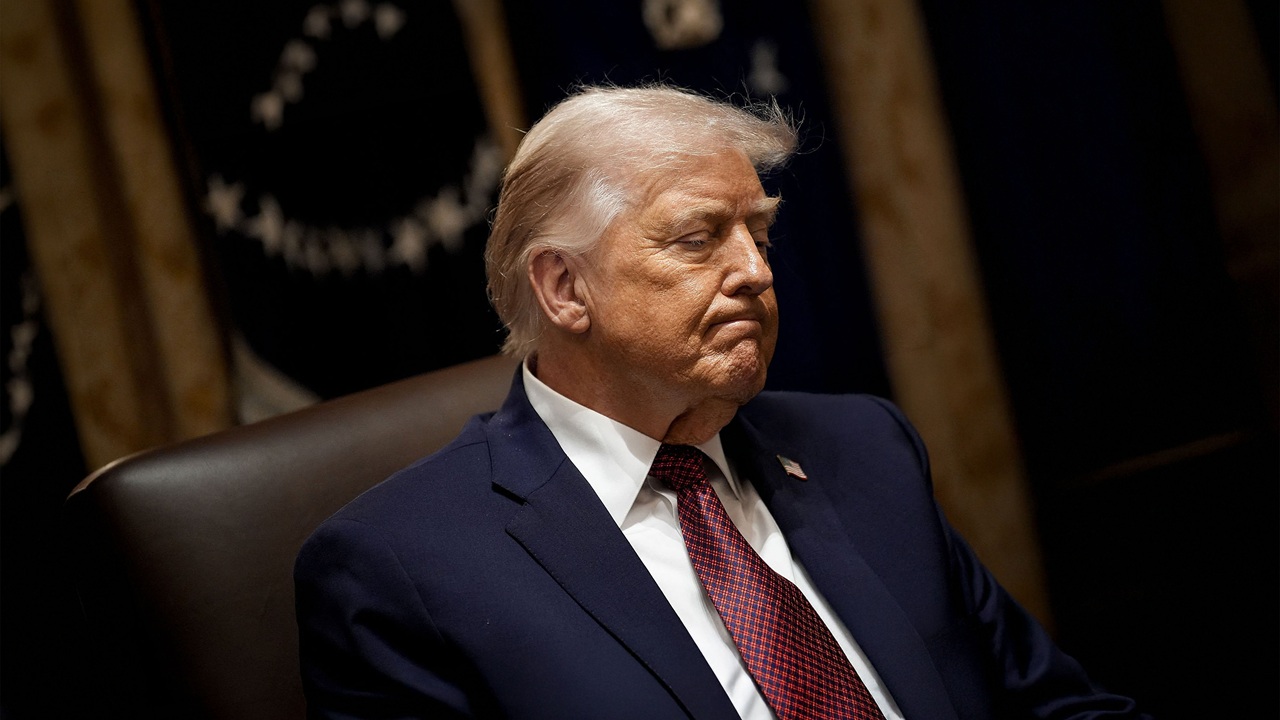
Image: Shutterstock / Lucas Parker.