President Donald Trump warned Wednesday that Iran’s Supreme Leader Ali Khamenei “should be very worried” as U.S.–Iran nuclear talks, earlier reported as collapsing, are now set to proceed Friday in Oman amid sharp disputes over the scope of negotiations and rising U.S. military pressure.
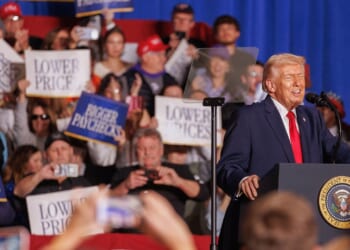
Speaking in an NBC News interview excerpt released Wednesday, Trump was asked directly whether Khamenei should be concerned as the negotiating track wavered.
“I would say he should be very worried, yeah. He should be,” Trump replied. “As you know, they are negotiating with us.”
The warning landed amid a day of conflicting signals around talks that were initially expected to be held Friday in Turkey — before multiple reports said the meeting was effectively being called off after Tehran demanded changes to the location, format, and scope of the discussions.
According to reporting, U.S. officials rejected Iran’s push to move the talks, exclude regional partners, and limit discussions strictly to the nuclear file — a framework that would sideline U.S. demands related to ballistic missiles, regional proxy groups, and human-rights abuses.
“We told them it is this or nothing, and they said, ‘OK, then nothing,’” one senior U.S. official said earlier Wednesday, adding that Washington wants a “real deal” — and warning that failure could force consideration of “other options.”
Hours later, fresh reporting and Iranian messaging suggested the meeting is now back on.
Iranian Foreign Minister Abbas Araghchi said Wednesday that negotiations with the United States were scheduled to take place Friday morning in Muscat, Oman, thanking Omani officials for facilitating the meeting, even as Tehran reiterated that its missile program and regional activities would not be discussed.
U.S. officials said the Trump administration agreed to proceed with the meeting after urgent appeals from multiple regional governments to keep the diplomatic track alive, though skepticism remains about Iran’s willingness to broaden the talks.
Earlier Wednesday, Secretary of State and National Security Advisor Marco Rubio stressed that the United States is prepared to engage Iran — but not on Tehran’s terms.
“We don’t view meetings as a concession,” Rubio said, adding that for talks to “actually lead to something meaningful,” they must include Iran’s ballistic missile program, its sponsorship of terrorist organizations across the region, its nuclear activities, and its treatment of its own people.
Rubio argued the regime’s internal crisis is inseparable from the negotiations, saying Iran’s leadership cannot address the economic collapse driving unrest because it continues to pour national wealth into missiles, proxy wars, and exporting its revolution instead of improving living conditions at home.
“I know of no other country where there’s a bigger difference between the people that lead the country and the people who live there,” Rubio said.
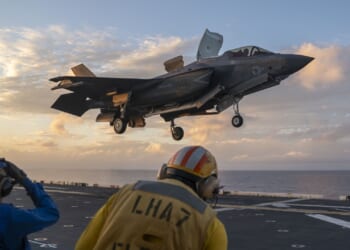
The diplomatic turbulence comes as U.S. forces remain postured in the region following two incidents Tuesday: the downing of an Iranian drone that aggressively approached a U.S. aircraft carrier in the Arabian Sea, and Iranian forces harassing a U.S.-flagged merchant vessel transiting the Strait of Hormuz.
Trump has repeatedly warned Tehran that time is running out.
On Tuesday, he said he believed Iran wanted to negotiate but suggested the regime was trying to avoid a repeat of Operation Midnight Hammer — the U.S. strikes that devastated Iran’s nuclear facilities last summer — adding, “I don’t think they want that happening again.”
In the NBC excerpt released Wednesday, Trump also said he has heard Iran is attempting to rebuild aspects of its nuclear program, warning that any such effort would trigger a renewed American response.
The revived talks now proceed as U.S. intelligence assessments describe Iran’s Islamic regime as operating from its weakest position since the 1979 revolution, citing economic collapse, deepening internal dissent, and growing instability following last summer’s strikes and the regime’s violent crackdown on protesters.
With diplomacy abruptly back on but tightly constrained — and military options repeatedly emphasized by the White House — Friday’s meeting in Oman is shaping up as a decisive test, not just of Iran’s willingness to compromise, but of whether a diplomatic off-ramp still exists at all.
Joshua Klein is a reporter for Breitbart News. Email him at jklein@breitbart.com. Follow him on Twitter @JoshuaKlein.