A recently announced funding opportunity for homelessness programs from the U.S. Department of Housing and Urban Development would reward communities that commit to public safety—including those that comply with the Sex Offender Registry and Notification Act. At first glance, this may seem like an unusual concern for homelessness policy. But it relates directly to a growing concern among policymakers about a strong link between sex offenses and homelessness—one that activists have attempted to obscure.
Organizations like the National Homelessness Law Center have tried to dismiss the connection, claiming that homeless people are often classed as sex offenders merely because they don’t have access to bathrooms and wind up getting convicted of indecent exposure. Researchers at the UCSF Benioff Homelessness and Housing Initiative have made similar claims, without citing any data.
Finally, a reason to check your email.
Sign up for our free newsletter today.
These claims are inaccurate, and they conceal a disturbing trend. In 32 states, sex offenders account for approximately one in ten homeless people living on the street. In at least eight states, registered sex offenders account for more than 50 percent.
Indecent exposure that is not sexually directed is almost never prosecuted. Even when it is, such cases account for a minimal portion of the sex offender registry. In the vast majority of states, upward of three-quarters of registered sex offenders are on the registry for serious offenses or high-risk classifications. In South Carolina, for example, over half of the registry consists of offenders who committed violent sexual acts against children; a further 18 percent did so against adults.
The highest-risk sex offenders are also the most likely to be homeless. Sex offenders designated as sexually violent predators were 77 percent more likely to be homeless compared with low-to-moderate-risk sex offenders. Moreover, sex offenders on probation, such as for low-level offenses like indecent exposure, were 51 percent less likely to be homeless than sex offenders who were not on supervision.
It’s far more likely that sex offenders often become homeless than it is that homeless people often become sex offenders, as the National Homelessness Law Center’s Eric Tars suggests they do. Research from the UCSF Benioff Homelessness and Housing Initiative found that roughly one-third of homeless people in California had left prison six months prior to their becoming homeless. Another study found that more than one in ten people leaving prison use a homeless shelter within two years of release.
People leaving prison face many challenges in securing housing. For example, they are far more likely to be rejected in a lease application. The stigma and safety concerns of a sex-offense conviction only worsen such challenges.
Sex offenders are also subject to unique legal restrictions on where they can live. Some researchers have found limited evidence that such restrictions increase the likelihood of homelessness, but others have found that these restrictions are typically not observed by offenders or landlords and are unlikely to be enforced by police.
Still, sex offenders are about 13 times as likely to be homeless as the general population. But contrary to Tars’s claims, that does not mean that homeless people are becoming sex offenders because they lack access to bathrooms.
Other homeless people do, however, face the brunt of the public safety risks of living in proximity to sex offenders. Homeless people are nine times more likely than the general population to be victims of sexual assault.
Sex offenders make up a much larger subpopulation of the homeless than many other categories of homeless people, such as veterans, families, and victims of domestic violence. In fact, sex offenders are a larger proportion of the unsheltered homeless than all those groups combined.
President Trump’s policy priorities take seriously the complex challenges of responding to sex-offender homelessness—so much so that the principal component of his executive order is addressing the need to collect more data about this population. Moreover, new HUD policies will encourage communities to adopt policies specifically addressing this population, including making sure that homeless sex offenders are not recklessly commingled with other vulnerable populations in HUD-funded programs. Unlike its critics, the Trump administration refuses to pretend that the problem does not exist.
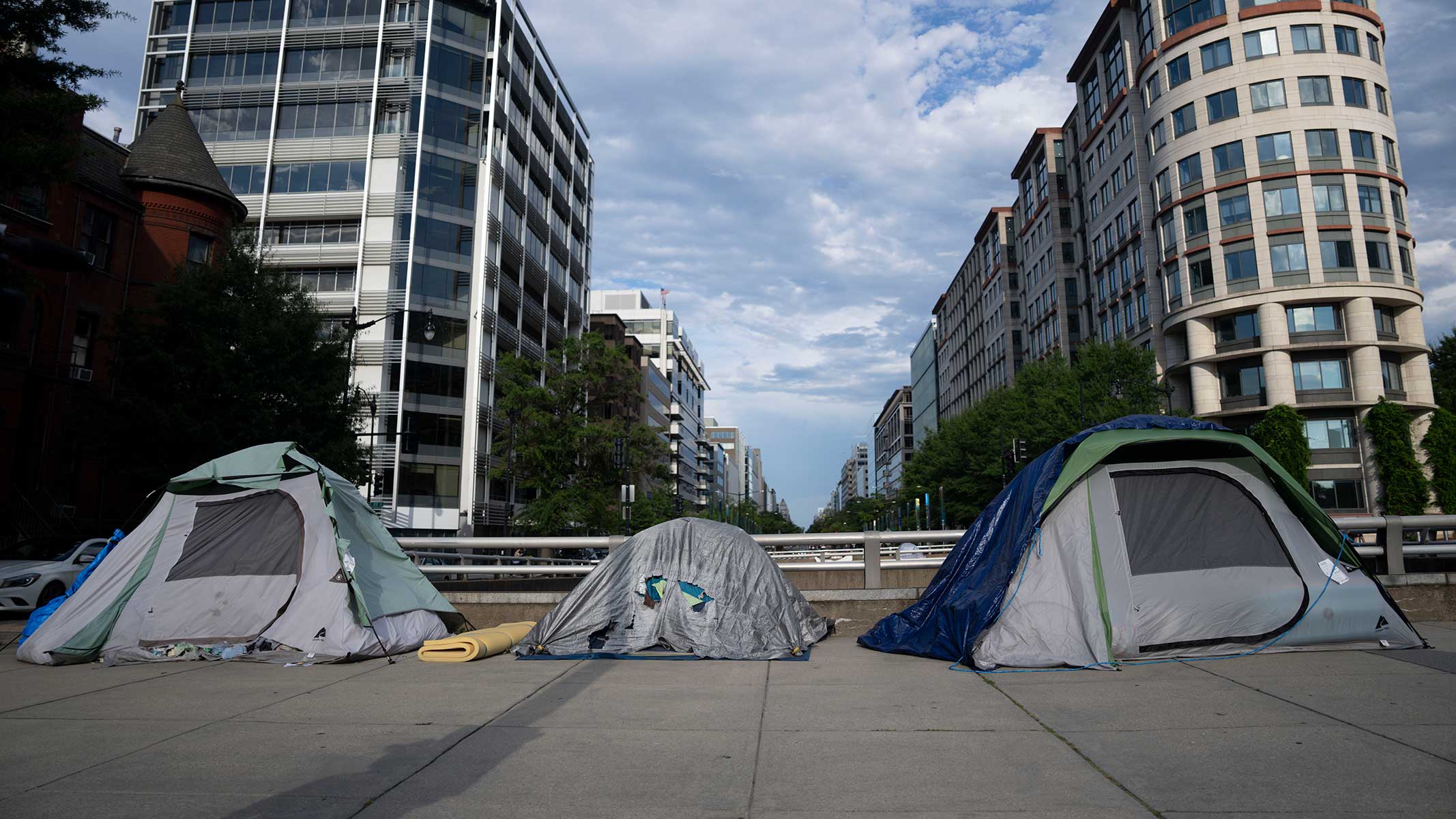
Photo by Kayla Bartkowski/Getty Images
City Journal is a publication of the Manhattan Institute for Policy Research (MI), a leading free-market think tank. Are you interested in supporting the magazine? As a 501(c)(3) nonprofit, donations in support of MI and City Journal are fully tax-deductible as provided by law (EIN #13-2912529).
Source link