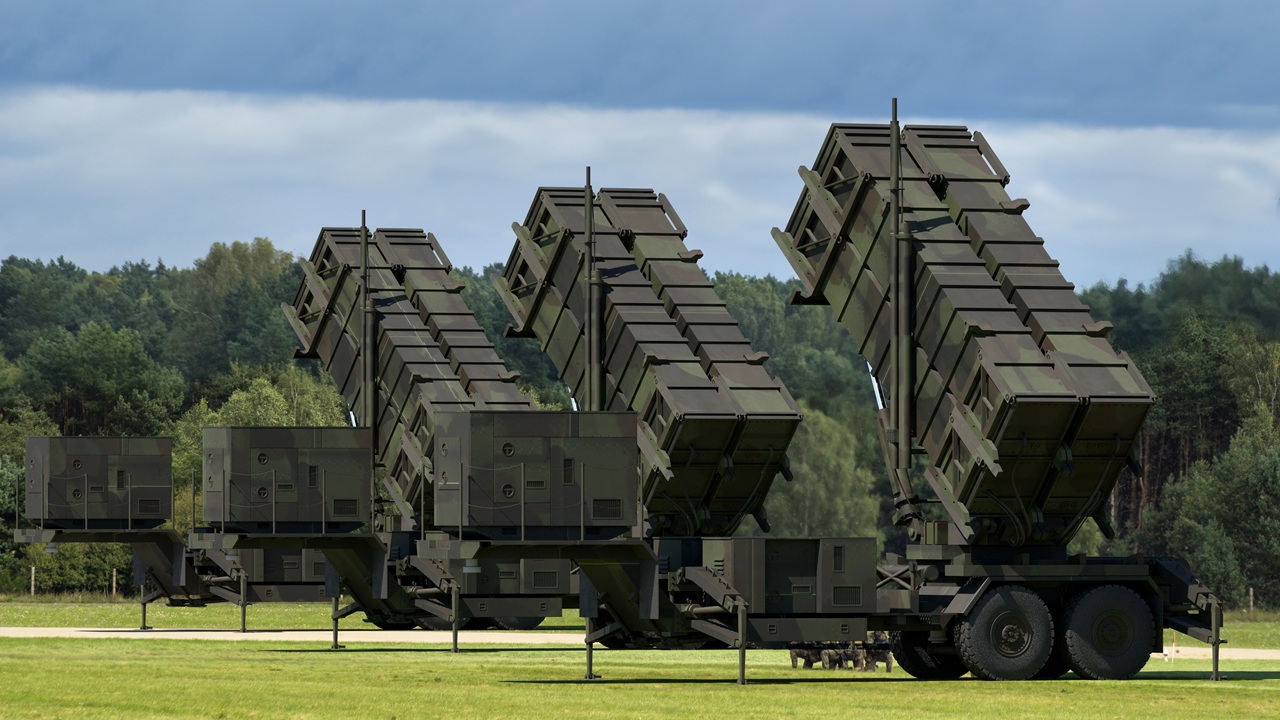
Poland—typically a stalwart American ally and reliable member of NATO—has declined to dispatch Patriot systems in the Middle East, citing their urgent need in Eastern Europe.
This week, NATO member Poland rejected calls from the United States to deploy an MIM-104 Patriot air defense system to the Middle East, where it could be used to counter Iranian missiles and drones. Warsaw has said that the weapons are needed to deter Russian aggression in Europe.
“Our Patriot batteries and their armaments are used to protect Polish airspace and NATO’s eastern flank. Nothing is changing in this regard, and we have no plans to move them anywhere!,” Polish Defense Minister Władysław Kosiniak-Kamysz wrote on X (formerly Twitter) on Tuesday.
“Our allies know full well and understand how important the tasks we have here are. Poland’s security is an absolute priority,” Kosiniak-Kamysz added.
Poland operates two MIM-104 Patriot air defense system batteries, each consisting of 16 launchers. Warsaw had also ordered “200 specialized missiles” from the United States in 2019, according to Politico, and most have already been delivered.
The MIM-104 Patriot Air Defense System’s Specifications
- Year Introduced: 1984
- Number Built:
- Battery: ~1,300
- Missiles: ~10,000
- Price:
- Battery: $1 billion
- Missiles: ~$7 million each
- Armament: PAC-2 or PAC-3 missiles (upgrades ongoing)
- Missile Speed:
- PAC-2 GEM+: 5,630 km/h (3,500 mph)
- PAC-3: 6,170 km/h (3,830 mph)
- Radar Range: 60+ miles (+100 km)
- Altitude Ceiling: 75,000 feet (22,860 m)
- Crew: 3
The MIM-104 Patriot was initially developed in the 1970s to counter Soviet missiles. Some 50 years later, though the flag over the Kremlin has changed, the threat it poses has remained more or less the same—although its primary method of attack has shifted from high-end missiles to swarms of low-cost, expendable one-way kamikaze drones.
The heart of the Patriot system is a mobile interceptor surface-to-air missile (SAM) launcher. However, the long-range, all-weather, all-altitude platform is more than a single unit. Each “Patriot battery includes a radar set, an engagement control system, power generation and other support vehicles” as well as “several launch stations,” according to the Center for Strategic and International Studies (CSIS).
Although the MIM-104 Patriot platform was built to confront the Soviet Union, it wasn’t until after the end of the Cold War that it was first used in combat. During the 1991 Gulf War, Patriot systems were employed to shoot down more than 40 Iraqi Scud missiles. The Patriot has also seen great success in Ukraine, where it has intercepted Russian high-end ballistic missiles, including the air-launched Kh-47M2 Kinzhal and the vertical-launched 3M22 Zircon.
More than 1,100 MIM-104 Patriot air defense systems have been produced for the US military. Another 200 have been exported to various allied and partner nations, including Germany, Israel, Japan, and South Korea.
Poland Is Right About the Need for Patriots in Eastern Europe
Polish claims of needing to protect its airspace and NATO’s eastern flank should not be seen as overstated.
Poland sits on the border with Ukraine, and Russian drones attacking targets in western Ukraine have come perilously close to detonating across the border. Poland also borders Russia’s Kaliningrad exclave, the hub of its Baltic Fleet. Poland and Lithuania have each played a significant role in preparing for war in the “Suwalki Gap,” the narrow strip of land between Poland and Lithuania separating Kaliningrad from Russian-allied Belarus and a likely flashpoint for a future land war in Europe. In preparation for such a conflict, Poland and the three Baltic states have also withdrawn from the Ottawa Convention banning anti-personnel landmines.
Last September, NATO and Polish forces intercepted multiple Russian drones that had violated Polish airspace. At the time, a German-operated Patriot system was even placed on high alert. However, Polish F-16 Fighting Falcons and Dutch F-35 Lightning IIs were credited with downing the Russian unmanned aerial systems (UAS).
As previously reported, the fifth-generation fighters were deployed to Poland as part of NATO’s enhanced Air Policing (eAP) mission, which began in late August.
Most of NATO Doesn’t Want Anything to Do with the Iran War
Poland isn’t the only NATO member that has refused to support the ongoing Operation Epic Fury. Several other nations, including Spain, France, and Italy, have also denied the use of their respective airspaces for combat operations. The United Kingdom initially did the same, but later relented.
President Donald Trump has expressed frustration, calling on Europe to send warships to help open the Strait of Hormuz. Trump has further speculated that the United States should withdraw from NATO, although it remains the most successful international military alliance in history.
About the Author: Peter Suciu
Peter Suciu has contributed to dozens of newspapers, magazines and websites over a 30-year career in journalism. He regularly writes about military hardware, firearms history, cybersecurity, politics, and international affairs. Peter is also a contributing writer for Forbes and Clearance Jobs. He is based in Michigan. You can follow him on Twitter: @PeterSuciu. You can email the author: [email protected].