President Donald Trump’s decision to strike Iran arose from a severe misunderstanding of US interests in the Middle East.
President Donald Trump had long been opposed to US military involvement in wars in the Middle East. He had excoriated previous administrations for their military involvement in the region, particularly in Iraq. He was dragged against his initial “America First” instincts into a war manufactured in Israel without being properly advised on the likely consequences of this adventure, especially its impact on the flow of oil and gas through the Persian Gulf.
As the war has progressed, it has become increasingly evident that the attack on Iran was undertaken primarily to serve Israeli goals that in many ways run directly counter to America’s strategic interests in the Middle East as well as the stability of the international economy. The energy crunch has not only had adverse effects globally but has also upset President Trump’s calculations about the American economy and may have disastrous consequences for the Republican Party in the midterm elections.
That President Trump has now realized that the attack on Iran was a misjudgment on his part is clear in his desperate attempts to find an off-ramp via negotiations with Tehran through intermediaries, including Pakistan, Egypt, and Turkey.
That Israel initiated the war and the US was railroaded into joining the fight was clearly implied in the statement made on March 2 by Secretary of State Marco Rubio. When asked by the press if there was an imminent threat from Iran to the US that led to the preemptive attack, he replied that “There absolutely was an imminent threat, and the imminent threat was that we knew that if Iran was attacked—and we believe they would be attacked—that they would immediately come after us, and we were not going to sit there and absorb a blow before we responded.” The statement clearly implied that America’s ally Israel had decided to attack Iran with or without Washington’s approval and that the US was left with no choice but to follow Israel’s lead.
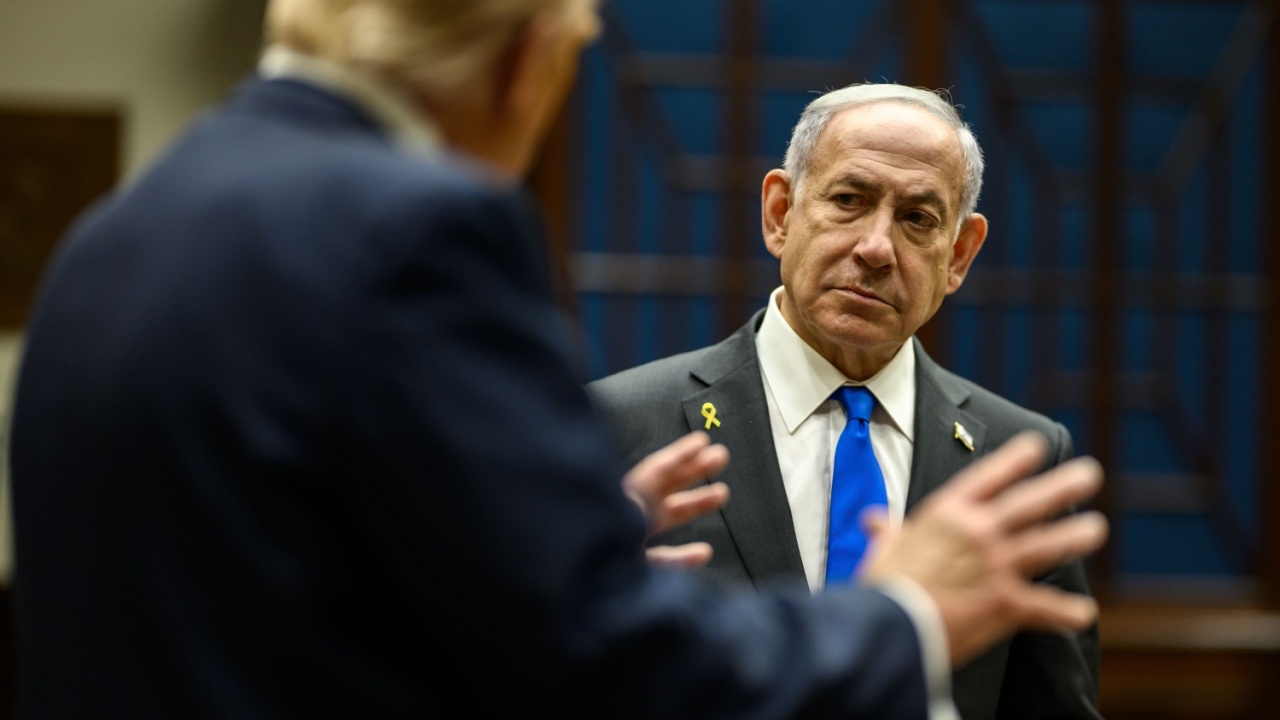
Despite Israeli Prime Minister Benjamin Netanyahu’s denial that Israel forced America into the war, this is proved beyond doubt if we look at the timing of the attack on Iran. The attack was initiated on February 28 amid ongoing negotiations in Geneva between Iran and the United States aimed at resolving the dispute over Iran’s nuclear program. The negotiators had taken a break to consult with their principals, and their technical teams were scheduled to meet on March 2. This was preempted when Israel and the United States launched the war.
The foreign minister of Oman, Badr Albusaidi, who was the chief mediator between the two parties on the eve of the war, has recounted these details in an article in The Economist, in which he blamed Israel for initiating the war in order to disrupt the negotiations and prevent the United States and Iran from reaching an agreement.
According to Albusaidi, “Twice in nine months the United States and Iran have been on the verge of a real deal on the most difficult issue that divides them: Iran’s nuclear-energy programme and American fears that it could be a weapons programme. So it was a shock…when on February 28th—just a few hours after the latest and most substantive talks—Israel and America again launched an unlawful military strike against the peace that had briefly appeared really possible.”
He goes on to say, “Israel’s leadership seems to have persuaded America that Iran had been so weakened by sanctions, internal divisions and the American-Israeli bombings of its nuclear sites last June, that an unconditional surrender would swiftly follow the initial assault and the assassination of the supreme leader. But it should now be clear that for Israel to achieve its stated objective will require a long military campaign to which America would have to commit troops on the ground, opening a new front in the forever wars which President Donald Trump previously vowed to end.”
That the Trump administration had no clear objectives in mind while joining the Israeli attack is also demonstrated by the shifting and often contradictory objectives laid out by the president, his cabinet, and various spokespeople. These have ranged from “unconditional surrender” to “regime change” to “keeping the Strait of Hormuz open” to “degrading Iranian capabilities” and everything in between.
On the other hand, the Israelis have clearly defined objectives: degrade Iran’s capabilities to such an extent that it would not recover for 50 years, plant a pliant regime in Tehran that would never challenge Israeli dominance of the Middle East, and, if those outcomes are not possible, create a failed state or a series of mini-states.
But Israel needed the United States to join the fight because it did not possess the massive capabilities required to achieve these objectives. Israel was able to convince a gullible US administration that Iran posed an imminent threat to the United States’ regional interests when no such threat existed, especially after Iran’s military capabilities were degraded in the Israeli-American attack last June. Moreover, Iran’s proxies were immeasurably weakened by two years of Israeli assaults.
Israel was not concerned about the threat to global energy supplies that a war with Iran could create because it is not dependent on the Strait of Hormuz for its oil imports. It was also unconcerned about the security and economic well-being of the Arab Gulf states that are allies of the United States and were likely to bear the brunt of Iranian retaliation.
As the war has progressed and international attention has been diverted to the Persian Gulf, Israel has taken advantage of the fog of war to advance West Bank annexation. Under the guise of fighting Hezbollah, it is also in the process of occupying a large swath of southern Lebanon, where it has been destroying property and denuding the area of its population.
The destruction of Iran’s government, the annexation of the West Bank, and the indefinite occupation of southern Lebanon run directly counter to American interests in the Middle East. As a global power, the US’ goals primarily include regional stability in the Middle East, nonproliferation of nuclear weapons, and the free flow of oil and gas from the energy-rich region, which is essential for maintaining the international economy on an even keel.
All these major objectives are threatened by the Israeli-initiated war on Iran, especially since the Iranian regime shows no sign of crumbling despite Israel’s decapitation strategy. In fact, the end product is likely to be a hardline revanchist regime bent on taking revenge for the destruction and humiliation Iran has suffered. This would be a recipe not only for continuing anti-Americanism but also for persistent instability in the region.
Furthermore, the American objective of denying Iran nuclear weapons forever is unlikely to be achieved. As I have argued in an earlier article, Iran’s strategic calculus is bound to shift after the war. If Iran faces military attack regardless of its nuclear status, then possessing nuclear weapons looks like the only way to prevent such attacks in the future. The examples of Iraq and North Korea buttress this conclusion. Iraq was invaded because it lacked nuclear weapons. At the same time, North Korea, despite decades of American sanctions, was able to immunize itself from attack by acquiring nuclear weapons.
The Iranians have also learnt that transparency was the Achilles’ heel of their nuclear program and that by agreeing to the nuclear deal of 2015 and allowing IAEA inspectors access to their nuclear facilities, they had exposed all their nuclear secrets, including the locations of nuclear facilities, which became the locus of attacks. It is almost inevitable that the post-war Iranian regime would withdraw from the NPT and never allow international inspections again.
Unless the United States is able to quickly decouple its objectives and strategies from those of Israel and bring the war to a close, the result of this war manufactured in Israel is likely to be global economic recession caused by rampant inflation resulting from very high prices of oil and gas, a highly destabilized and insecure energy-rich region at war with itself, and a hardline revanchist Iran that would dash acquiring nuclear weapons causing a chain reaction with Saudi Arabia, Turkey and Egypt following suit.
One hopes that President Trump’s latest initiative, namely, negotiating with Iran either through intermediaries or directly, will succeed and will bring this unnecessary and counterproductive war to a quick conclusion, thus sparing Iran further destruction and the United States and the world from acute energy shortages, high prices, and a recession.
About the Author: Mohammed Ayoob
Mohammed Ayoob is a university distinguished professor emeritus of International Relations at Michigan State University and a senior fellow at the Center for Global Policy. His books include The Many Faces of Political Islam (University of Michigan Press, 2008), Will the Middle East Implode? (2014), and, most recently, From Regional Security to Global IR: An Intellectual Journey (2024). He was also the editor of Assessing the War on Terror (2013).