Israel’s military campaign in southern Lebanon threatens to revitalize Hezbollah’s reason for being.
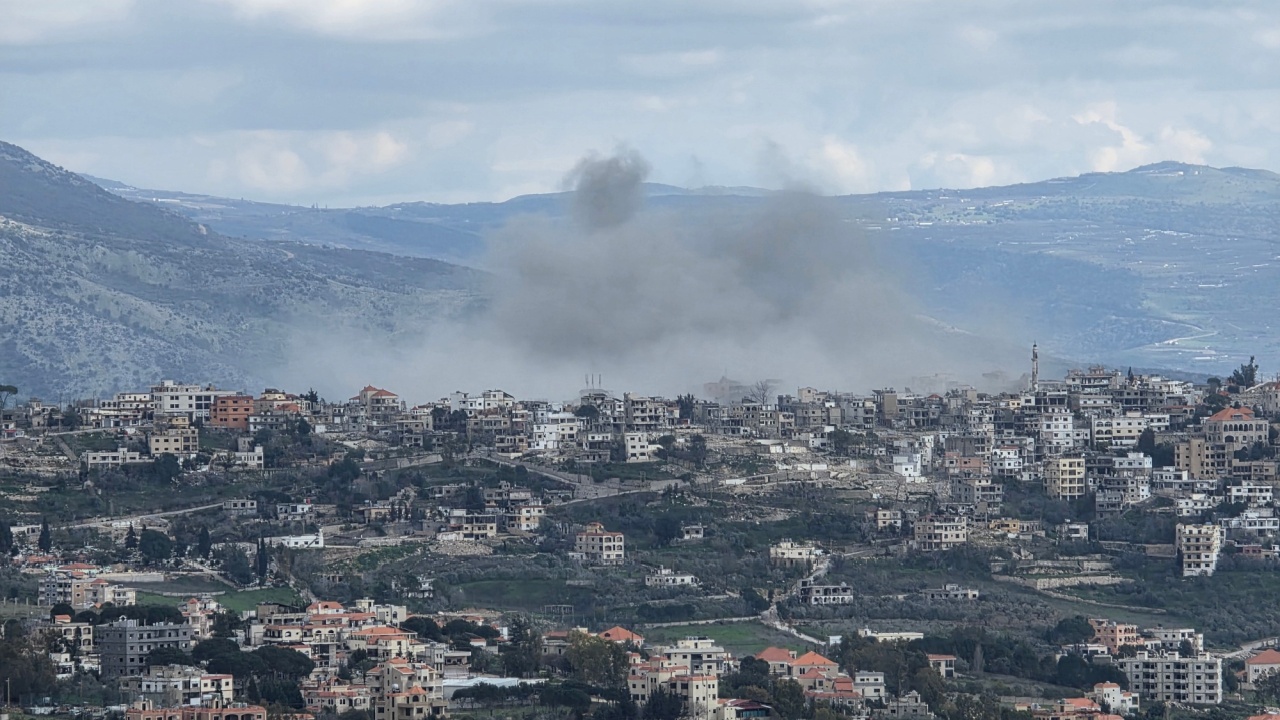
The war unfolding in Lebanon is moving in a dangerous direction. What began as an increased campaign by Israel in the past month to degrade immediate threats by Hezbollah has rapidly evolved into humanitarian collapse, regional escalation, and ultimately the strengthening of the very actor it seeks to weaken. This trajectory is unsustainable and counterproductive.
The Israeli Defense Forces (IDF) has degraded Hezbollah capabilities by dismantling military positions and weapons depots and killing hundreds of militants, but absent a political solution, these tactical gains will prove fragile.
Meanwhile, as military operations intensify, the humanitarian and strategic costs are mounting. Continued large-scale destruction is driving mass displacement (now exceeding 1 million people and thousands of deaths) while potentially deepening insecurity along Israel’s northern border. The widespread demolition of villages and critical infrastructure, including bridges and access routes, is preventing displaced populations from returning to their homes. Entire communities are being uprooted, infrastructure is being devastated, and the cost of recovery is rising by the day. This trajectory risks creating deeper and prolonged instability.
More troubling still, the war is reshaping the political landscape inside Lebanon in ways that could benefit Hezbollah. As strikes hit civilian areas and infrastructure, affected Shia communities, many of whom do not support Hezbollah, are hardening in their views against Israel. This growing resentment and deepening grievances risk revitalizing the “resistance” narrative that Hezbollah exploits to legitimize its actions as deterrents against Israeli occupation and aggression. In other words, the longer this continues, the stronger Hezbollah becomes.
This dynamic is compounded by a fundamental misunderstanding of the nature of the organization. Hezbollah has evolved into a decentralized, networked force with semi-autonomous units, designed precisely to withstand this kind of pressure. The group is not only a military actor but also a deeply entrenched political, financial, and social force, with a significant presence in parliament and representation within government. While military action will certainly weaken Hezbollah’s capabilities, it may not defeat it entirely.
At the same time, relying on the Lebanese state to rapidly disarm Hezbollah as an alternative does not seem immediately viable under current conditions, despite some promising steps in that direction. The Lebanese Armed Forces (LAF), which have expanded deployments in parts of the country, are operating under severe constraints: limited resources, shortage of troops and lack of pay, competing missions, and the real risk of internal fragmentation. Forcing a maximalist approach risks weakening the very institution that must ultimately carry out disarmament. This moment demands a shift in approach.
If Israel seriously desires peaceful relations with Lebanon, the priority must now be to move from open-ended military escalation toward a defined political pathway that can translate into a sustainable outcome, beginning with the recognition that, absent a military solution, the only remaining path is the one to peaceful relations.
The United States has a critical role to play in shaping that path. It should actively facilitate direct talks for a peaceful resolution between Lebanon and Israel, building on recent calls with Lebanese President Joseph Aoun for engagement. These talks should include the need for an immediate ceasefire, as well as practical military mechanisms to advance disarmament, including the LAF’s role and ways to strengthen its capabilities. Importantly, diplomatic discussions can also resolve border demarcation, security, and other concerns between the parties, paving the way for peace.
Lebanon must simultaneously continue to demonstrate it is prepared to act. The government should take immediate, visible steps, through the LAF, to prevent further rocket launches, disrupt unauthorized military activity, and assert state authority where it can realistically do so, as incremental gains matter. It should also take concrete measures to curtail external influence and parallel networks, including downgrading diplomatic relations with Iran, detaining Islamic Revolutionary Guard Corps (IRGC) operatives, and disrupting Hezbollah-linked financial networks. These incremental but tangible actions will be critical to rebuilding the state’s credibility, restoring confidence in it, and creating the conditions for a meaningful political process to take hold.
A new and extensive humanitarian crisis is now unfolding. Displacement and destruction are reaching unsustainable levels, disproportionately affecting Shia communities in southern Lebanon and the suburbs of Beirut. Ignoring this reality will deepen grievances and expand Hezbollah’s influence. The opposite is also true: targeted humanitarian and recovery efforts, ideally led by the United States in coordination with the Lebanese government and international partners, can begin to reverse this dynamic by demonstrating that the state, not Hezbollah, can deliver.
Ultimately, the choice facing Lebanon is between two very different trajectories: one that continues down the path of escalation, state erosion, and long-term instability, and another that charts a course toward a cessation of hostilities and a negotiated, enforceable, and sustainable peace in the region. The longer the current approach continues, the narrower that second path becomes. With American leadership, Lebanese government action, and Israeli cooperation, there is still time to change course.
About the Author: Edward Gabriel
Edward Gabriel is the former US ambassador to Morocco (1997–2001) and currently the president of the American Task Force on Lebanon. Ambassador Gabriel is the recipient of numerous awards, including the Ellis Island Medal of Honor and ACCESS Arab American of the Year, among others, and was recognized by the FBI for his work on bilateral security issues. He is the recipient of Lebanon’s National Order of the Cedar and Morocco’s Order of the Ouissam Alaouite.