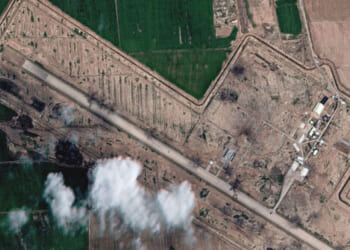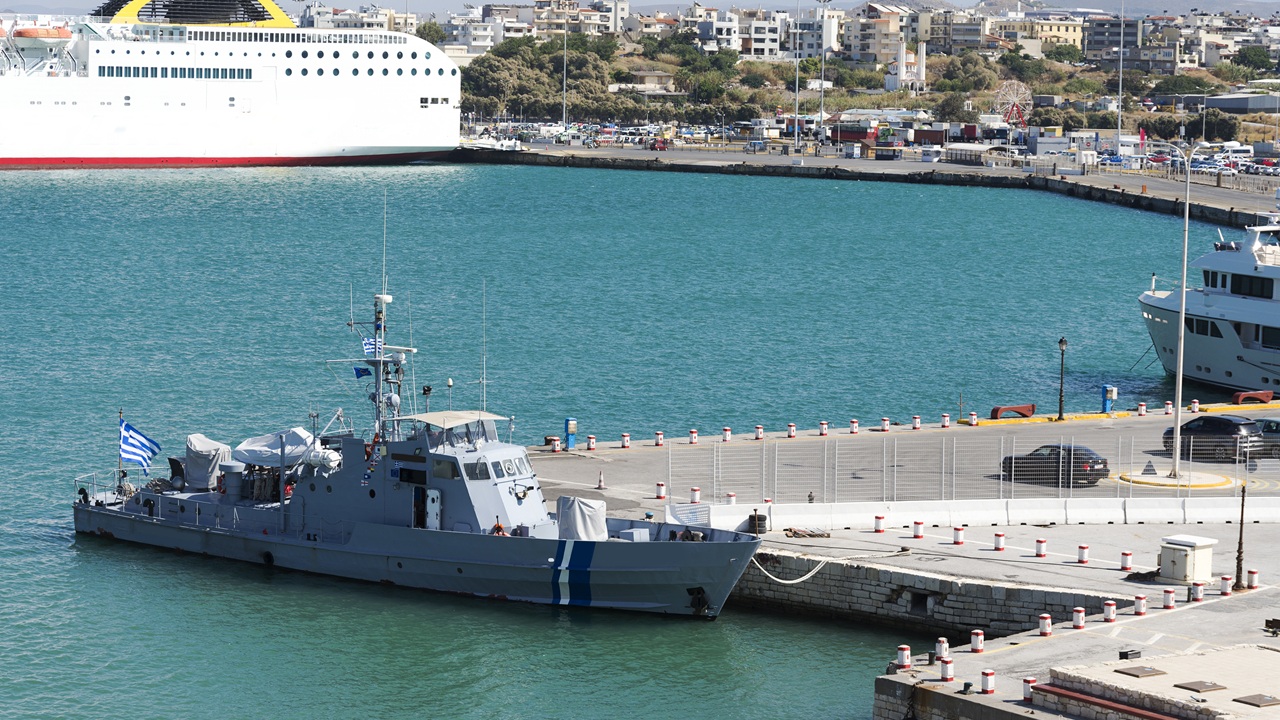
The Souda Naval Base—located on the Greek island of Crete—is the largest US base in the eastern Mediterranean, and a vital stopping point on the way to the Middle East.
When one thinks of naval divers, one’s mind naturally gravitates towards exotic, high-risk missions—Navy SEALs infiltrating from a submarine to attack an enemy warship, or landing on shore to kill or capture a high-value target.
But the US Navy has divers for more mundane uses as well—for example, the divers of the famed Seabees, who recently completed important work on one of the US Navy’s most strategic naval bases in the world.
What Are the US Navy “Seabees” Doing in Greece?
From December to January, Navy Seabees divers completed inspections and maintenance on the port security barrier system and tested new methods for underwater concrete repairs on the Marathi NATO Pier Complex in the Souda Naval Base, located on the Greek island of Crete in the Aegean Sea.
“For the pier repair project, we are basically adding reinforcement to holes and damage in the existing structural concrete,” Construction Mechanic 2nd Class Zack Risinger, the project supervisor at UCT 1, CDD/B, said in a service press release.
The underwater inspection could not have come at a better time. The Seabee divers recently discovered underwater damage on the port security barrier, which could result in reduced effectiveness. The barrier is used to protect Navy and NATO warships while they are undergoing maintenance and resupply. Aircraft carrier strike groups often resupply in the Souda Naval Base, going to or coming from the Middle East.
“Working with the Hellenic Navy, we identified the priority repair site, and now, we’re going down and installing composite formwork with anchor bolts so that we can backfill the void with high-strength concrete,” the Seabee added.
The Seabees sailors were assigned to Underwater Construction Team (UCT) 1, Construction Dive Detachment Bravo (CDD/B).
“The Seabee Divers come to Souda Bay every few years to provide a specialized service that we could not otherwise obtain,” Port Operations Regional Program Director Jim Walker, Commander, Navy Region Europe, Africa, Central, said. “The divers always get the job done on time; despite the very challenging weather conditions Souda Bay is known for in the winter.”
The US Naval Construction Battalions—or “Seabees” (CBs)—have been providing logistical support to the Navy and Marine Corps since 1942. With a motto “we build, we fight,” Seabees provide expeditionary logistical capabilities and are capable of building or mending airports, bridges, roads, ports, and other vital buildings in support of combat operations.
Crete Is the US Navy’s Anchor in the Mediterranean
The Souda Naval Base is probably the most important naval base in the Mediterranean Sea. It has one of the region’s largest natural ports, and it provides berthing, refueling, ammunition handling, general supply handling, and minor maintenance and ship repair to Navy and NATO warships and support vessels.
As the deepest port in the Mediterranean, Souda Naval Base is capable of hosting and maintaining aircraft carriers, cruisers, destroyers, submarines, and tankers. Thus, its importance to the US Navy and the 6th Fleet is high, especially considering its close proximity to the Middle East. The base is located on the Akrotiri Peninsula of Crete, a large island in the south of Greece.
Similar to other NATO bases, the Souda Naval Base also hosts units from the host country. For example, the Hellenic Air Force’s 115th Combat Wing is also located in Souda.
About the Author: Stavros Atlamazoglou
Stavros Atlamazoglou is a seasoned defense journalist specializing in special operations and a Hellenic Army veteran (national service with the 575th Marine Battalion and Army HQ). He holds a BA from the Johns Hopkins University and an MA from the Johns Hopkins’ School of Advanced International Studies (SAIS). His work has been featured in Business Insider, Sandboxx, and SOFREP.
Image: Shutterstock / beast01.