Lockheed Martin has indicated that it will soon move from “low-rate initial production” to “full-rate production,” after which more of the radars will arrive.
The world’s largest aerospace and defense contractor announced this week that its air- and missile-defense radar platform is nearing full-rate production, or FRP.
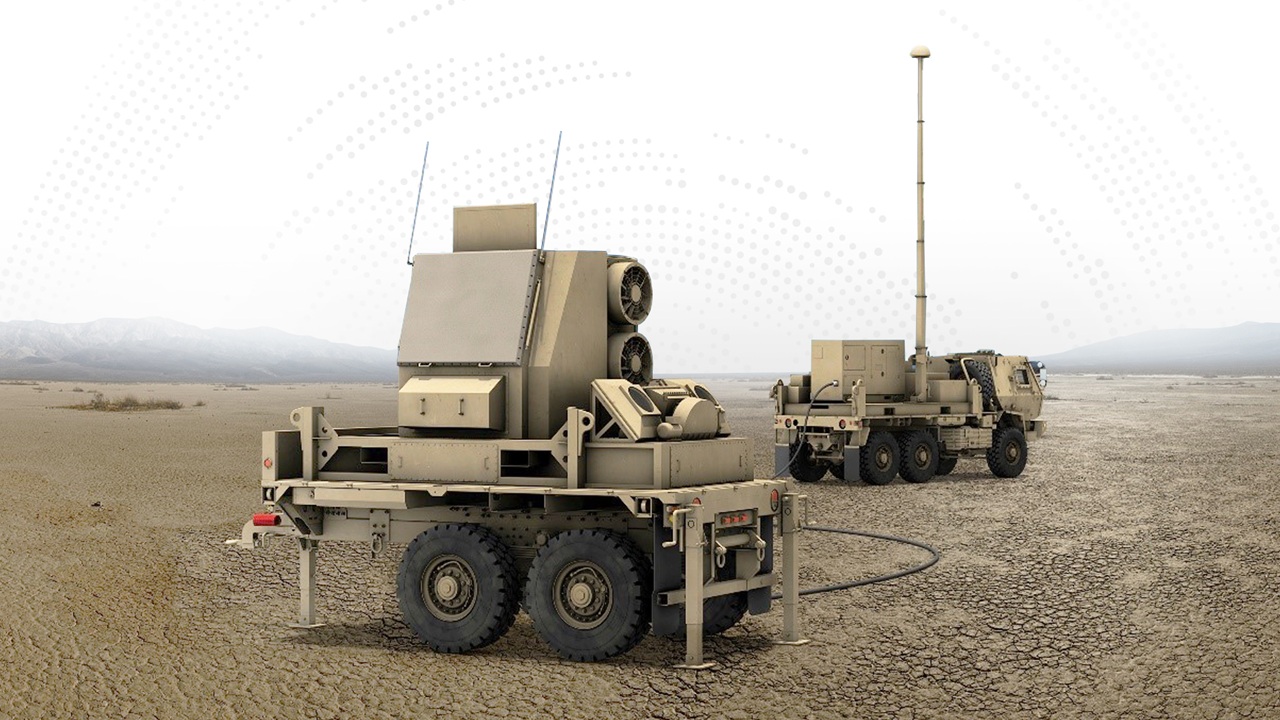
Lockheed Martin confirmed that it delivered the first Sentinel A4 radar from its Low-Rate Initial Production (LRIP) 2 to the United States Army. The new radar system is being adopted to replace the legacy Thales Raytheon Sentinel A3 (AN/MPQ-64A3), introduced in 2013, and to supplant the earlier HMMWV platform.
About the Sentinel A4 Radar
- Architecture: Digital Active Electronically Scanned Array (AESA) with Gallium Nitride (GaN).
- Coverage: 360-degree, “stop-and-stare” capability from ground to zenith.
- Performance: Over 75% increase in range over legacy systems.
- Detection Capabilities: Identifies RAM (Rocket, Artillery, Mortar), Cruise Missiles, UAS, and aircraft.
- Accuracy: Fire-control quality track data.
- Mobility: Mounted on a modified M1095 trailer, towed by an M1083 FMTV truck.
- Range: Demonstrates detection of small targets (0.01m2m squared 𝑚2 RCS) at ranges up to 35 km.
- Scanning Rate: 30 RPM.
- Weight: 6,070 kg (13,382 lbs).
- Power Requirement: 10 kW, 400 Hz, 115/200 VAC.
- Interoperability: Connects to FAAD-C2 and IBCS.
The new Sentinel A4 (AN/MPQ-65A4) radar features a 360-degree Active Electronically Scanned Array (AESA) sensor that will enhance the US Army’s defense against a variety of airborne threats, including cruise missiles, unmanned aerial systems (UAS), and fixed-wing and rotary aircraft.
According to Lockheed Martin, “The Sentinel A4 will add the ability to detect Rocket, Artillery, and Mortar (RAM) threats, providing RAM Point of Origin and Point of Impact locations, while also providing added protection against electronic threats.”
The US Army awarded the defense giant the contract to produce the Sentinel A4 in 2019, and the first unit was completed in August 2022.
Understanding Lockheed Martin’s “LRIP 2” and “FRP” Production
The delivery of the first radar—of a planned 19 in the LRIP 2 phase—moves the program closer to FRP.
“During IOT&E Phase I, Sentinel A4 integrated with Forward Area Air Defense Command and Control (FAAD-C2), validating the effectiveness of its open-architecture design and interoperability across multiple command-and-control networks,” Lockheed Martin added.
The Sentinel A4 is part of the US Army’s ongoing efforts to modernize its short-range air defenses, building on lessons from the modern battlefield. That includes the introduction of drones and other unmanned aerial threats. In April 2023, the Army announced that it had begun a limited user test of the system at the White Sands Missile Range. A pair of Sentinels was put through the paces in day and night conditions.
Even as the Sentinel A4 replaces the legacy radar systems, it will still integrate with the US Army’s existing air defense architecture, the Defence Blog reported. That will include sharing data “across sensors and shooters” and supporting a “layered defense against low-altitude and short-range threats.”
Lockheed Martin has confirmed it will continue deliveries of the Sentinel A4 as it approaches full-rate production.
“This delivery is a major milestone in getting next-generation radar capability to the warfighter to address the threats of today and tomorrow,” explained Rick Cordaro, vice president of Lockheed Martin’s Radar and Sensor Systems. “Sentinel A4 expands battlespace awareness and improves layered defense against cruise missiles, unmanned aerial systems, and rotary- and fixed-wing threats in complex environments.”
About the Author: Peter Suciu
Peter Suciu has contributed over 3,200 published pieces to more than four dozen magazines and websites over a 30-year career in journalism. He regularly writes about military hardware, firearms history, cybersecurity, politics, and international affairs. Peter is also a contributing writer for Forbes and Clearance Jobs. He is based in Michigan. You can follow him on Twitter: @PeterSuciu. You can email the author: [email protected].
Image courtesy of Lockheed Martin.