Israeli prime minister Benjamin Netanyahu estimated that Israel could absorb more than 700 missile strikes from Iran. But Iran has far more than 700 missiles in its stockpiles…
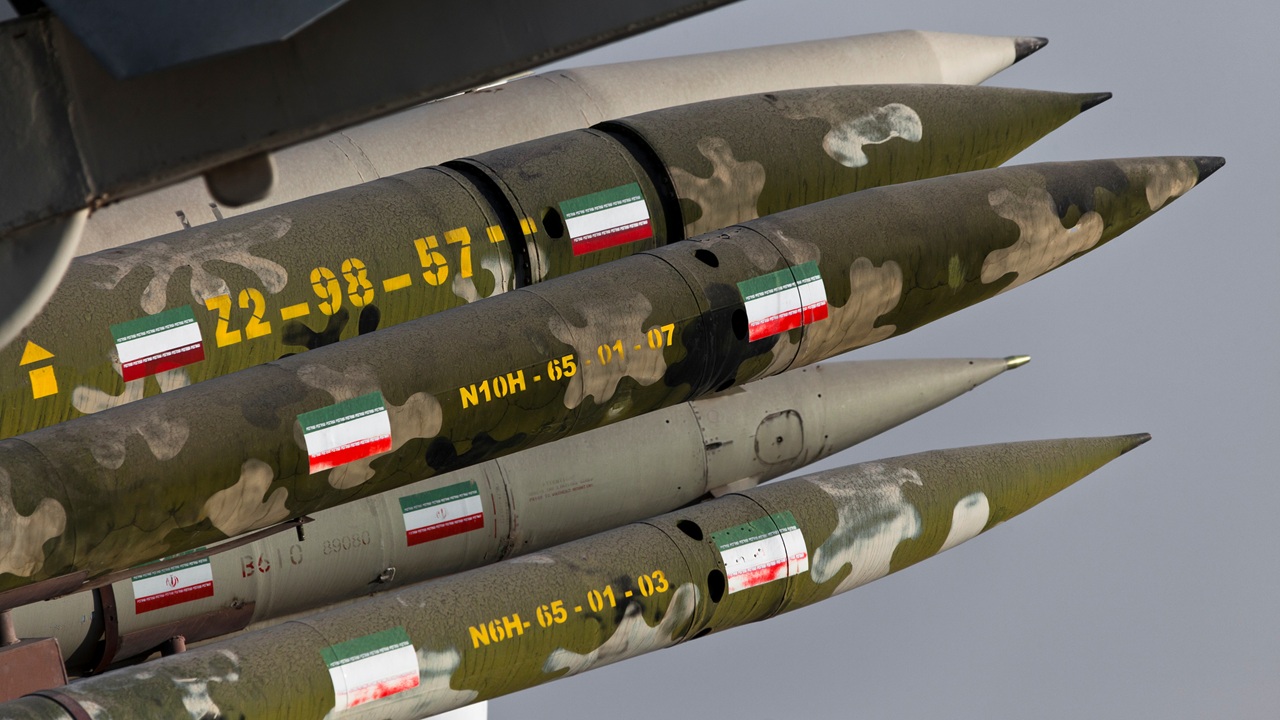
Iran has the largest stockpile of ballistic missiles in the Middle East today. At a time when the Israel-American military alliance appears poised to enact what will likely be the apotheosis of their long-term campaign of regime change against the Islamic Republic of Iran, the regime in Tehran is sitting on the region’s largest missile arsenals.
It’s Hard to Imagine the Scale of Iran’s Missile Threat
And it isn’t only missiles that comprise this massive, relatively unused missile threat. This includes hypersonic weapons against which there are no known defenses.
With the strike window on Iran now open, as the US maintains a growing armada off the coast of Iran, the Israeli Prime Minister Benjamin Netanyahu has expressed his belief that Israel could take more than 700 missile strikes—if it meant the hated Islamic regime in Iran would be destroyed on the other end.
While that tough-guy routine may play well in the media, it ignores the true nature of the threat that Israel (and US bases in the region) are facing.
Many of the missiles in Iran’s massive arsenal have ranges that are greater than 1,000 kilometers. In other words, they reach deep into Israeli territory from Iranian soil.
Other systems include multiple medium-range ballistic missiles (MRBMs), including variants like the Kheibar Shekan or Fattah-1. These systems are designed to maneuver and evade defenses both in Israel and throughout the region, along the likely course of many of these missiles.
As for Israel, their defense relies upon a multi-layered air defense network that has been built up during the last several decades (including US-supplied systems, like the Iron Dome, David’s Sling, and the Patriot/Arrow systems). In the recent 12-Day War, Israeli officials have acknowledged their system has an 80-90 percent interception rate.
Of course, these sources understand that the system is imperfect. What’s more, in the aftermath of Iran’s missile attacks during last year’s conflict, Israel’s air defense network is not fully replenished.
That fact, combined with the sheer volume of missiles, hypersonic weapons, and drone swarms the Iranians could potentially fire at Israel, likely means that these depleted air defense systems would be insufficient to mitigate some of the most extreme damage from such an Iranian attack.
Given Israel’s preoccupation with Gaza and its other regional enemies, it would not take much to shut down the Israeli economy. In so doing, Iran could inflict lasting damage upon the Israeli state at a crucial moment for national survival.
Mass Missile Salvos Will Overwhelm Israel’s Advanced Defenses
After the 12-Day War ended, Iran’s Defense Minister Brig. Gen. Aziz Nassirzadeh, claimed that his country had developed missiles “with far greater capabilities” than the ones the Islamic Republic used against Israel in their limited retaliation in the 12-Day War with the Jewish democracy.
Iran’s defense minister emphasized that the missiles Iran fired at Israel during the 12-Day War were “manufactured a few years ago.” This was his attempt at claiming that Iran’s newer, unfired systems were qualitatively superior to the systems that were lobbed at Israel last summer.
What’s more, Nassirzadeh implied that if the Israelis launched another attack upon Iran (as they are readying to do alongside the Americans), then Tehran would launch those new and enhanced missiles without hesitation.
Since last June, too, the Iranians have made clear that they were ramping up their missile production to prepare for what they correctly assumed would be an Israeli-American assault on their country once more. Per The War Zone, Iran’s newer missiles were being given upgraded guidance and lethality based upon the hard lessons Iranian defense planners learned during the 12-Day War.
Of course, why does this even matter?
Well, it matters because it indicates where Tehran’s thinking is on the matter of another war with Israel (and the United States). Iran’s claims regarding their massive missile arsenal is as much political as it is military. This is clearly intended to signal to Jerusalem (and Washington) that future attacks on Iran will carry heavier risks in the form of massive retaliation by Iran.
Iran’s defense minister was clearly suggesting that Iran believes its arsenal is more capable and possibly more numerous than what the Israeli (and American) air defenses throughout the region can defend against.
An Israel-Iran War Will Not Be a Short, Surgical Conflict
More importantly, these capabilities combined with Tehran’s bellicose rhetoric, act as complicating factors for the US and Israeli regional strategy. You see, the Iranians understand that their Arab neighbors, while not fond of the Islamic Republic in Tehran, are even more concerned about what they view as unconstrained Israeli belligerence.
As such, the Arab powers have informed both the Americans and the Israelis that they will neither allow for their territory to be used to strike Iran nor will they participate in the defense of Israel from the massive amount of Iranian missile and drone swarms.
Ultimately, the looming war between the Israeli-American alliance and Iran is not shaping up to be a short, surgical campaign. It is clearly going to become a systemic stress test of Israel’s national resilience and America’s already waning regional staying power. Tehran is signaling that it is prepared to absorb punishment while unleashing devastation at a scale that no Middle Eastern state has ever before attempted.
And if Washington and Jerusalem miscalculate (they already are) by believing that precision strikes and layered defenses alone can tame a missile superpower, like Iran, they will discover—too late—that they have walked into a war whose costs far exceed its promised gains.
About the Author: Brandon J. Weichert
Brandon J. Weichert is a senior national security editor at The National Interest. Weichert is the host of The National Security Hour on iHeartRadio, where he discusses national security policy every Wednesday at 8pm Eastern. He hosts a companion show on Rumble entitled “National Security Talk.” Weichert consults regularly with various government institutions and private organizations on geopolitical issues. His writings have appeared in numerous publications, among them Popular Mechanics, National Review, MSN, and The American Spectator. And his books include Winning Space: How America Remains a Superpower, Biohacked: China’s Race to Control Life, and The Shadow War: Iran’s Quest for Supremacy. Weichert’s newest book, A Disaster of Our Own Making: How the West Lost Ukraine, is available for purchase wherever books are sold. He can be followed via Twitter/X @WeTheBrandon.
Image: Shutterstock / saeediex.