To deal with helium shortages from the war in Iran, Washington must treat helium as strategic, coordinate with allies, build redundancy, and incentivize recovery technologies.
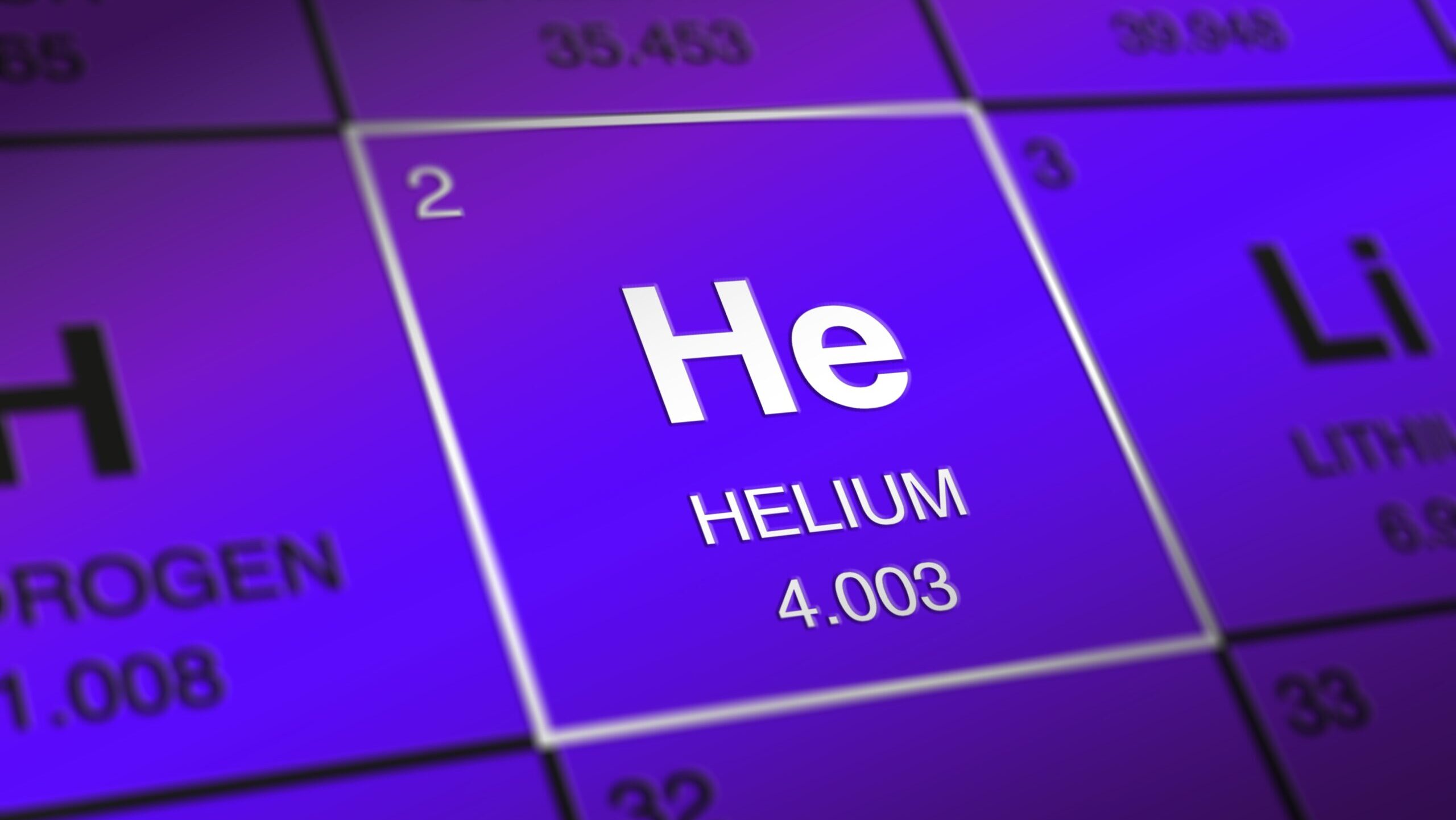
Everyone is watching the Strait of Hormuz for oil, liquefied natural gas (LNG), and fertilizer. Far fewer are tracking the same waterway as a pressure point for magnetic resonance imaging (MRI) systems, semiconductor fabrication, and aerospace production. Helium is what makes modern economies and militaries function. Helium cools superconducting magnets in MRI systems, supports semiconductor fabrication, enables leak detection and pressurization in aerospace, and serves a range of high-precision industrial processes with demanding purity requirements. Helium becomes the next critical industrial chokepoint around the world.
The Iran War is pushing that vulnerability into plain view. Since March 12, disruptions tied to halted gas processing in Qatar removed 5.2 million cubic meters of helium per month from the market, triggered force majeure declarations, and doubled spot prices. Qatar matters because it is one of the world’s dominant helium suppliers, with the QatarEnergy LNG Ras Laffan complex being a major global production hub and home to the world’s largest helium plant. Additionally, 2025 US Geological Survey data shows world helium production around 190 million cubic meters, with the United States at 81 million and Qatar at 63 million, giving the two countries an outsized role in the global market—analogous to the LNG market.
Helium is a strange commodity with unforgiving physics—yet most Americans only experience it when going to the local dollar store to get cheaply filled balloons. Once liquefied, it continuously boils off over time, and industry executives have reported that the practical delivery window is about 45 days before losses become severe. That means the market runs on throughput, timing, and logistics discipline more than on the kind of stockpiling logic that works for crude oil or grain. In a prolonged disruption, like the Iran War appears to be becoming, inventories do not simply get drawn down. They dissipate.
That reality has immediate American economic implications for the material foundations of the artificial intelligence (AI) boom, and it stings even deeper into the US and allied defense industrial base than most policymakers appreciate.
Helium as a Hidden Industrial Gas Behind Advanced Manufacturing
It’s easy to think that AI is more of a software problem than industrial age issues. Thus far, AI advancements have rested on models, data centers, and compute power. The industrial story of this digital age technology starts further upstream. AI system hardware depends on a manufacturing ecosystem built on gases, chemicals, precision tooling, controlled environments, and highly specialized logistics. Helium is the quietest input that enables the industrial ecosystem to function.
The Semiconductor Industry Association has warned that helium is critical to semiconductor manufacturing and is used in carrier-gas applications, photolithography, vacuum environments, leak detection, and cooling-related functions, with many of these uses lacking ready or cheap substitutes.
That is a much larger point than it first appears. Fab construction has become the visible face of industrial policy. The invisible layer lives in the upstream inputs. A fabrication plant may look like the trophy, but a fabrication plant without secure access to industrial gases is an expensive shell. Unfortunately, helium is technically specific, physically constrained, and commercially small relative to the strategic importance of the industries it supports.
AI buildouts further raise the stakes. For example, Nvidia sees more than $1 trillion in revenue opportunity through 2027 for its Blackwell and Rubin AI chips. Whatever the eventual number, the direction is unmistakable. More AI infrastructure requires more advanced chips. More advanced chips mean more pressure on the upstream manufacturing system. Helium belongs in the same conversation as electricity, advanced packaging, wafer capacity, and tool availability because it is part of the physical base of what makes or breaks the AI economy.
The Defense Industrial Base Is More than Just Metals and Munitions
The helium shock will also impact defense. Pressure purging, leak detection, controlled atmospheres, welding, and scientific and specialty gases are all dependent on helium. Those categories map directly onto high-performance manufacturing environments and complex aerospace systems. The National Academies have also long identified large-scale aerospace as a major helium user, especially for space exploration. Fiber optics and satellites also all require helium—and these are all vital to the functioning of the US military.
Because modern defense production relies on interconnected industrial systems, the loss of helium from the “ecosystem” can cause a cascading failure of the industrial base. Aircraft, missiles, satellites, sensors, guidance components, communications hardware, and secure electronics all depend on advanced manufacturing processes. The electronics inside defense systems draw from the same semiconductor ecosystem that supports commercial AI and cloud infrastructure—this, in turn, enables US warfighting capabilities.
Helium shortages also become an allied issue. When one-third of global helium supply is removed, the result is more than just a commodity pricing adjustment. It becomes an alliance-wide resilience question shaped by access, allocation, and the ability to keep high-value systems moving through production and maintenance pipelines.
What Washington Should Do
The first priority must be to treat helium as a strategic industrial gas within semiconductor policy and defense-industrial planning. CHIPS-era supply-chain mapping should explicitly track industrial gases, including helium, as part of resilience assessments for fabs, electronics, and other high-value manufacturing sectors.
The second priority should be to improve redundancy across North America and allied supply chains. The Bureau of Land Management sold the Federal Helium System in 2024, which placed greater weight on commercial arrangements and private-sector capacity. That transition strengthens the case for commercial priority-access planning, stronger logistics coordination, and a harder push to expand reliable production where geology and economics support it.
The third priority is reclamation and recovery. Large-volume helium applications are seldom recycled in the United States, even as closed-loop systems become more common. Targeted incentives for recovery systems in fabs, laboratories, medical facilities, and high-end manufacturing would expand effective buffer capacity in exactly the sectors that matter most. The government must incentivize technology advancements that enable the capture and recovery of helium.
The fourth priority requires allied coordination. The United States and its closest partners should treat helium disruptions the way they increasingly treat other supply-chain shocks: as a shared resilience challenge that can help or hurt their economies and militaries. Long-term contracts, cooperative contingency planning, and better industrial-gas visibility across allied production networks would improve industrial endurance in the next crisis.
Ultimately, the “cloud” has a supply chain, and it’s even heavier than most realize. AI has a materials base. The defense industrial base obviously needs steel, titanium, and propellant. But it also critically needs quiet industrial inputs that are ignored until a crisis hits, just like how the 2022 Russian invasion of Ukraine disrupted neon production, leading to prices spiking by 5000 percent. The Iran war has revealed helium as a different gaseous input that constrains the basic functioning of technology, advanced economies, and a digital age military.
About the Authors: Morgan Bazilian, Jahara Matisek, Macdonald Amoah
Morgan D. Bazilian is the director of the Payne Institute and professor at the Colorado School of Mines, with over 20 years of experience in global energy policy and investment. A former World Bank lead energy specialist and senior diplomat at the UN, he has held roles at NREL and in the Irish government, and advisory positions with the World Economic Forum and Oxford. A Fulbright fellow, he has published widely on energy security and international affairs.
Lt. Col. Jahara “Franky” Matisek (PhD) is a US Air Force command pilot, nonresident research fellow at the US Naval War College and the Payne Institute for Public Policy, and a visiting scholar at Northwestern University. He is the most published active-duty officer currently serving, with over 150 articles on industrial base issues, strategy, and warfare.
Macdonald Amoah is an independent researcher with interests across critical mineral supply chains, advanced manufacturing gaps, the industrial base, and the geopolitical risks in the mining sector.
DOD Disclaimer: The views of Lt. Col. Matisek are his own.