If the United States cannot reform its permitting process, decade-long delays will undermine the infrastructure needed to compete with China on AI.
In the United States, it was once common to build major public infrastructure projects quickly, of high quality, with broad and compelling public benefits. Today, federal permitting processes can tie up important projects for more than a decade, raising costs and killing many of them.
The problem is especially acute in the energy sector, and risks derailing America’s artificial intelligence (AI) lead over China, which has unleashed the full force of its government and industry to build infrastructure expeditiously.
America Once Built Infrastructure Rapidly
It was not always this way.
Three years after the Tennessee Valley Authority (TVA) was formed in 1933, its first major project, the Norris Dam, was completed. Twenty dams were built in the TVA’s first 20 years, providing hydroelectric power and flood control that provided transformative benefits to millions of people.
The interstate highway system got out of the gate quickly after it became law in August 1956. By January 1961, as President Dwight D. Eisenhower left office, 10,440 miles, or 25 percent of the system, were open to traffic.
How NEPA Transformed the US Permitting Process
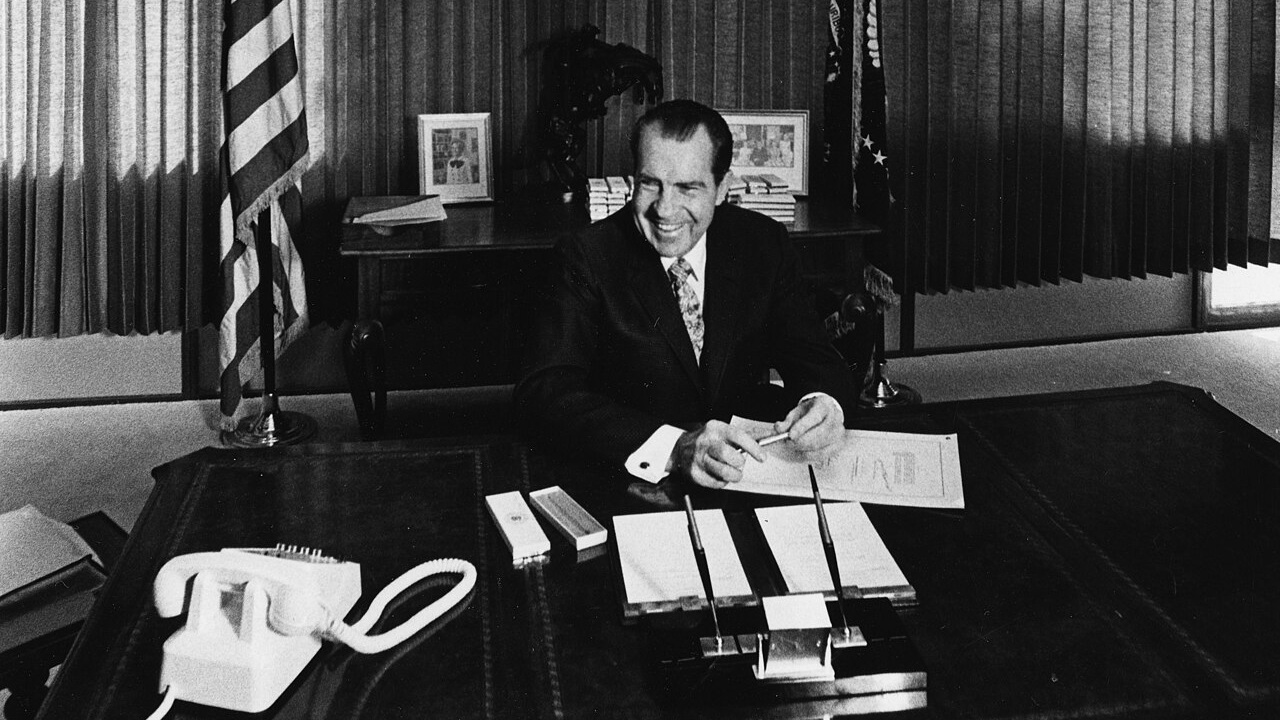
Things began to change on January 1, 1970, when President Richard Nixon signed the National Environmental Policy Act (NEPA). The measure aimed to ensure environmental considerations informed permitting decisions, while still allowing projects to move forward expeditiously.
NEPA is now one of the most litigated statutes in the country and has been the subject of 17 US Supreme Court cases. It governs energy, transportation, water, and many other projects.
Clean energy projects have taken a big hit. According to the American Clean Power Association, it takes an average of four and a half years for a proposed generation facility to complete the permitting process.
Across all energy sources, according to a 2024 report from the US Department of Energy (DOE), it takes an average of 10 years to complete electric grid transmission projects, with many projects going up to 15 years. Most of that time, commonly 80 percent, is spent on waiting for the project to be approved, i.e., permitted.
Permitting delays have become so severe that, in addition to clean energy advocates, governors such as Maryland’s Wes Moore and Massachusetts’ Maura Healey, and members of Congress across the political spectrum have grown alarmed and are demanding legislative change.
The Trump Administration Is Pushing Permitting Reform for AI Infrastructure
President Donald Trump has issued several executive orders to pare back the excesses of NEPA. This includes a July 23, 2025, executive order, “Accelerating Federal Permitting of Data Center Infrastructure,” whose purpose is “to facilitate the rapid and efficient buildout of this infrastructure by easing Federal regulatory burdens.”
NEPA reform through legislation, though, should be given high priority in 2026, as it will provide clarity and attract investments needed for AI and other infrastructure.
“Being a good steward of our environment doesn’t mean we must tolerate a yearslong permitting process that is onerous, overly complex, and ripe for litigation abuse. America must get back into the business of building. We need modern infrastructure.”
Those are not the words of a MAGA Republican, but rather US Representative Jared Golden (D-ME), ranking member of the US House of Representatives Natural Resources Committee.
The Bipartisan SPEED Act Will Address Permitting Reform
Representative Golden wrote the bipartisan Standardizing Permitting and Expediting Economic Development (SPEED) Act in July 2025, along with Committee Chair Representative Bruce Westerman (R-AR). Westerman said, “Our permitting process is broken. Unfortunately, federal permitting has turned into a blunt tool used by radical litigants to block projects.”
The SPEED Act passed the US House of Representatives on December 18 in a 221-196 vote.
It streamlines and shortens the permitting process by closing loopholes that litigants have exploited. The SPEED Act excludes from NEPA review projects that have already been reviewed under another federal, state, or tribal environmental review statute and that meet the NEPA requirements. When preparing NEPA reviews, agencies are to consider the effects the project will have and avoid speculation. Furthermore, a NEPA review cannot be triggered simply because a project will use federal funds.
Permitting Delays Threaten the US AI Infrastructure Boom
Today, America is in its biggest-ever capital expenditure program for AI, spending far more in constant dollars than for the historically significant interstate highway system, the Apollo space program, or for interstate railroads. And it is all threatened by permitting delays.
In the US Senate, Senator Sheldon Whitehouse (D-RI), a strong advocate for permitting reform and Ranking Member of the Environment and Public Works Committee, said on January 28 that he is holding up his support for permitting reform because of the Trump Administration’s “unlawful and irrational blockade of offshore wind.”
This refers to attempts to close offshore wind projects for Rhode Island and New York. Even oil company executives are weighing in to try to get the administration to change its stand on these projects.
By agreeing to this modest change, President Trump will secure substantial, common-sense permitting reform, a powerful and important legacy, and one that will help ensure US leadership over China on AI and economic development generally.
About the Author: Paul Steidler
Paul Steidler is a senior fellow with the Lexington Institute, a public policy think tank based in Arlington, Virginia. He researches, studies, and discusses federal government policy on technology and logistics issues, identifying ways the federal government can work more efficiently. This includes analyzing the costs and impacts of federal government policies, as well as their interactions with the European Union and other international organizations.