Since early March, Israel has launched a ground incursion into Lebanon intended to displace the Hezbollah militant group from positions along the border.
Truth remains the first casualty in modern warfare, with social media helping inflate the number of enemy losses and any collateral damage. This has been especially true in Israel’s ongoing campaign into southern Lebanon, where there are reports that the Israeli military has taken the heaviest tank losses in more than four decades.
Israel and Hezbollah Offer Wildly Different Casualty Figures
Iran-aligned Lebanese paramilitary group Hezbollah, longtime thorn in Israel’s side, claimed to have destroyed at least 21 Merkava main battle tanks (MBTs) last week. As many as 100 of the Israel Defense Force (IDF) MBTs have been disabled or worse since early March, when Israel’s campaign in Lebanon began.
A pro-Hezbollah journalist recently described the anti-tank campaign as “The miracle of the south,” claiming that “Lebanese resistance fighters” countered attacks by the IDF. Hezbollah claimed that the tanks were destroyed via ambushes using anti-tank guided missiles (ATGMs) and a variety of unmanned aerial systems, including loitering munitions or kamikaze drones. The techniques employed by the Iranian-backed militants were reported to be similar to those employed in the early fighting in Ukraine.
Although most of the US media reporting in the Middle East has focused on “Operation Epic Fury,” the US and Israeli attacks against Iran, Israel has also conducted a concurrent ground campaign in Lebanon. The IDF launched its fifth invasion of its neighbor to the north since 1978 in response to Hezbollah firing rockets into the Jewish state on March 2, following the US and Israel airstrikes on Iran that killed Iranian Supreme Leader Ali Khamenei. The IDF sought to establish a “security zone” south of the Litani River, about 20 miles north of the Israeli border, to stop the militant group from targeting positions in northern Israel.
Although the IDF has confirmed that multiple Merkava MBTs had been disabled or even destroyed, it disputes the claims that Hezbollah had succeeded in targeting nearly 100 of the advanced armored vehicles.
“This is completely false,” Israeli military spokesperson Ella Wawiya said of Hezbollah’s casualty claims in a statement to Turkish state-run news outlet Anadolu. “Hezbollah is making exaggerated claims as part of its media war.”
As the Iran War Heats Up, Israel Continues to Strike Lebanon
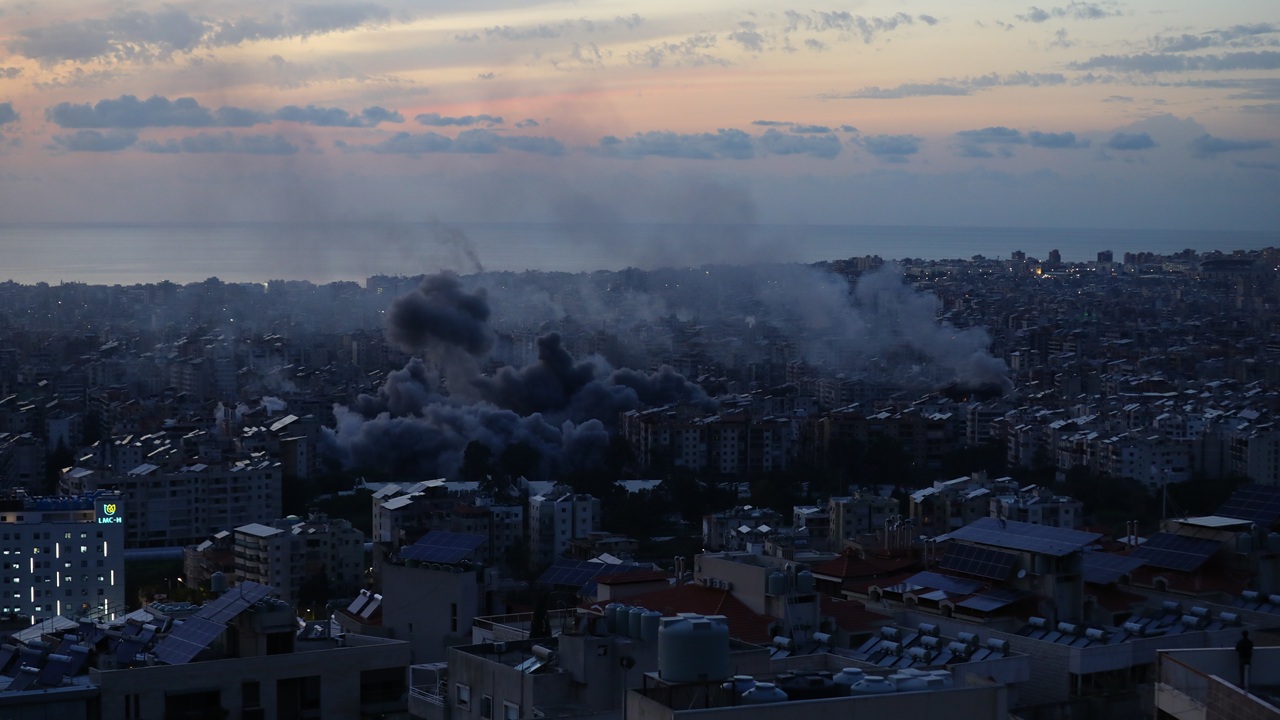
Even as the IDF has downplayed its losses, it has claimed that it has launched more than 7,000 drone, missile, and air strikes against Hezbollah positions—killing at least 700 militants in the strikes.
Although most of the targets have been in southern Lebanon, missiles have hit positions outside Beirut, far from the current fighting, Defense News reported. It added that the Lebanese capital has been largely spared from Iranian missile attacks, unlike many Gulf states, “possibly because its regional ally Hezbollah is active in Lebanon.”
Lebanese officials have also claimed that there has been significant collateral damage from Israeli strikes—with at least 1,116 people, including civilians, killed and another 3,229 wounded. The IDF’s incursion into southern Lebanon has reportedly displaced more than one million people.
Among those killed was a United Nations Interim Force in Lebanon (UNIFIL) peacekeeper, the group confirmed on Monday.
“A peacekeeper was tragically killed last night when a projectile exploded in a UNIFIL position near Adchit al Qusayr,” UNIFIL said in a statement on social media. “Another was critically injured. No one should ever lose their life serving the cause of peace.”
The Lebanon War Will Probably Outlast the Iran One
Even as the campaign against Iran could wind down, the situation in Lebanon is very different and is likely to continue for weeks, perhaps longer.
“The fighting in Lebanon constitutes one front in the ongoing region-wide war between Israel and Iran. This war overlaps with the US-Iran contest but is not identical to it,” a report from the Middle East Forum explained.
Israel’s goal may be to create a new security zone that weakens the abilities of one of Iran’s proxies to launch rockets and missiles into Israel. However, that is unlikely to solve the long-term problems.
“This ‘buffer zone’ strategy doesn’t address the core issue, of course,” the Middle East Forum report read. “The Iranian strategy, with its accompanying nuclear and ballistic missile components, will continue for as long as the Islamic regime in Tehran exists.”
Yet the buffer zone could help ensure that Hezbollah’s ability to strike Israel is diminished. Of all the fighting now ongoing in the Middle East, the campaign in Lebanon at least has a clear objective—unlike the ongoing mission in Iran.
About the Author: Peter Suciu
Peter Suciu has contributed to dozens of newspapers, magazines and websites over a 30-year career in journalism. He regularly writes about military hardware, firearms history, cybersecurity, politics, and international affairs. Peter is also a contributing writer for Forbes and Clearance Jobs. He is based in Michigan. You can follow him on Twitter: @PeterSuciu. You can email the author: [email protected].