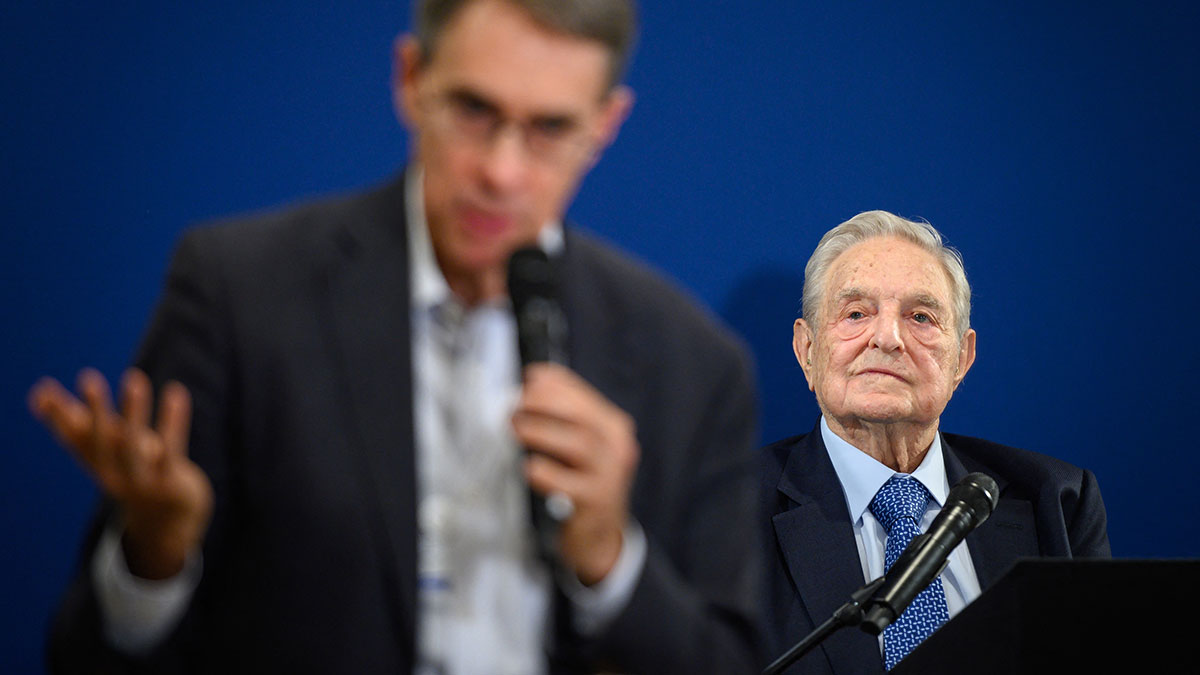
Americans pay too little attention to local politics. A decade ago, progressive billionaire George Soros took advantage of this fact, pouring millions into local races to get progressive district attorneys elected across the country.
Now, the increasingly radical Democratic Socialists of America (DSA) has adopted the Soros strategy. Rather than supporting candidates at the national level, the organization increasingly focuses on small, local elections. Races for city councils, state assemblies, and state senates often get scarce media attention but represent real opportunities for power that the DSA is increasingly seizing.
Finally, a reason to check your email.
Sign up for our free newsletter today.
The Soros model is well known. In 2016, Soros spent $3 million in local district attorney elections across six states. Soros-funded DAs won in both small and large cities, and 126 have held public office at various points. By 2024, at least 30 percent of Americans lived under the jurisdiction of a Soros-funded prosecutor.
These progressive DAs have transformed the criminal justice systems they oversee. Many have refused to prosecute minor offenses, eliminated cash bail, and reduced the use of sentencing enhancements like “three strikes” provisions. Some of the most aggressive have been turned out of office following significant increases in crime.
Now, the DSA is pursuing a similar political strategy. Its efforts started with the growth of local chapters. Prior to 2016, DSA membership in the United States hovered at around 5,000. By 2021, that number had ballooned to almost 78,000.
Bernie Sanders’s 2016 presidential campaign, the first election of Donald Trump, and the 2020 George Floyd riots all contributed to the new socialist fervor. Almost 97 percent of the current DSA membership joined after 2016.
But the DSA also attributes its recent growth to “qualitative shifts in how we organize and relate to each other.” The DSA currently has 225 chapters nationwide, each with its own recruitment, retention, training, and mentorship strategies. Highly organized and coordinated chapters in key areas of the country have helped drive the membership boom.
In 2017, amid the surge in membership, DSA delegates to the group’s national convention voted to prioritize elections going forward. “Now is the time for every DSA chapter to start recruiting candidates for local office,” wrote DSA coordinator Amelia Dornbush on the DSA’s official blog the following year. “When DSA-backed candidates do win elections, they can make big changes in people’s lives.”
The group has followed through. Besides the highly visible Zohran Mamdani, DSA candidates hold approximately 250 local political positions across the 50 states. That includes 96 city councilors and county commissioners, in addition to eight mayors, county executives, and town supervisors.
There are more to come. In New York City, ten DSA-endorsed candidates are running for Congress, the state assembly, or the state senate in upcoming elections. Progressives like Aber Kawas, David Orkin, and Illapa Sairitupac are determined to entrench DSA policies on immigration, housing, health care, and other issues in New York politics. In February’s special election to fill Mamdani’s vacant state assembly seat, all three candidates on the ballot were DSA members.
Outside Gotham, DSA-aligned candidates are steadily building a national bench. In Washington, D.C., DSA-endorsed Janeese Lewis George is running for mayor to replace Muriel Bowser, promising to “side with working people to make DC safe and affordable.” In Los Angeles, multiple DSA–LA members are vying for city council seats.
The Mamdani administration’s first few months in office reveal the potential consequences of DSA’s growing power. The city council has so far blocked some of the worst of the mayor’s agenda, like his promise to hike property taxes citywide. With a majority-DSA city council, Mamdani would be able to raise taxes tomorrow.
Electing more DSA candidates to office would translate into easier and broader implementation of similar policies pushed by the group: even higher taxes on top earners (an already disastrous experiment in California), expanded environmental regulations that may come at the expense of blue-collar employment, reduced funding for policing, the expansion of sanctuary policies, and further efforts at decarceration. It would also likely include additional “affordable housing” measures that risk constraining supply and increasing overall market costs. In effect, without meaningful checks, these policies could compound and place significant strain on the city’s fiscal and economic stability, while also contributing to a broader cultural shift that cultivates contempt for capitalism and American exceptionalism—positions associated with the DSA.
The Soros-funded DA movement shows how vital local elections are. We ignore it at our peril.
Photo by FABRICE COFFRINI / AFP via Getty Images
City Journal is a publication of the Manhattan Institute for Policy Research (MI), a leading free-market think tank. Are you interested in supporting the magazine? As a 501(c)(3) nonprofit, donations in support of MI and City Journal are fully tax-deductible as provided by law (EIN #13-2912529).
Source link