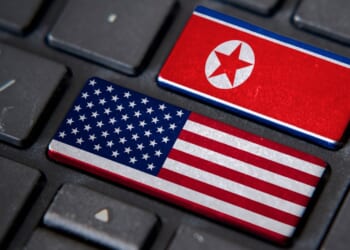
By banning drones but not drone docks, Washington risks trading one Chinese dependency for another across US public safety and critical infrastructure.
For years, policymakers treated Chinese drones the way they treat most controversial technologies: as a procurement problem, deciding what to buy, what to ban, and what to phase out. But the drone market has already moved on. The next leap in public-safety aviation is the rise of drone docking stations, fixed hubs that stage multiple drones on standby to support first responders and protect critical infrastructure. While Washington recently banned new Chinese drones from entering the US market, Beijing is already shifting the competition to drone docks, positioning its companies to dominate an industry that first responders will depend upon when seconds matter.
The FCC’s Drone Ban Targeting China
Last December, after an extensive national security review, the Federal Communications Commission (FCC) updated its Covered List to include foreign-produced unmanned aircraft systems and their critical components. The logic was straightforward: drones from certain foreign countries, namely China, can be used to harvest sensitive data or be sabotaged through rogue software updates. The FCC’s ruling did not ground Chinese drones already in use; however, the decision prevents new Chinese drone models from operating in American airspace on national security grounds.
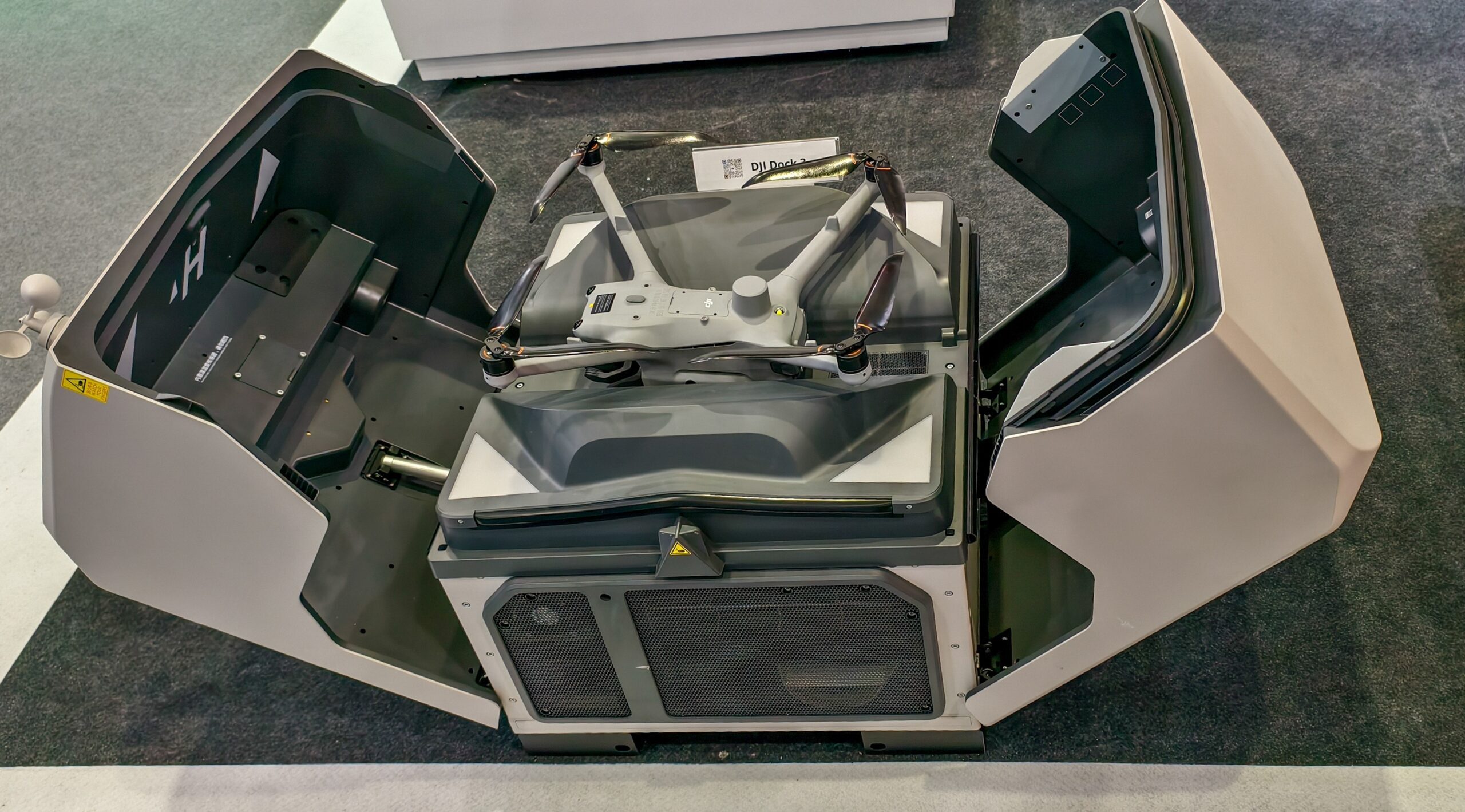
The FCC’s decision was a necessary step to address Chinese drone risks, although it does not fully account for docked “drone-in-a-box” systems, where drone fleets are managed as a service, dispatched remotely, and supported by an always-on ground station. Police, fire departments, and critical infrastructure operators are already using docks to support first-responder missions. In practice, a drone can be sent to an incident within minutes, streaming overhead video before help arrives. The dock handles drone launch and recovery and routes video and telemetry into emergency dispatch workflows, including for 9-1-1 operators.
Why Drone Docks Create a New Class of Security Risk
Docked systems are very appealing to first responders and utility providers because they promise faster response times and more reliable coverage. Yet the same networked architecture that enables rapid drone deployment also creates systemic risks. This is particularly true because drone docks receive regular security updates and patches to operate properly. If a dock malfunctions, either because it receives a malicious software update or because supply chain shortages prevent regular maintenance, it can go dark—right when safety personnel are counting on it.
This is why Beijing’s push into the drone dock market should be treated as a national security risk as much as a commercial contest. Once a police department or utility commits to a docked platform, switching costs rise quickly: training, maintenance routines, software integrations, data storage, spare parts, and the sunk cost of installed infrastructure. That is the point at which a Chinese supply chain dependency becomes leverage, and Washington has already witnessed how Beijing uses that coercive playbook, including China’s threat last year to terminate rare earth shipments to the United States when bilateral tensions flared.
The dependency risks posed by Chinese drone docks are not hypothetical. Ahead of the FCC’s December 2025 announcement, Chinese drone manufacturer DJI told Department of Homeland Security Secretary Kristi Noem that “more than 80% of the nation’s 1,800+ state and local law enforcement and emergency response agencies” use DJI technology. That kind of market penetration creates a predictable workaround: Chinese firms will work to keep legacy fleets flying as long as possible under existing inventories and support contracts, while shifting the competitive fight to the dock layer that future drone programs will depend on.
Meanwhile, the dock market is also growing fast. Estimates project that the dock economy will rise from about $1.47 billion in 2025 to about $5.64 billion by 2032. Chinese vendors are not mere spectators in this sector. DJI is already selling Dock 3 as a platform for 24/7 remote operations, and another Chinese firm, Autel, markets its EVO Nest for automated takeoff, landing, charging, and mission planning. Both firms also appear on the Department of Defense’s 1260H list of “Chinese military companies,” a designation that should trigger heightened scrutiny for systems embedded in public safety and critical infrastructure networks.
Closing the Dock Gap Before Dependency on China Sets In
The FCC can get ahead of the challenge by applying the same Covered List authorities it used in December 2025 against Chinese drones to restrict high-risk Chinese drone docks. The determination already covers “critical components” in drones and uses “included but not limited to” language that explicitly names the functions that modern docks bundle into a single unit, including data transmission devices, ground control stations, flight controllers, and batteries. On that basis, the FCC should treat docking stations as approved targets and move to add Chinese-linked dock systems to the FCC Covered List as a direct complement to existing drone restrictions.
In parallel, the administration and Congress should tighten procurement and grant guardrails so public-safety agencies and critical infrastructure operators are not buying Chinese-linked docks with taxpayer dollars. Policymakers should also incentivize US and allied manufacturers to more aggressively compete in the dock market, so trusted alternatives can scale quickly. Congress should order a targeted survey to map which Chinese dock systems are already deployed across first-responder networks and critical infrastructure providers, and then extend rip-and-replace style funding so agencies are not trapped with risky Chinese systems.
All told, if Washington leaves the dock layer unsecured, it may win the fight over Chinese drones, but lose the fight over dock dependency in our communities—where it matters most.
About the Author: Craig Singleton
Craig Singleton serves as senior director for China and senior fellow at the Foundation for Defense of Democracies (FDD) and is a former US diplomat.
Image: Allora Empire Art/shutterstock