Around 20 American aircraft have been damaged or destroyed in the first month of fighting near Iran, according to the Department of Defense.
Even as President Donald Trump and Secretary of Defense Pete Hegseth have repeatedly claimed that Operation Epic Fury has been an epic success, it has come at a high cost. As of this week, 13 US servicemembers have been killed, and hundreds more wounded.
The material damage, too, has been significant—particularly for a conflict Trump has deemed an “outstanding victory.”
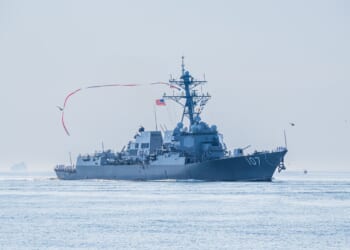
The US Navy’s newest and largest aircraft carrier, USS Gerald R. Ford (CVN-78), suffered a severe fire in its laundry room, requiring the ship to withdraw from combat operations and sail to US naval facilities in Europe for repairs. The cause of the fire is still under investigation. Yet it is still likely a consequence of the ongoing campaign, as the crew has seen its deployment extended by months longer than expected.
Critics of the war in the Middle East have suggested that the carrier was overdue for much-needed maintenance, and that pushing it hard will only prolong the time it spends in port next.
The US Has Lost More than 20 Planes—Including Irreplaceable Ones
In total, more than 20 US Air Force aircraft have been destroyed or damaged since the start of Operation Epic Fury on February 28.
On Thursday, March 19, an F-35A Lightning II suffered damage after being hit by Iranian ground fire. The conventional takeoff and landing (CTOL) Lightning II was forced to make an emergency landing after taking damage. The pilot successfully landed, but suffered “shrapnel wounds” in the attack, indicating the significance of the damage. Unverified footage released by Iranian media after the incident appeared to show a missile strike against the plane, seriously damaging it. Each F-35A has a base cost of roughly $80 million.
The incident was the first confirmed instance of an F-35 taking any major damage during a combat operation, and it could cost millions of dollars to address if the aircraft can even be repaired.
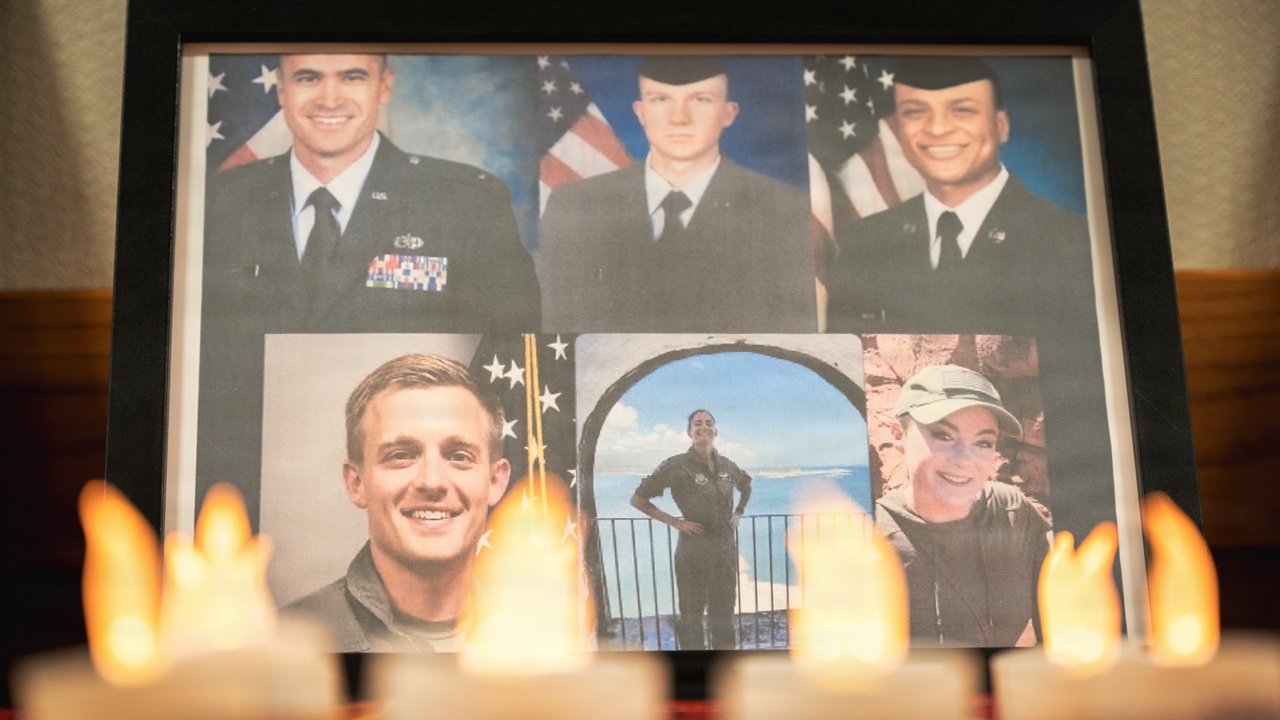
The damage to the F-35 came days after a US Air Force KC-135 refueler crashed in western Iraq, killing six airmen. The US military has said that the incident was “not due to hostile fire or friendly fire,” and an investigation is also underway.
Another KC-135 was confirmed to have been damaged on the ground in Saudi Arabia during an Iranian missile strike. Though America’s KC-135s first entered service in the 1950s and 1960s, making an exact calculation of their value difficult, some estimates have put the replacement cost at roughly $80 million.
In the first days of the fighting, three F-15E Strike Eagles were mistakenly shot down by Kuwaiti air defenses, with some reports stating it was a Kuwaiti F/A-18 Hornet that shot down the fighters. All six crew members safely ejected and suffered no serious injuries. Each F-15E cost roughly $30 million during initial acquisition in the 1990s, or around $60 million today.
However, the greatest materiel loss to date came after a Boeing E-3 Sentry was destroyed on the ground at an air base in Saudi Arabia last week. The US now has only 16 of the aircraft, which have been vital for tracking airborne threats, including missiles, and for surveilling and monitoring the battlespace in the region.
“New image reportedly showing the USAF E-3 Sentry destroyed in an Iranian attack at Prince Sultan Airbase on Friday,” the open source analyst group OSINTtechnical wrote on X, sharing an image of the destroyed aircraft.
“The E-3 detects aircraft, missiles, and drones, tracking and classifying these threats. Then, mission specialists direct fighter intercepts and strike missions based on the data received, providing real-time targeting and coordination,” Harrison Kass explained in a recent article for The National Interest. As with the KC-135, an exact valuation of the E-3 is difficult given its age and limited number, but each aircraft is thought to run into the hundreds of millions of dollars.
The US Air Force has already selected a replacement for the E-3 Sentry, but it won’t be until at least 2028 that Boeing’s E-7 Wedgetail Airborne Early Warning & Control (AEW&C) aircraft finally enters service. The US Air Force will eventually field a fleet of 26 E-7s, which the Royal Australian Air Force and the Republic of Korea Air Force have already adopted.
In the meantime, the US has lost a valuable asset that could be crucial beyond just Operation Epic Fury. In the meantime, the US will need to rely on the US Navy’s E-2D Hawkeye, which, as Kass noted, is “smaller and offers far less comprehensive coverage.”
Iran Is Probably Getting Outside Help (from the Usual Suspects)
The final question in these strikes is how Iran, a nation that appears to be so thoroughly beaten, has managed to close the Strait of Hormuz and then successfully target US assets.
At least in the case of the E-3 Sentry, suspicions abound that it wasn’t blind luck. Ukrainian officials told The Guardian that a Russian spy satellite photographed the base three times before the attack—on March 20, March 23, and March 25.
Taken as a whole, this damage is far from collateral. More than a dozen Americans have lost their lives, and billions of dollars in military assets have been lost.
About the Author: Peter Suciu
Peter Suciu has contributed to dozens of newspapers, magazines and websites over a 30-year career in journalism. He regularly writes about military hardware, firearms history, cybersecurity, politics, and international affairs. Peter is also a contributing writer for Forbes and Clearance Jobs. He is based in Michigan. You can follow him on Twitter: @PeterSuciu. You can email the author: [email protected].