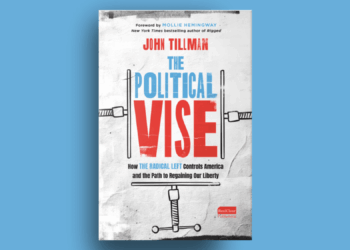
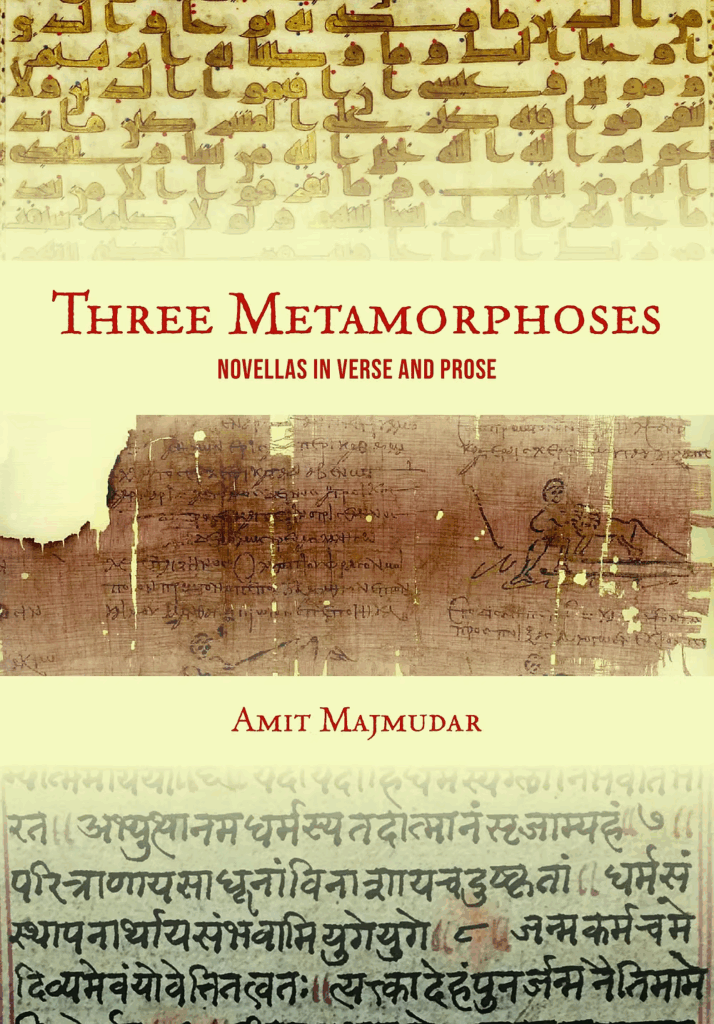
Three Metamorphoses: Novellas in Verse and Prose, by Amit Majmudar (Orison Books): “[E]ach shape reshaped, reborn/ as cochon, cocoon, raccoon, acorn, corn,/ and art, like nature, thinking nothing of it—/ a pageant in a grove, a page in Ovid.” The poet Amit Majmudar’s penchant for morpheme manipulation will be known to regular readers of The New Criterion, as will the range of his critical appetite (recent review subjects include Goethe, the material history of India, and Late Antique historiography). What his new Three Metamorphoses reveals is the extent to which those two impulses shape a unified sensibility, combining a craftsman’s resourcefulness with the attention of the antiquarian. The first component, “Azazil,” is an Islamic recasting of Paradise Lost; “Creon/Pilate” concocts a blend of Antigone and the Crucifixion; and the third portion, “Metamorphoses,” gives us Hindu mythology with an Ovidian flair. Like the Roman poet’s masterpiece, however, Three Metamorphoses works magic beyond its juxtapositions. —RE
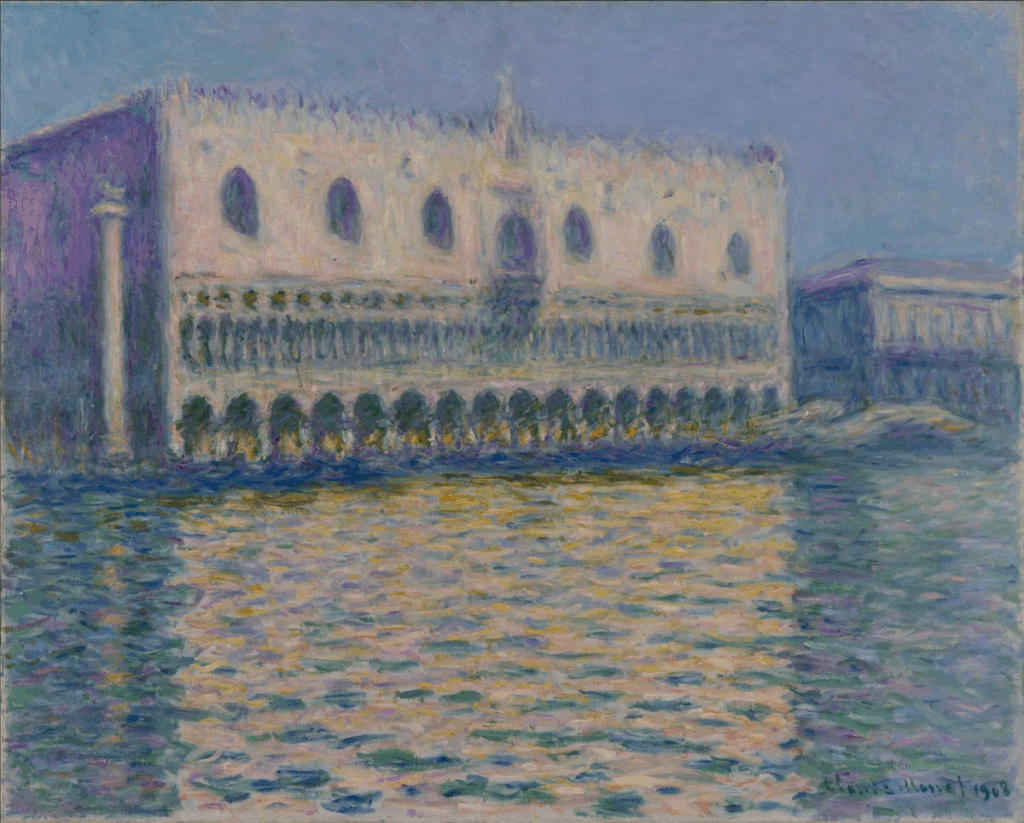
Claude Monet, The Palazzo Ducale, 1908, Oil on canvas, Brooklyn Museum.
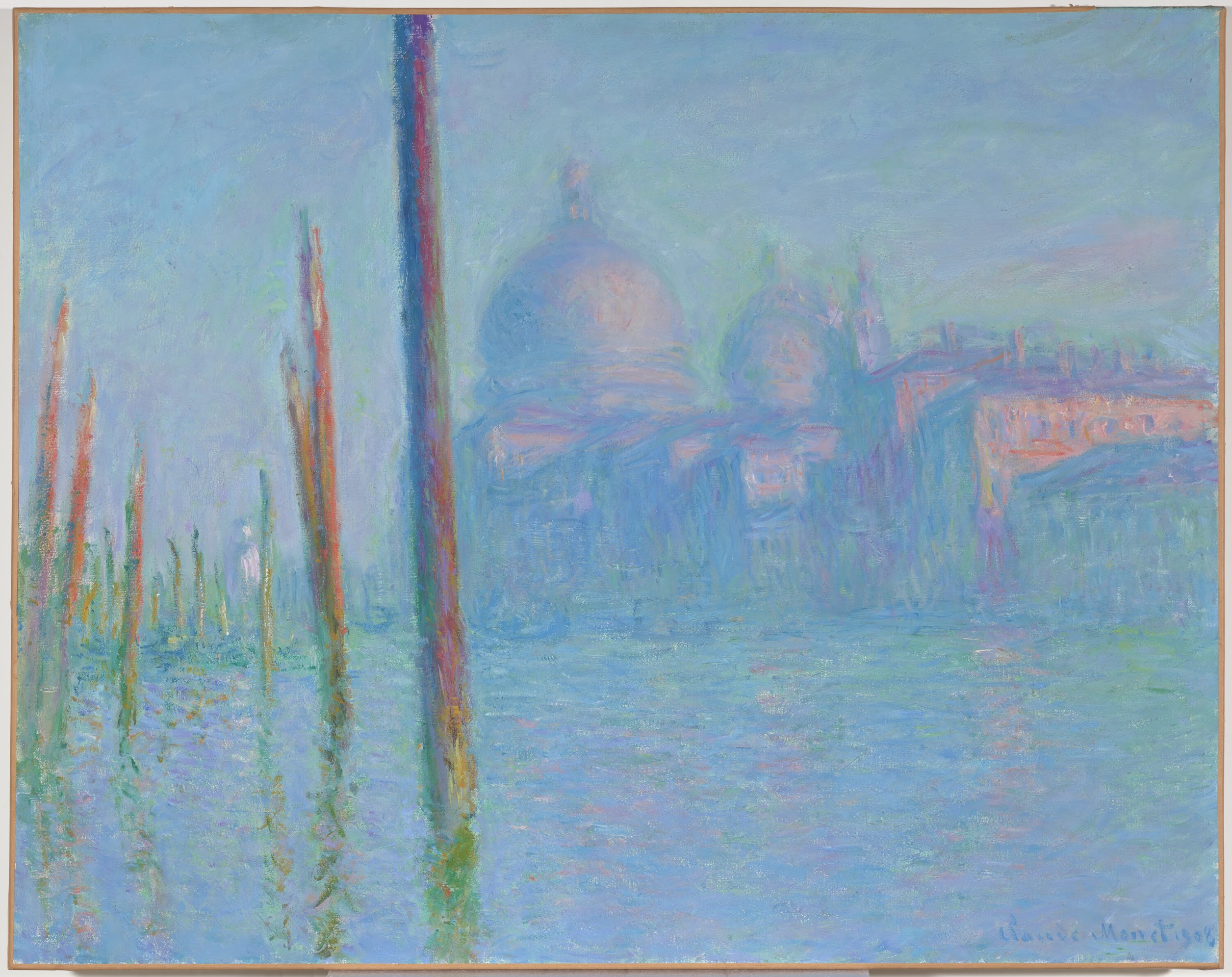
“Monet and Venice,” at the Brooklyn Museum (opening October 11, 2025): Loath to leave his beloved water lilies in Giverny, Claude Monet only visited Venice in 1908, aged sixty-eight, at the behest of his wife. The ten-week stay resulted in thirty-seven luminous cityscapes that were first exhibited together in 1912. Reuniting more than half of these Venetian paintings, “Monet and Venice,” curated by Lisa Small of the Brooklyn Museum and Melissa Buron, the former head curator of the Fine Arts Museums of San Francisco, is New York’s largest show in the twenty-first century dedicated to the most celebrated Impressionist of them all. The exhibition will also feature masters who inspired Monet, such as Canaletto and J. M. W. Turner, alongside Venetian works by Monet’s contemporaries, including James McNeill Whistler and John Singer Sargent. This opportunity to see the mature Monet working in one of the great art cities in the world is not to be missed. —AG
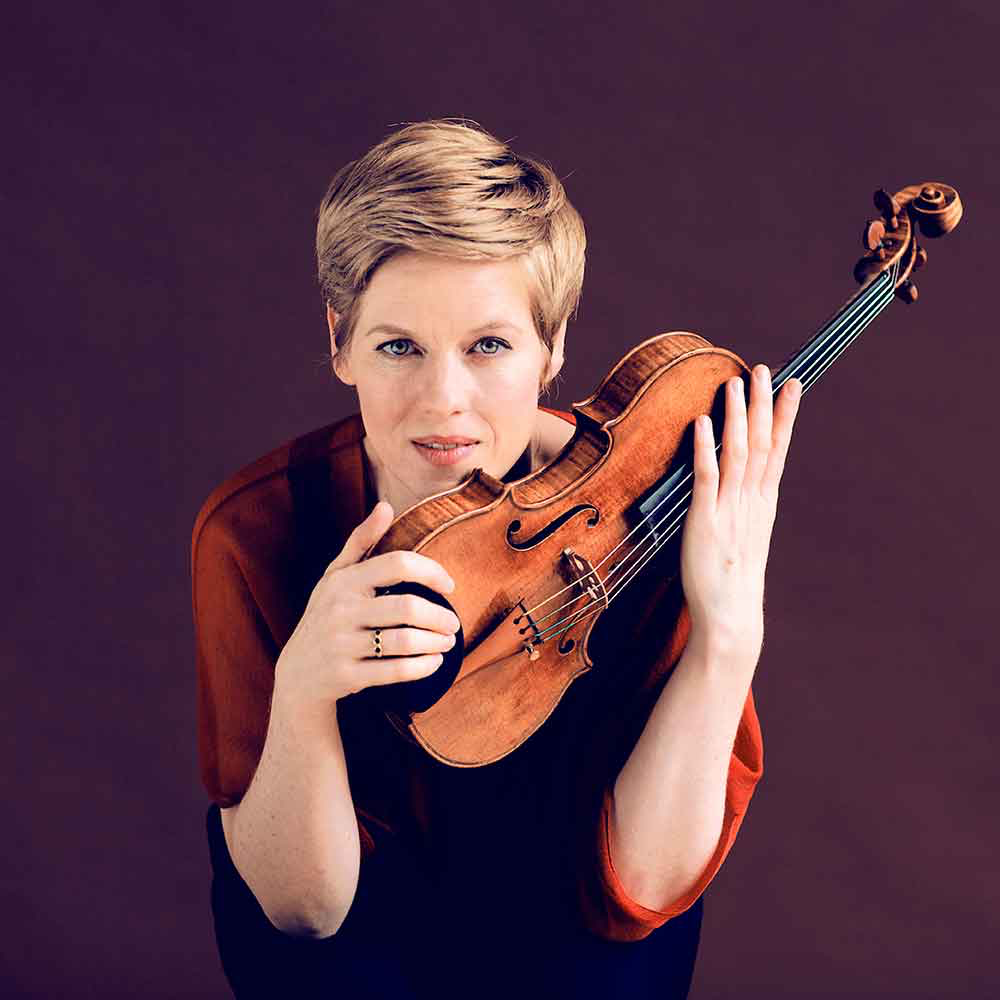
The violinist Isabelle Faust. Photo: Felix Broede.
Opening weekend of the Frick Collection’s 2025–26 concert series, in the Stephen A. Schwarzman Auditorium (October 10 & 12): The new Stephen A. Schwarzman Auditorium, beneath the Seventieth Street garden of the Frick Collection, replaces levels of subterranean storage with a glistening alabaster grotto. Designed by Selldorf Architects, the 218-seat hall stands in for John Russell Pope’s late lamented Music Room with a space that recalls its curvilinear bones. This week the Frick launches its first full concert season in the new venue with the first two of twenty-five performances scheduled from now through May 2026. On Friday, Isabelle Faust will inaugurate the season with works for solo violin by J. S. Bach and Nicola Matteis. On Sunday, the mezzo-soprano Anne Sofie von Otter will join the pianist Kristian Bezuidenhout for a Schubertiade of Schubert’s late song cycle Schwanengesang. Concert tickets include access to the collection in the hours before each performance, but last-minute music lovers should take note that the season is already sold out, so angle to be some perspicacious ticket holder’s plus-one. —JP
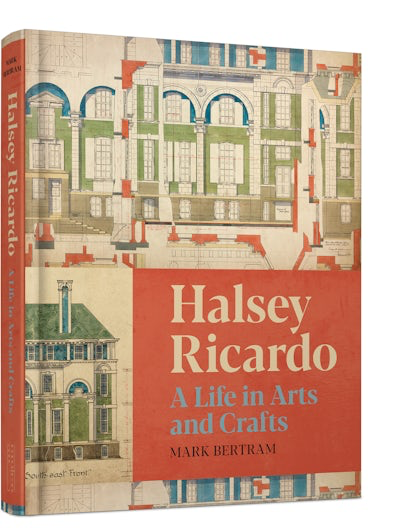
Halsey Ricardo: A Life in Arts and Crafts, by Mark Bertram (Lund Humphries): In a letter to his uncle while undertaking an architectural tour on the Continent, Halsey Ricardo (1854–1928) wrote that “I am either an architect or nothing and maybe both.” He was indeed an architect, and rather a talented one, though now unjustly neglected. The architect and retired civil servant Mark Bertram remedies this neglect with Halsey Ricardo: A Life in Arts and Crafts, crisply written and abundantly illustrated to reveal Ricardo’s talent for both surface decoration and massing. Bertram skillfully draws out the life and work of his great-grandfather in this handsome new production. —BR
Dispatch:
“Capital notes,” by Paul du Quenoy. On the season-opening gala concert of the National Symphony Orchestra.
Podcast:
“Music for a While #106: Souvenirs.” Jay Nordlinger, music critic of The New Criterion talks music—but, more important, plays music.
From the Archives:
“Losing Virgil,” by John Herington (November 1996). On Virgil in English, edited by K. W. Gransden.