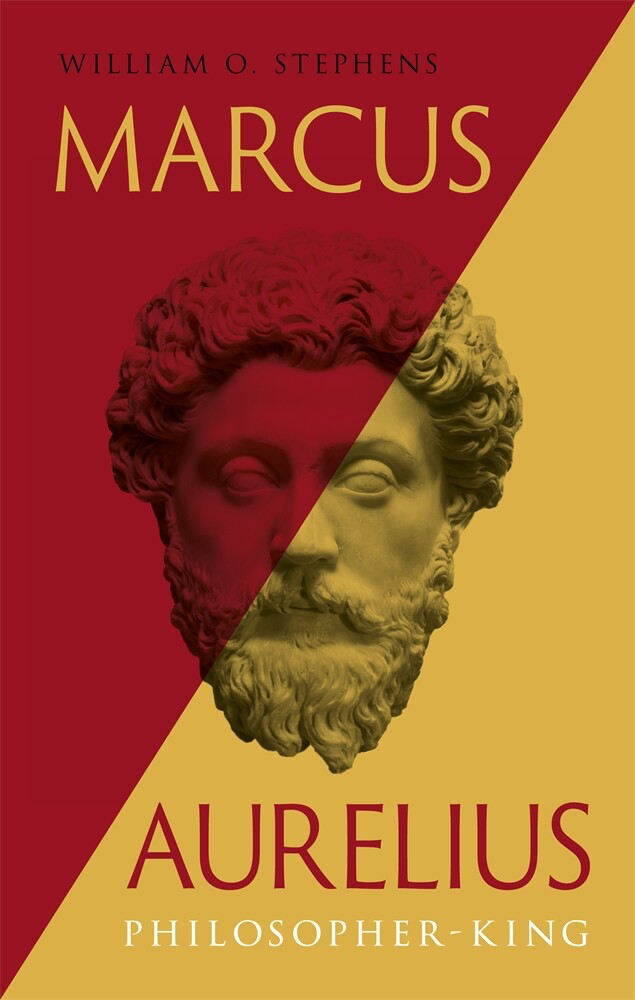
Marcus Aurelius: Philosopher-King, by William O. Stephens (Reaktion Books): “A king’s role is to be good and be maligned.” So wrote Marcus Aurelius, who, despite being the paradigmatic good emperor, was rarely maligned, perhaps because he was almost too good to be true. One of the few rulers in history who can fairly be described as a philosopher-king, Marcus was the last of the “five good emperors” and ruled Rome under her imperial apogee from A.D. 161 to 180. William O. Stephens, an expert on Stoic philosophy, has written a useful primer for anyone interested in Marcus’s thought and the tumultuous events that defined his reign, which included the first pandemic (the Antonine Plague), barbarian invasions, and internal instability. Stephens is particularly insightful in his discussion of the one shadow hanging over the Antonine golden age: Christian persecution, which he contextualizes within the broader clash between Roman and Christian moralities. —AG

Saving Can-Do: How to Revive the Spirit of America, by Philip K. Howard (Rodin Books): “Let people take responsibility again, and judge them by how they do,” says Philip K. Howard in his latest book about sensible solutions to seemingly intractable problems. With a citizenry infantilized by overbearing governments (federal, state, and local), such a goal may seem far out of reach, but Howard offers practical suggestions that we can only hope our overlords stop to consider. —BR
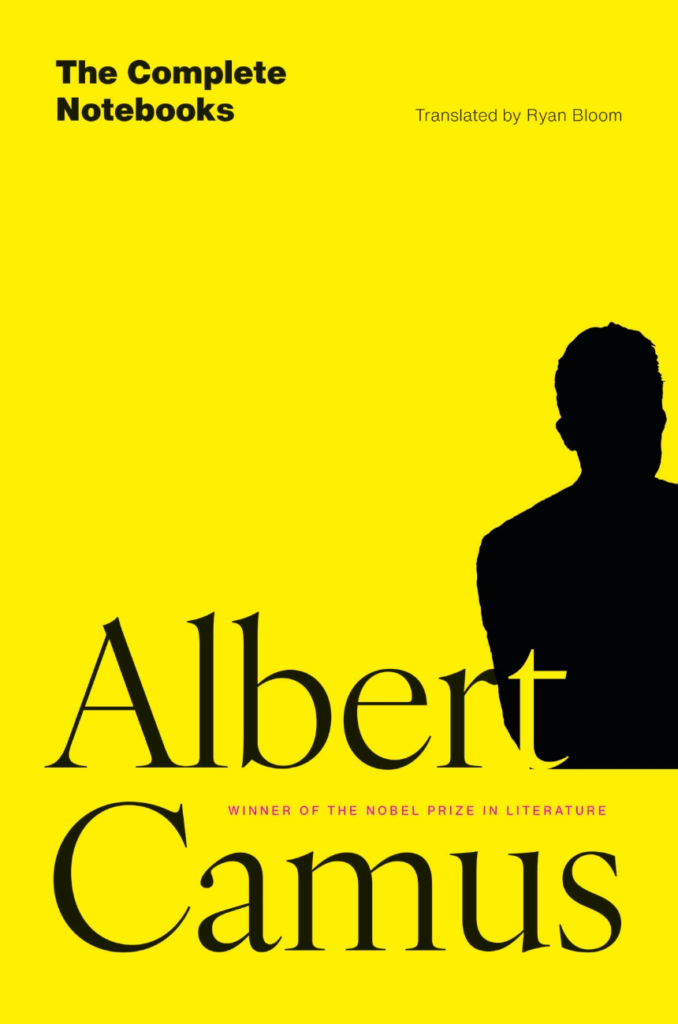
The Complete Notebooks, by Albert Camus, translated by Ryan Bloom (University of Chicago Press): “We only think in images,” wrote Albert Camus in his personal notebook in January 1936; “If you want to be a philosopher, write novels.” And if you want to see what occupies a philosophical novelist in his off-hours, we now have The Complete Notebooks of Camus, translated by Ryan Bloom, presented in a single-volume format for the first time in English. The translation itself is sharp yet sensitive, and the perceptive footnotes will be appreciated even by readers fluent in French. —RE
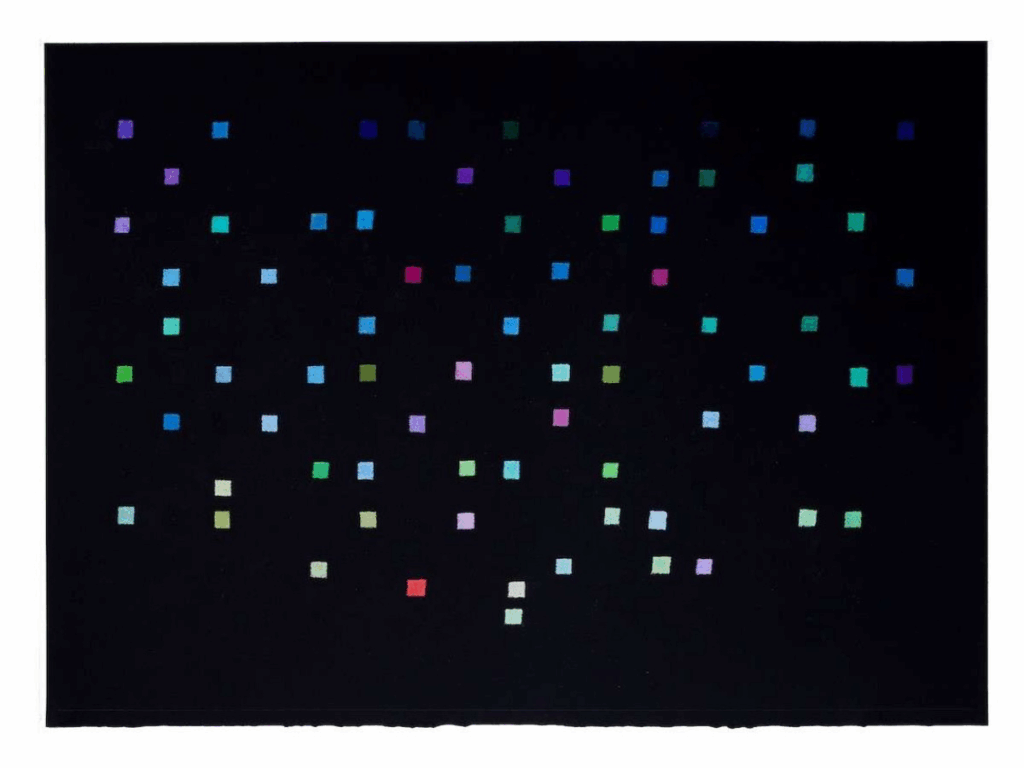
“Joseph Marioni: Artist’s Choice,” at the New York Studio School (through January 5, 2026): The abstractions of Joseph Marioni (1943–2024) appear to glow from some internal illumination. The American painter, who made a half-century study of color and light, is now the subject of an exhibition at the New York Studio School curated by the New Criterion critic Karen Wilkin. “Joseph Marioni: Artist’s Choice” presents a retrospective of the painter’s works on paper—primarily in oil pastel. The artist’s blinking, flickering compositions, all finely wrought on a range of paper, project a powerfully warming glow, what the artist called a “liquid light.” —JP

The violinists Maxim Vengerov & Vilde Frang, the violist James Ehnes, the cellist Daniel Müller-Schott, the pianist Yefim Bronfman & the clarinetist Anthony McGill.
“Maxim Vengerov and Friends,” at Carnegie Hall (December 16): Brahms may have famously remained a bachelor, but late in life he did form one unexpected attachment—to the music of the clarinet. Fifty-seven years old and creatively exhausted, Brahms by chance heard the clarinetist Richard Mühlfeld play; soon, four of his last and greatest chamber compositions, all clarinet pieces, flowed from his pen, of which the Clarinet Quintet, Op. 115 (1891), is the pinnacle. The violinist Maxim Vengerov has curated a very special Brahms evening this Tuesday at Carnegie Hall, recruiting the New York Phil’s Anthony McGill to play Mühlfeld’s part in the quintet, along with Vilde Frang on violin, James Ehnes on viola, and Daniel Müller-Schott on cello. The great pianist Yefim Bronfman will also join for Brahms’s youthful Piano Quintet, Op. 34. —IS
Dispatch:
“Heavenly dog,” by Anatoly Grablevsky. On Diogenes: The Rebellious Life and Revolutionary Philosophy of the Original Cynic, by Inger Kuin.
From the Archives:
“The art & life of Dostoevsky,” by Gary Saul Morson (June 2002). On Dostoevsky: The Mantle of the Prophet, 1871–1881, by Joseph Frank.