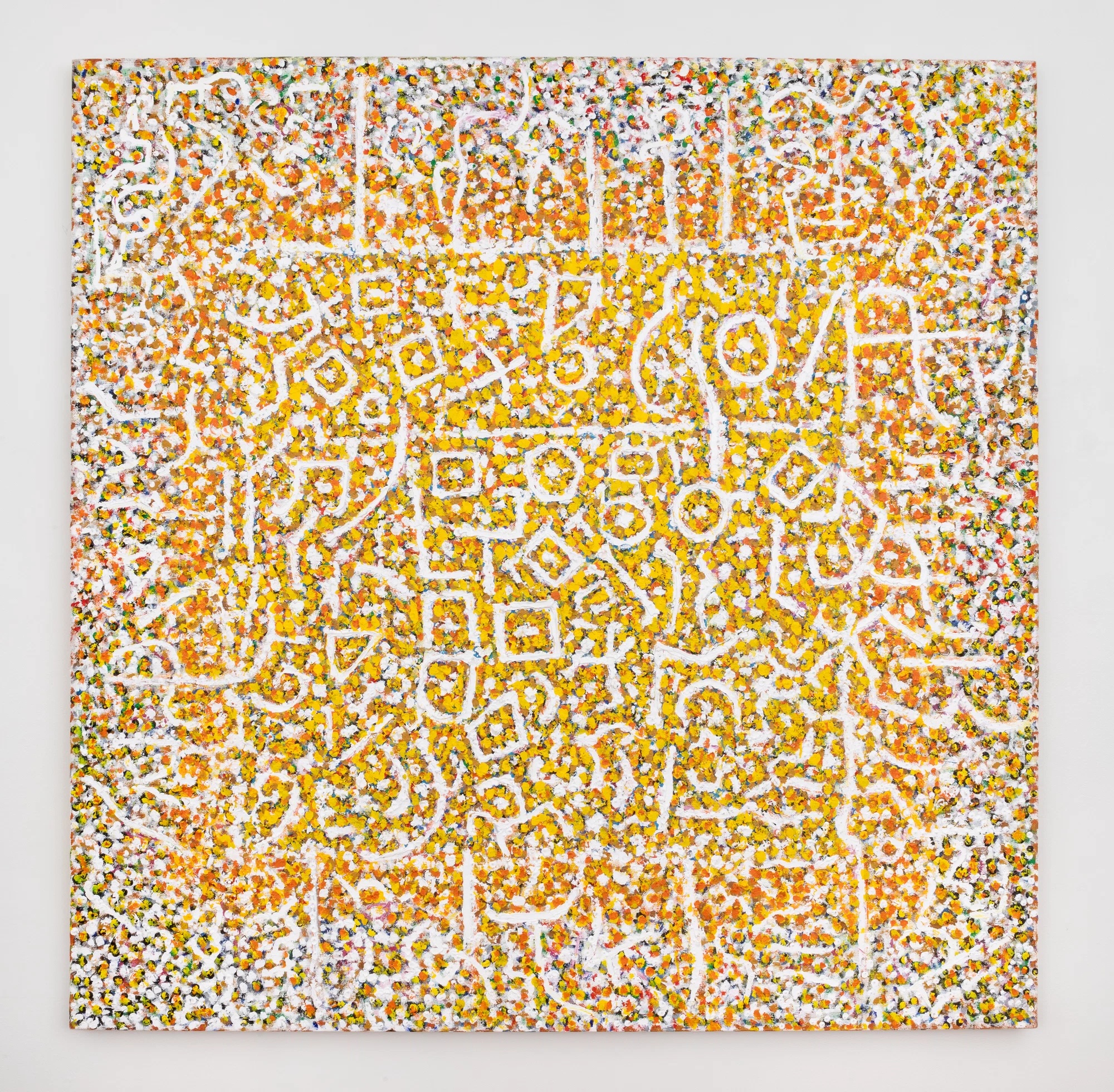
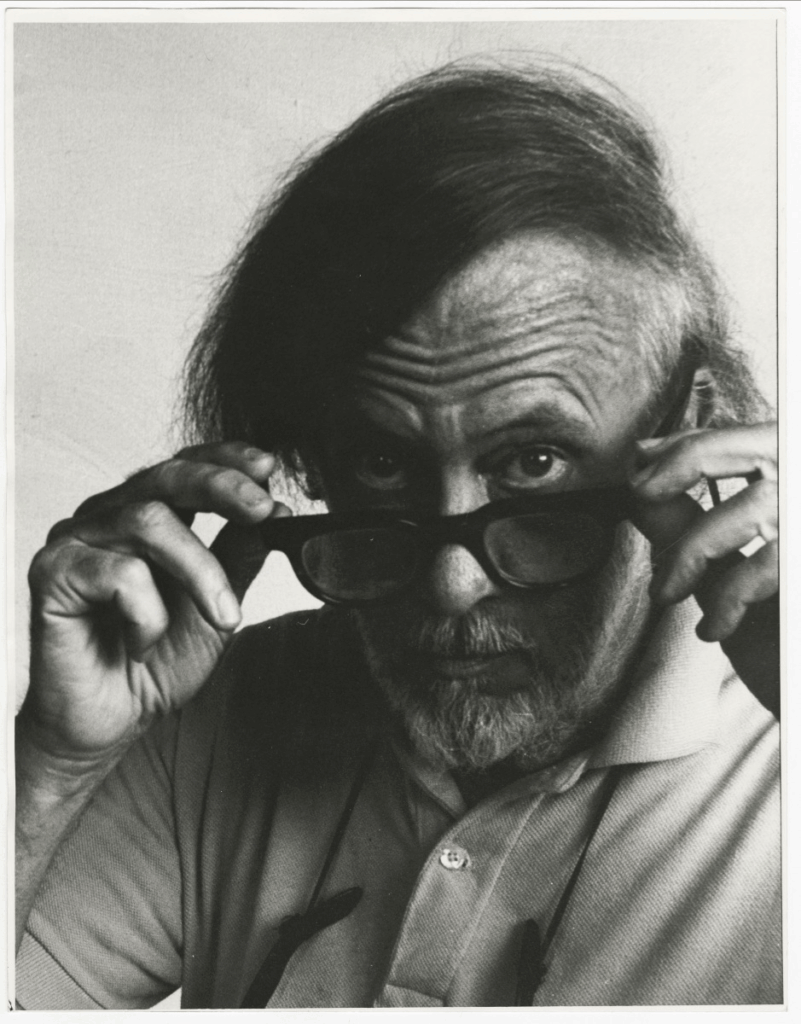
“Richard Pousette-Dart: Geometry of Summer,” at Pace, New York (through February 28): Hilton Kramer called Richard Pousette-Dart the “odd man out of the New York School.” “While not in the least representational in any ordinary sense,” Kramer continued, the abstractionist’s mystical forms seem “nonetheless to apostrophize the heavens as a sacred subject.” There is much to look up to in “Richard Pousette-Dart: Geometry of Summer,” the survey now at Pace of the artist’s paintings from 1974 until his death in 1992. Like metal filings arranged by a magnetic field, an accretion of tiny marks collects to reveal the artist’s own sacred symbols. At times these forms appear hidden beneath screens of color. Elsewhere, especially in this later work, shapes come to the surface with mesmerizing effect. As I wrote of this artist at the time of his Guggenheim survey in 2007, here is form at the moment of recognition. —JP
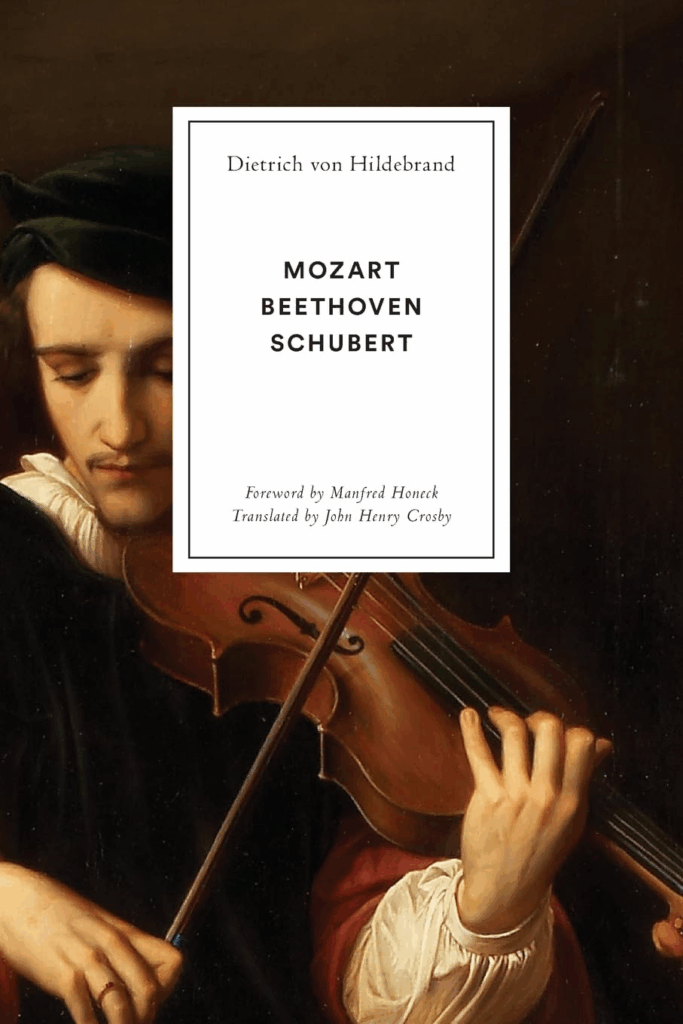
Mozart, Beethoven, and Schubert, by Dietrich von Hildebrand, translated by John Henry Crosby (Hildebrand Press): Comprising three essays by the theologian Dietrich von Hildebrand (1889–1977), Mozart, Beethoven, and Schubert arrives as a refreshing tonic. With consummate grace, von Hildebrand illuminates distinctions where we previously saw none and reconciles antitheses we might have thought diametrically opposed. Thus, he helps us see Mozart’s affinity with the humor and sublime poetry of Shakespeare, or Beethoven’s with the “awesome power” of Michelangelo; he contrasts Mozart’s angelic sweetness with Schubert’s down-to-earth charm; and he dispels the occluding myth of Beethoven as the troubled “titan with the clenched fist,” instead arguing for his conscious classicism and religiousness. Supplementary writings on Wagner, Verdi, and more, plus a foreword by the conductor Manfred Honeck, round out this delightful little volume, suitable for recent initiates and lifelong listeners alike. —IS
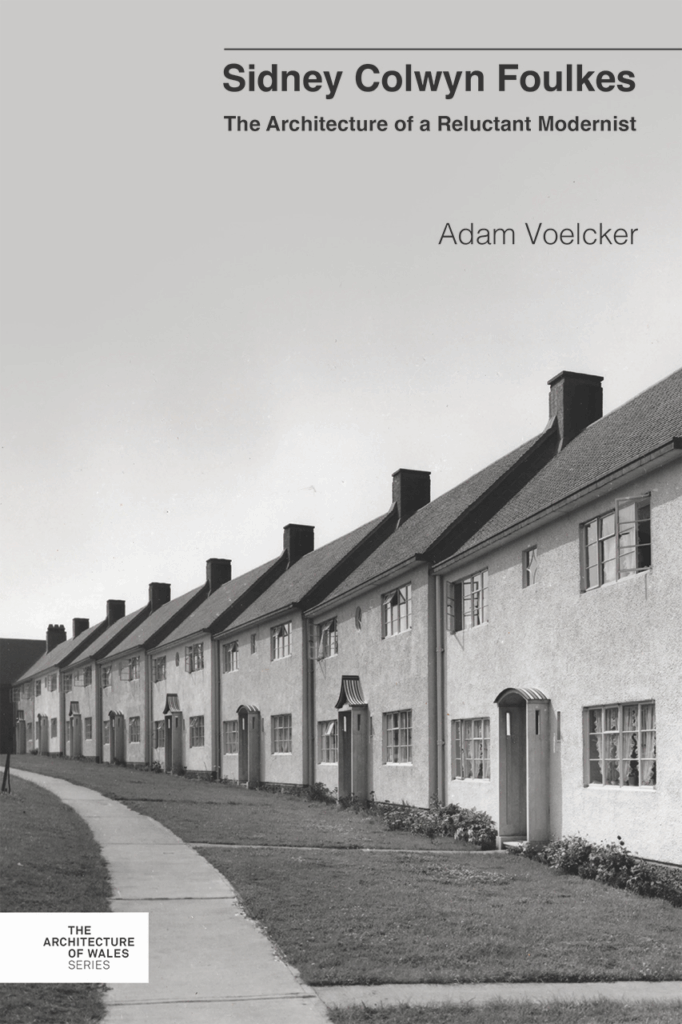
Sydney Colwyn Foulkes: The Architecture of a Reluctant Modernist, by Adam Voelcker (University of Wales Press): Clough Williams-Ellis is perhaps the only Welsh architect known to non-adepts, but a new monograph makes the case that Sydney Colwyn Foulkes (1884–1971) should join his better-known contemporary in the public consciousness. The prolific Foulkes benefited from having a father who ran a building firm, but he also benefited from a practical mind that housed a good deal of respect for historical precedent. If Foulkes’s buildings don’t stand out as remarkable, that is because they lack the self-conscious showiness of the International Style; Foulkes’s designs for housing developments contain modern comforts in simple, traditional shells. In early 1950s terraces built on Elwy Road at Llandrillo-yn-Rhos, roughcast façades in pastel colors featured front doors with “ornate timber porches with painted metal roofs alternately ogee and gently arched. Beneath them, little Alice-in-Wonderland and Edward Lear carved figures were fixed above the doors. And above the porches were small windows with decorated glazing.” As Adam Voelcker writes in this welcome study, Foulkes adhered to the “Vitruvian definition of good architecture” by making sure structural soundness was complemented by beauty. —BR
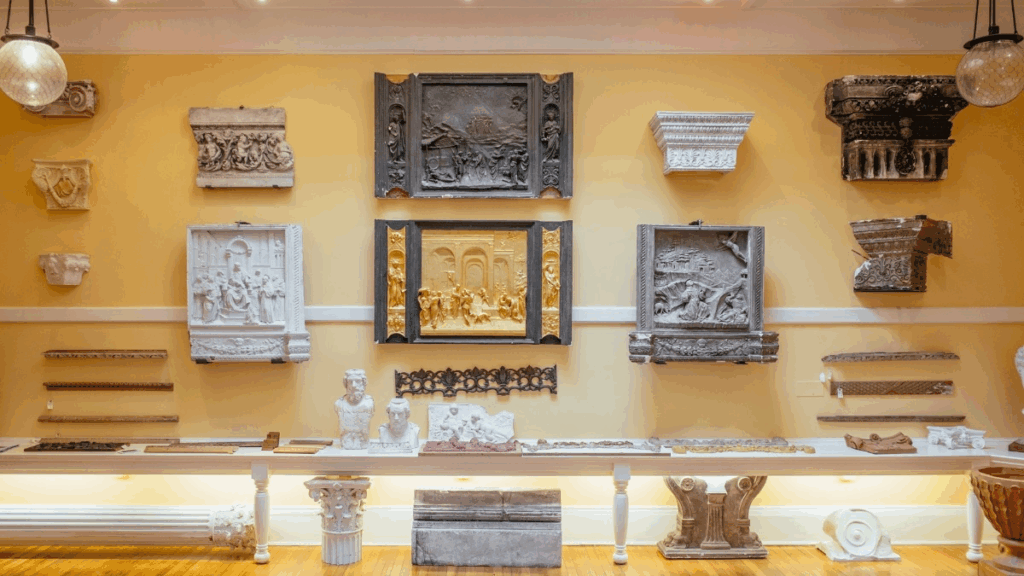
“The Forgotten Legacy of The Met’s Plaster Casts,” at the Cast Hall of the Institute of Classical Architecture & Art, New York (January 22): Have a look at any photograph of the Metropolitan Museum of Art’s galleries before the 1940s. One feature immediately jumps out: the galleries are filled to the brim with plaster casts of Greek, Roman, medieval, and Renaissance sculptures, architectural elements, and models. These copies, acquired by the hundreds in the 1880s and 1890s for the museum’s collection and then progressively given away in the latter half of the twentieth century, once formed a key part of the Met’s educational mission. This week, a lecture at the Cast Hall of the Institute of Classical Architecture and Art, which now contains more than two hundred of the Met’s deaccessioned casts, will explore the pivotal role of these plaster models in the nineteenth-century conception of the museum. —AG
Dispatch:
“The angelic bear,” by Jay Nordlinger. On a concert of the New York Philharmonic, featuring Yefim Bronfman.
By the Editors:
“America’s Somalis and the ‘learing’ explosion”
Roger Kimball, The Spectator World
From the Archives:
“The talk of the Salon,” by Karen Wilkin (January 1996). On Diderot on Art, translated by John Goodman.