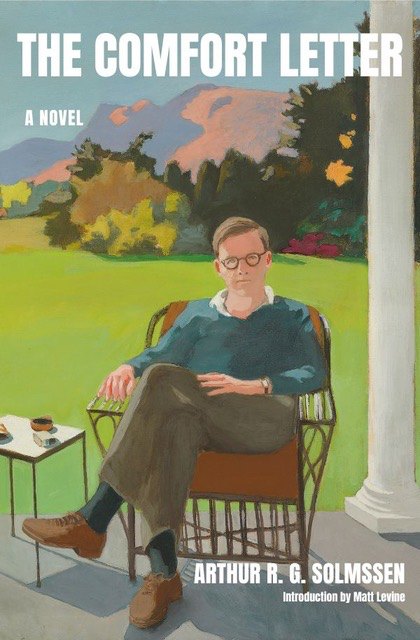
The Comfort Letter, by Arthur R. G. Solmssen (Tivoli Books): Ordway Smith, the reluctant, reticent hero of The Comfort Letter by Arthur R. G. Solmssen, written in 1975 but recently reissued by Tivoli Books, understands that, for him at least, lawyering is less about the law and more about interpersonal relationships. Those relationships, the source of his worth to the fictional Philadelphia firm of Conyers & Dean, are also the source of much anguish, as professional duties conflict with Ordway’s traditional Northeastern values—rapidly going out of fashion in the era of Vietnam. Solmssen’s eye for detail and keen ear for dialogue turn what might have been a dreary legal procedural into a wry examination of a society in flux. Solmssen’s Alexander’s Feast, likewise set in the Conyers & Dean orbit and published a few years before The Comfort Letter, is also being reissued this week by Tivoli as the firm works to bring this unjustly forgotten author back into the public consciousness. —BR
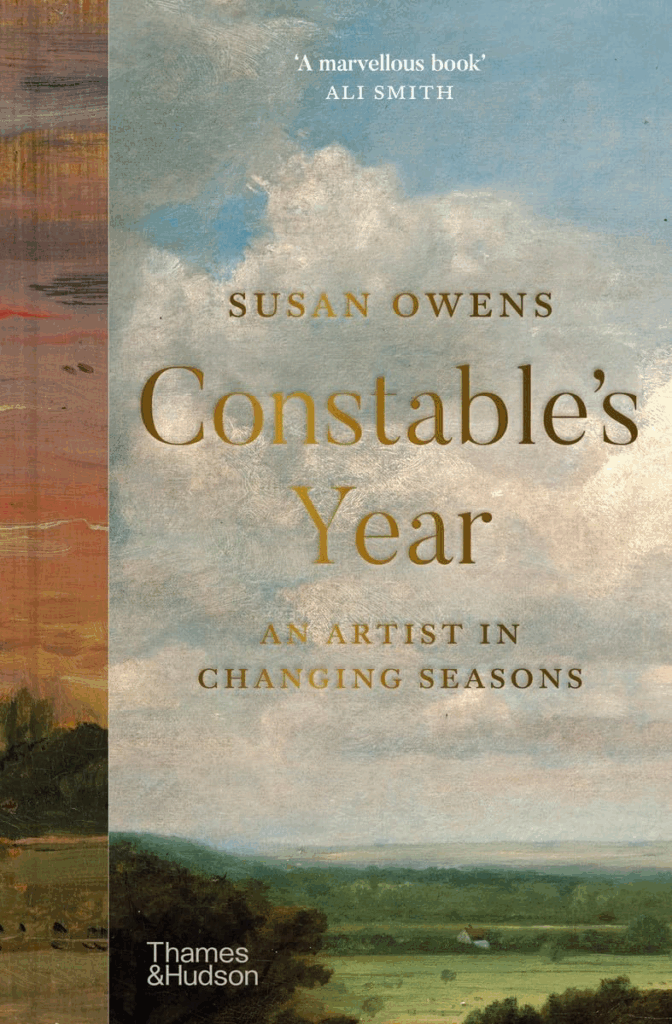
Constable’s Year: An Artist in Changing Seasons, by Susan Owens (Thames & Hudson): John Constable once confessed that, upon starting a new work, the first thing he did was try “to forget that I have ever seen a picture.” In a time when landscape painting was still being judged by the standards of Claude Lorrain’s idealized, classical settings bathed in golden light, Constable’s was a radically novel, Romantic attitude, which explains why his pictures took so long to be appreciated. Now, to mark the semiquincentennial anniversary of the artist’s birth, Susan Owens has written Constable’s Year, a delightful romp through the life and work of the painter. Owens frames her study through the four seasons, showing how Constable’s rural agricultural background informed his work, which was governed by changing seasonal rhythms akin to those of a farmer. By the end of the book, Constable emerges as an idiosyncratic visionary and the true father of the modern landscape. —AG
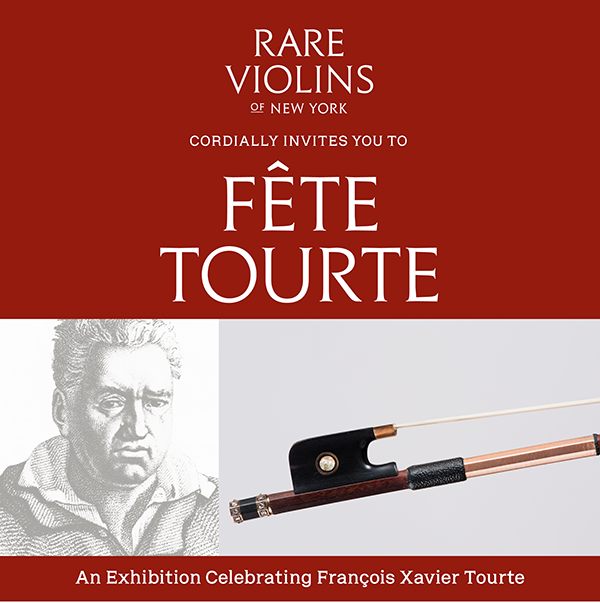
“Fête Tourte,” at Rare Violins of New York, Carnegie Hall Tower (through March 6): All know the fame of the luthiers of Cremona, chief among them Antonio Stradivari, whose six-hundred-odd surviving instruments command prices in the lower millions and up. But ask a discerning violinist what his dream purchase is, and he might point to a bow made by François Xavier Tourte (1747–1835), the so-called “Stradivari of the bow.” Indeed, it was Tourte’s consultant, the great violinist Giovanni Battista Viotti, who aphorized Le violon, c’est l’archet (the violin is the bow). In its thirty-eighth-floor space in Carnegie Hall Tower, the dealer Rare Violins of New York has curated an exhibition of almost forty Tourte bows, making an argument for how his innovations in design and manufacturing enabled the flourishing of the violin repertoire from the nineteenth century to the present day. —IS
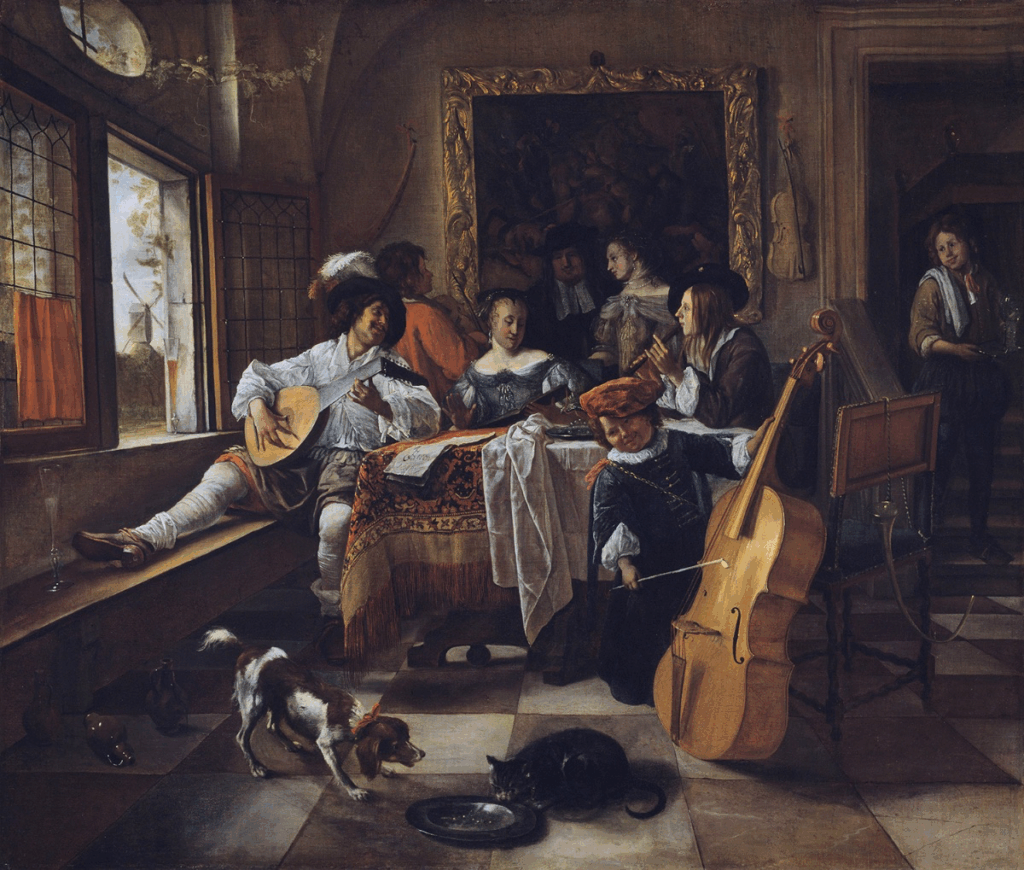
Sea Chanteys and Maritime Music at the South Street Seaport Museum, New York (March 1): What shall we do with a drunken sailor, early in the morning? You could chuck him in the long boat ’til he’s sober, or take him to the next “Chantey Sing” at the South Street Seaport Museum. Carousing at the Seaport’s Schermerhorn Row gallery at 12 Fulton Street this Sunday at 2 p.m., the monthly sing-along invites participants to join the chorus or lead their own halyard chantey, forecastle song, maritime ballad, or contemporary number in the maritime tradition (“Son of a Son of a Sailor,” anyone?). While the sing-along comes with a Zoom option, only the in-person chantey offers the opportunity to tour the Seaport’s 1885 tall ship Wavertree, the 1908 lightship Ambrose, and its three-floor exhibition “Maritime City,” on view in the recently renovated A. A. Thomson & Co. building at 213 Water Street.—JP
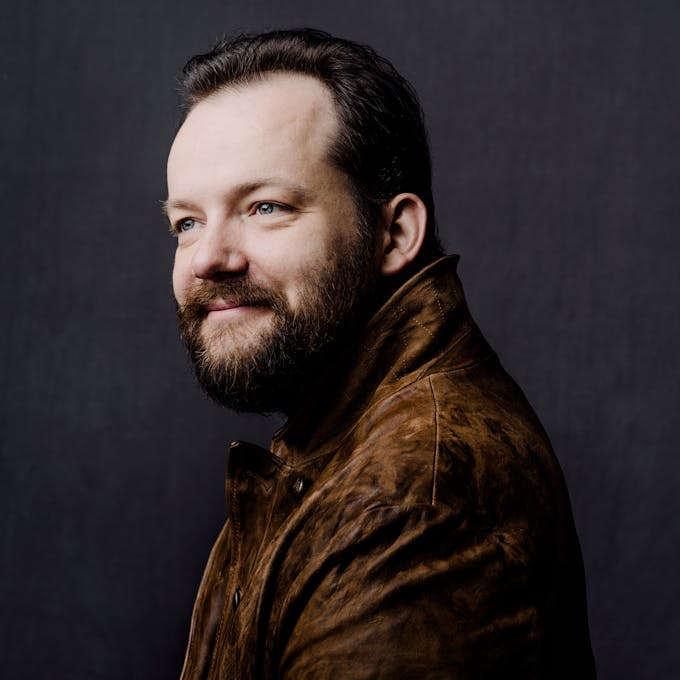
Vienna Philharmonic at Carnegie Hall (March 1): How rare are those antediluvian souls who first experienced Richard Strauss’s Also sprach Zarathustra before the release of 2001: A Space Odyssey. Stanley Kubrick’s monumental 1968 film took flight on the scores of not one but two Strausses and never let them go. This Sunday, the Vienna Philharmonic—the orchestra that performed Zarathustra on the film soundtrack under the baton of Herbert von Karajan—will take the Carnegie Hall stage for a return ad astra. Andris Nelsons will conduct Strauss’s (Nietzschean, Kubrickian) tone poem paired with Jean Sibelius’s pastoral, patriotic Second Symphony for this matinee conclusion to Vienna’s three-day Carnegie run. —JP
TNC Events:
Book Party with the architect Douglas Wright
Thursday, February 26
If you have not already, become a member of the Friends and Young Friends of The New Criterion here.
Dispatch:
“From Spain & elsewhere,” by Jay Nordlinger. On a recital by the pianist Bruce Liu.
From the Archives:
“‘Strange seriousness’: discovering Daumier,” by Roger Kimball (April 2000). On “Daumier, 1808–1879” at the Phillips Collection, Washington, D.C.