To maintain grid reliability and advance the energy transition, utilities must adopt new tools to manage the uncertainty from both AI and non-AI-driven electricity demand.
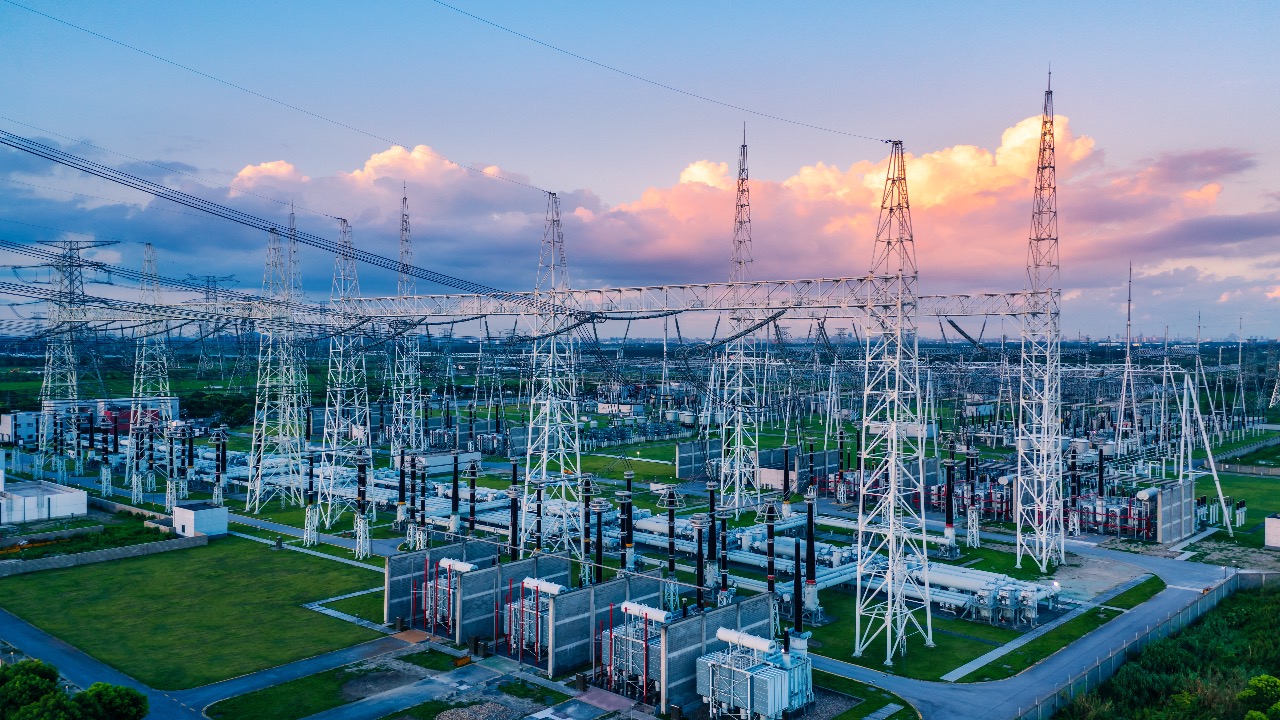
The rising electricity demands of artificial intelligence (AI) have dominated recent headlines. Policymakers and utilities alike are scrambling to understand how the rapid expansion of AI data centers will reshape the power grid. But there’s a quieter story unfolding in parallel: the steady, relentless rise of non-AI electricity demand across the continental United States. And if we don’t pay attention, this “background” growth could prove just as disruptive. Policymakers at the federal and state levels need to encourage utilities to modify their decision tools so they can make choices that are robust to these uncertainties.
Non-AI Energy Demand Is Growing
Analysts point out that nearly three-quarters of anticipated energy demand will come from non-AI sources. Non-AI energy demand growth is driven not by computing, but by electrification of large parts of the economy: millions of electric vehicles (EVs) plugging in, households swapping gas furnaces for heat pumps, and industries modernizing and reshoring their operations. In short, the energy transition is happening, and it is happening everywhere.
Forecasting electricity demand has never been a straightforward task, but today’s landscape is riddled with deep uncertainties. First, while the electrification of the economy is happening, it is unclear whether the pace will remain unchanged, increase, or slow down. For example, the adoption of EVs and heat pumps depends on consumer behavior, incentives, and supply chains. Even a minor change in any of these could lead to significant variations in the pace of electrification. Second, climate volatility could have a large impact on load forecasting. Extreme weather events—such as heat waves, polar vortices, and hurricanes—can drive sudden spikes in demand and strain regional grids. Historical averages may no longer be reliable. Third, there are significant regional differences in power demand growth. Most of the projected growth is concentrated in the Midcontinent Independent System Operator (MISO), the Electric Reliability Council of Texas (ERCOT), and regions without an Independent System Operator (ISO). These areas face unique challenges in transmission buildout, regulatory frameworks, and resilience planning. All of this comes on top of the significant uncertainty around AI energy demand, as reflected in the wide range of potential AI energy consumption provided by experts.
Traditional forecasting models, which rely on econometric methods, weather normalization techniques, and sectoral averages, are ill-suited to capture these uncertainties. They risk either underestimating demand—which could lead to blackouts—or overestimating it, saddling consumers with the costs of overbuilt infrastructure. The lesson is clear: we cannot treat non-AI demand as a stable baseline while focusing all our attention on AI-related power demand. Both forces are reshaping the grid, and both require new approaches to planning.
Managing Uncertainty
Fortunately, alternatives to traditional approaches exist: Robust decision-making (RDM) and decision-making under deep uncertainty (DMDU) are closely related approaches designed to help policymakers and organizations navigate complex, unpredictable environments. RDM emphasizes strategies that perform reasonably well across a wide range of plausible futures rather than optimizing for a single forecast, thereby reducing vulnerability to unforeseen changes. DMDU extends this idea by acknowledging situations where probabilities, models, or even the structure of the problem are unknown or contested, making traditional risk-based analysis insufficient. Instead of seeking precise predictions, DMDU frameworks in the context of load forecasting will lead utilities to integrated resource planning that is adaptive, flexible, and resilient, and that can be adjusted as new information emerges. Together, these approaches shift the focus from trying to “get the future right” to preparing for multiple possible futures on energy demand, ensuring that decisions remain effective even when uncertainty is profound. For instance, DMDU approaches may suggest that investments in Grid Enhancing Technologies (GET), which increase the capacity of the current grid, may be a more robust option than investments in large transmission projects. As part of this effort, scenario planning, stress testing, and adaptive investment strategies must become the norm.
Poor Forecasting Jeopardizes Reliability and the Energy Transition
The stakes are high. Ignoring the deep uncertainty affecting future energy demand could lead to investment choices that are non-robust and therefore at risk of either overbuilding expensive infrastructure or poor reliability due to insufficient or untargeted supply. Such outcomes could affect the US’s aim for AI dominance, slow the energy transition, and erode public trust in its affordability and reliability. Conversely, considering the deep uncertainties embedded in energy demand is a key prerequisite for building a robust grid that powers both the AI revolution and the decarbonization of everyday life.
About the Authors: Ismael Arciniegas Rueda, Henri van Soest, and David Gill
Ismael Arciniegas Rueda is a senior economist at the nonprofit, nonpartisan RAND Corporation and a professor of public policy at the Pardee RAND Graduate School.
David Gill is a technical analyst at RAND.
Henri van Soest is a senior analyst at RAND Europe and a professor of policy analysis at the RAND School of Public Policy.
Image: ABCDstock/shutterstock