
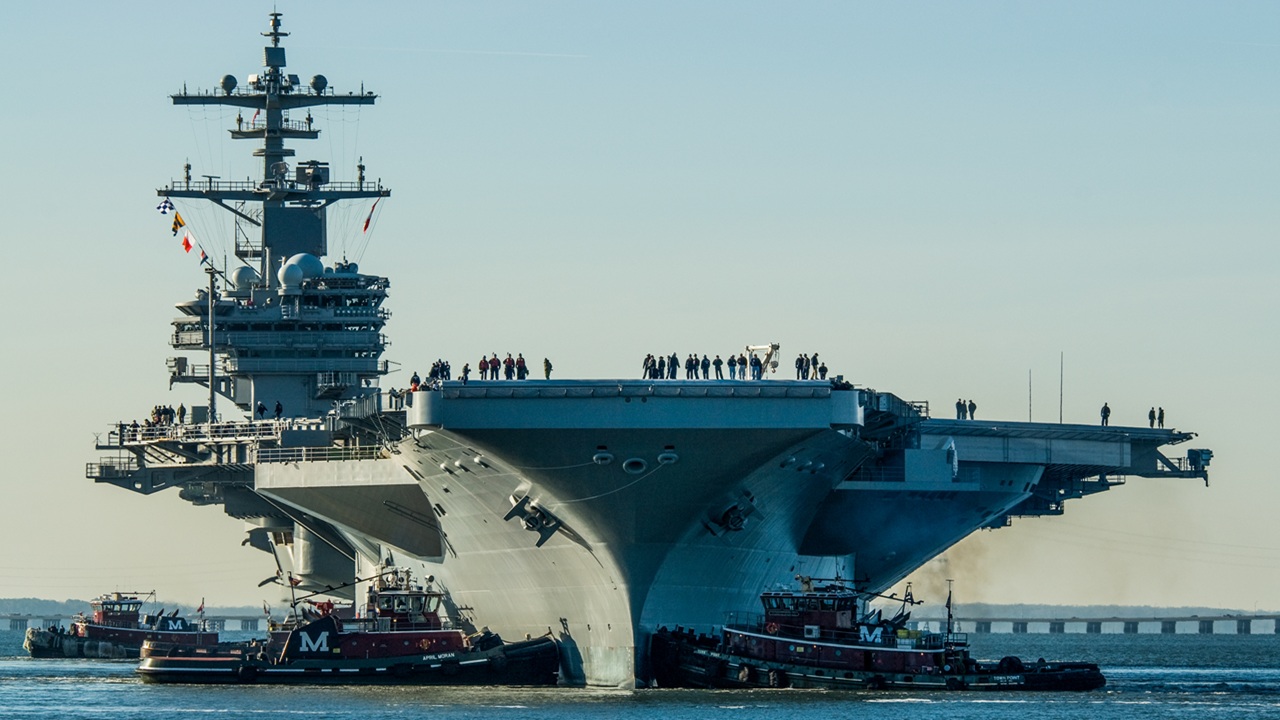
Although “aircraft carriers” come in many sizes and shapes, the largest and most advanced supercarriers all fit a pattern—carved out by the US Navy for others to emulate.
Modern aircraft carriers are among the largest ships ever built. Costing billions of dollars to build, housing dozens of aircraft, and with crews often in the thousands, aircraft carriers are essentially miniature island cities—enormous warships that powerful navies use to project power well beyond their shores.
Aircraft carriers are diverse in size and shape—with displacements ranging from around 10,000 tons, in the case of Thailand’s small Chakri Naruebet, to more than 100,000 tons in the case of the US Navy’s newest supercarriers. They can be powered either by conventional means or by nuclear reactors. Their design also varies based on their air wing; smaller and more affordable carriers typically utilize a “ski jump” ramp to aid aircraft in takeoff, while the most advanced carriers use steam- or electromagnet-powered launch catapults.
The vast resources required to operate an aircraft carrier necessarily limits their user base. Though many mid-sized countries can afford smaller carriers, only a handful of powerful nations can operate the far larger supercarriers found below. Indeed, one nation in particular dominates in carrier construction and operation—the United States, which operates 11 gargantuan supercarriers, far outstripping second-place contender China.
Note that carrier size is typically measured by displacement, or the total volume of water pushed out of the way when a ship enters the ocean. This measurement is inherently flexible, as it also depends on how heavily the ship is equipped and provisioned.
10. Charles de Gaulle (R91)
- French Navy
- In Service: 2001–present
- Number Built: 1
- Displacement: ~42,500 tons
- Air Wing: 35–40
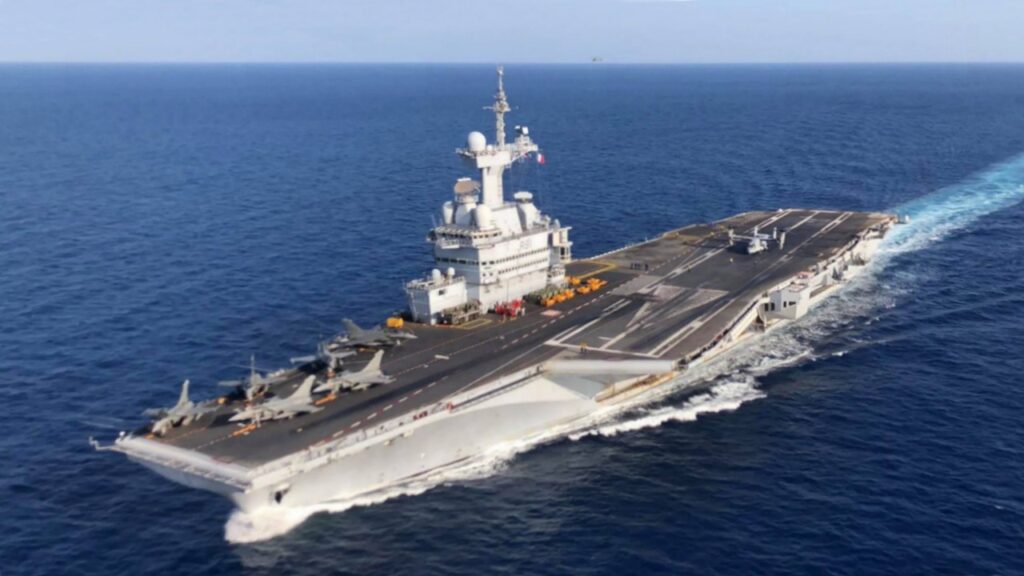
France’s Charles de Gaulle is the only nuclear-powered aircraft carrier ever built outside the United States, although one is currently under construction in China. Commissioned in 2001, it is equipped with a steam catapult, allowing it to launch large conventional fighters like the Dassault Rafale.
While smaller than US super carriers, the de Gaulle punches above its weight strategically, giving France indecent power-projection capability. The ship struggled with propulsion issues early in its career, but subsequent upgrades have stabilized operations. The de Gaulle has been used extensively for combat in the Middle East, aiding French ground troops in places like Afghanistan, Iraq, and Syria.
The French Navy recently announced its intention to build a replacement for the de Gaulle, meaning the venerable carrier is likely entering its twilight years.
9. Liaoning (Type 001)
- People’s Liberation Army Navy (China)
- In Service: 2012–present
- Number Built: 1
- Displacement: 60,000-65,000 tons
- Air Wing: 36
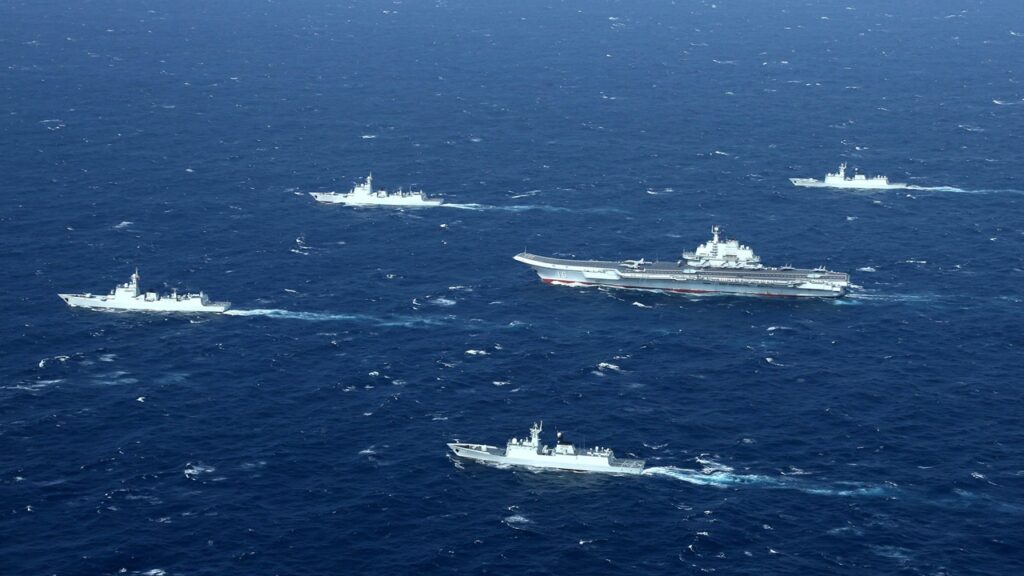
China’s Liaoning began its life in the 1980s as the unfinished Soviet carrier Varyag. After the Soviet Union’s dissolution in 1991, the carrier fell into the hands of newly-independent Ukraine, which faced severe budgetary issues and had little interest in finishing it. In 1998, the People’s Liberation Army Navy surreptitiously bought the hulk, using a front company in Macau to purchase the ship on the pretense of transforming it into a floating hotel and casino. Instead, after the partially finished carrier arrived in China, the PLA finished its construction, commissioning it as the Liaoning in 2012.
Using a ski jump configuration, the ship operates J-15 fighters and primarily serves as a training and doctrine-development platform. The ship’s value lies mostly in institutional learning, and less in combat power. While limited relative to US carriers, Liaoning marked a watershed in Chinese military development—the first example of its carrier aviation, laying a foundation for its expanded carrier fleet and hinting at China’s blue-water naval ambitions.
8. Midway Class
- US Navy
- In Service: 1945–1992
- Number Built: 3
- Displacement: 65,000 tons
- Air Wing: 130 (propeller aircraft); later decreased to ~60–70 (jet aircraft)
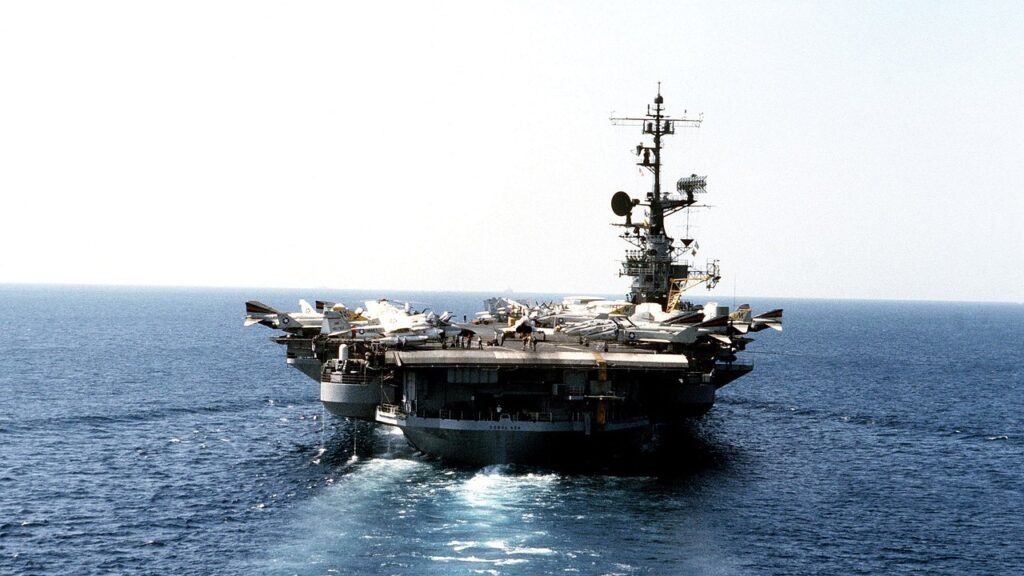
The Midway class was the largest carrier design of the World War II era. Although six of the carriers were planned, only three had been completed by the end of the war, and the remainder were canceled.
Originally designed for prop aircraft, the ships were subsequently modernized in the postwar era to operate early jet fighters—adding angled flight decks, steam catapults, and heavier structures. By the Cold War, the Midway’s displacement rivaled newer carriers. Serving for decades, the USS Midway namesake of the class remained active until 1992, seeing action from Vietnam through Operation Desert Storm, and serving as a bridge between World War II and the supercarriers of the present day.
7. Queen Elizabeth Class
- Royal Navy (United Kingdom)
- In Service: 2017–present
- Number Built: 2
- Displacement: 65,000 tons
- Air Wing: 40 (standard conditions); can surge to 72 during emergencies / wartime
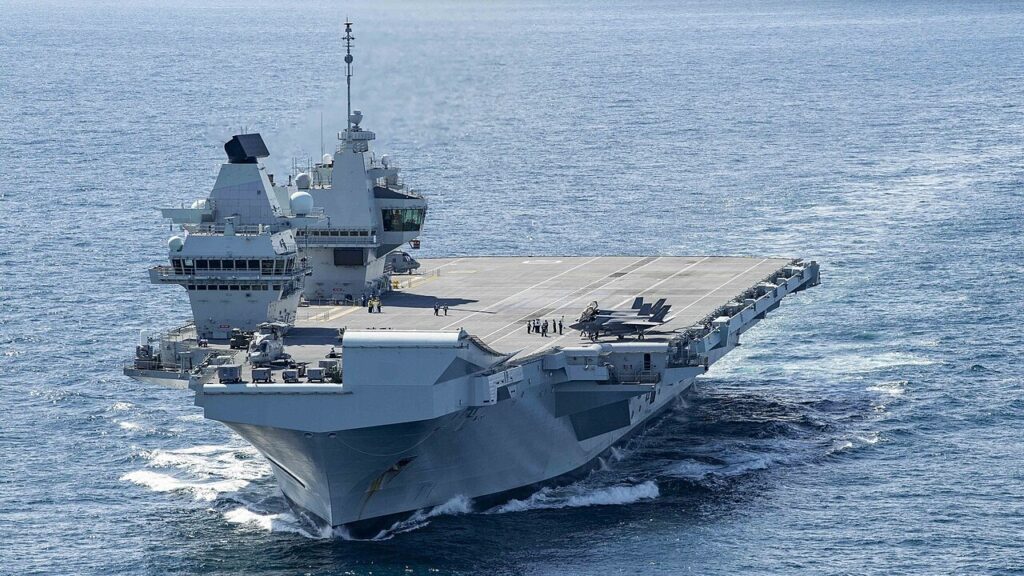
The Queen Elizabeth class—consisting of two carriers, the HMS Queen Elizabeth and the HMS Prince of Wales—are the largest warships ever built for the Royal Navy. Designed around short takeoff / vertical landing (STOVL) aviation, the ships operate the F-35B Lightning II and rely on a twin-island layout for improved command and flight operations. These carriers restore the UK’s ability to conduct large-scale naval air operations independently.
Despite lacking catapults, the ships’ size, automation, and modern design make them formidable—representing Britain’s return to global carrier operations.
6. Shandong (Type 002)
- People’s Liberation Army Navy
- In Service: 2019–present
- Number Built: 1
- Displacement: 66,000-70,000 tons
- Air Wing: 40–44
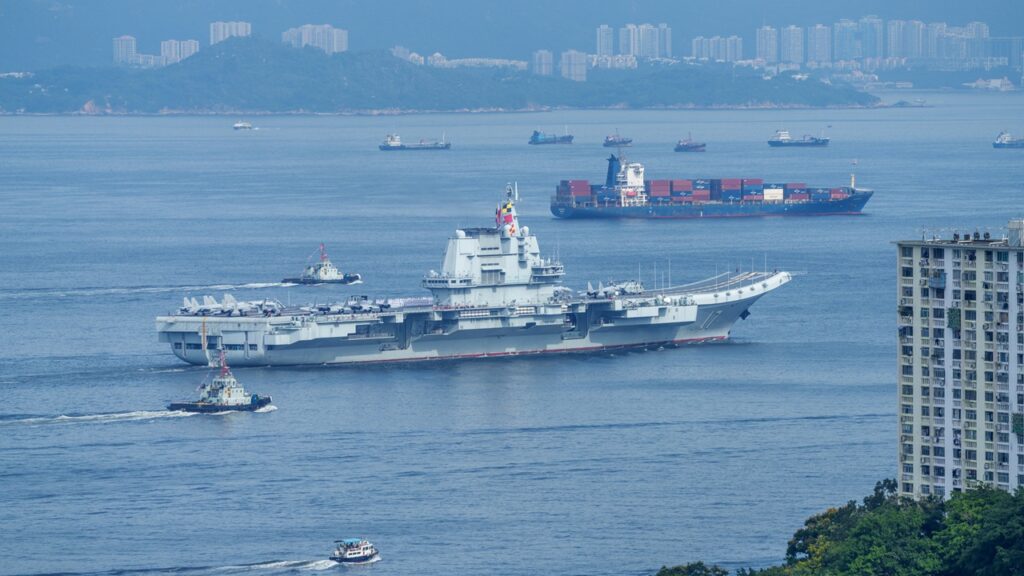
Shandong is China’s first domestically built aircraft carrier, an evolution of the Liaoning design. Larger and more refined than her predecessor, the Shandong retains the Liaoning’s ski jump but benefits from improved systems and construction quality. The ship is operationally assigned to China’s southern fleet, underscoring Beijing’s focus on the South China Sea.
While constrained by the limitations imposed by its ski jump configuration, Shandong reflects China’s growing industrial competence, a stepping stone towards forthcoming advanced designs. From a strategic perspective, the ship signals China’s intent to sustain multiple carrier strike groups simultaneously.
5. Admiral Kuznetsov
- Russian Navy
- In Service: 1991–present (inactive since 2017)
- Number Built: 1
- Displacement: 67,500 tons
- Air Wing: 26
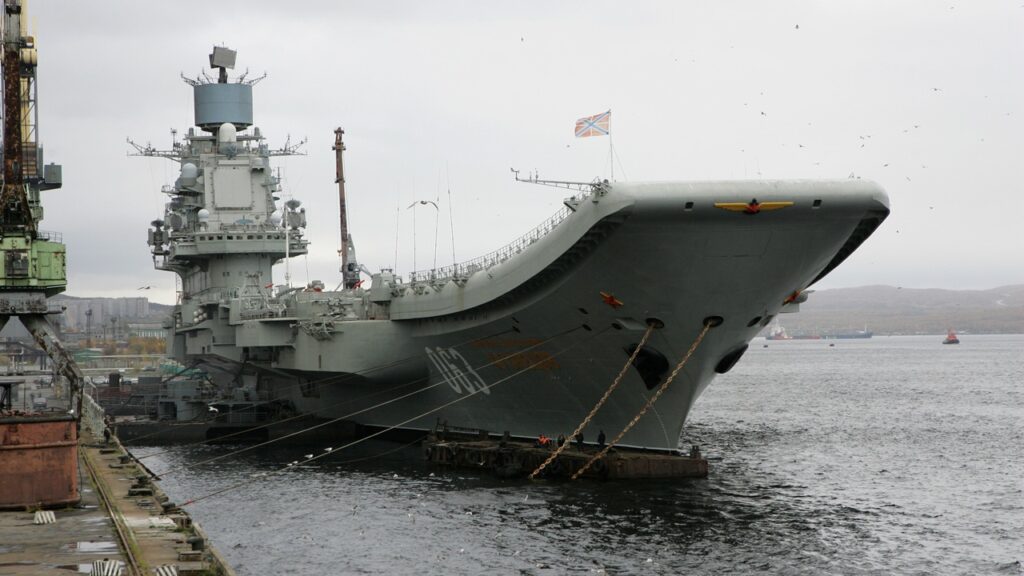
Russia’s Admiral Kuznetsov is the largest aircraft carrier ever operated outside NATO or China (despite being officially classified as an “aircraft-carrying cruiser”). Featuring a ski-jump ramp and heavy onboard missile armament, the ship reflects the Soviet doctrine prioritizing self-defense over pure aviation capability.
The Admiral Kuznetsov has been out of service for much of the last decade. Over its decades in the Russian Navy, the ship has been plagued with ongoing propulsion issues and various accidents; the ship has been dry-docked for years with an uncertain fleet return date. Indeed, reports circulated in 2025 that Russia had finally given up on the carrier and was intent on dismantling it. However, the Kremlin has not publicly confirmed this, and no progress has yet been made on its scrapping—leaving the ship’s fate undetermined as before.
4. Kitty Hawk Class
- US Navy
- In Service: 1961–2009
- Number Built: 3
- Displacement: 83,000 tons
- Air Wing: 70–85
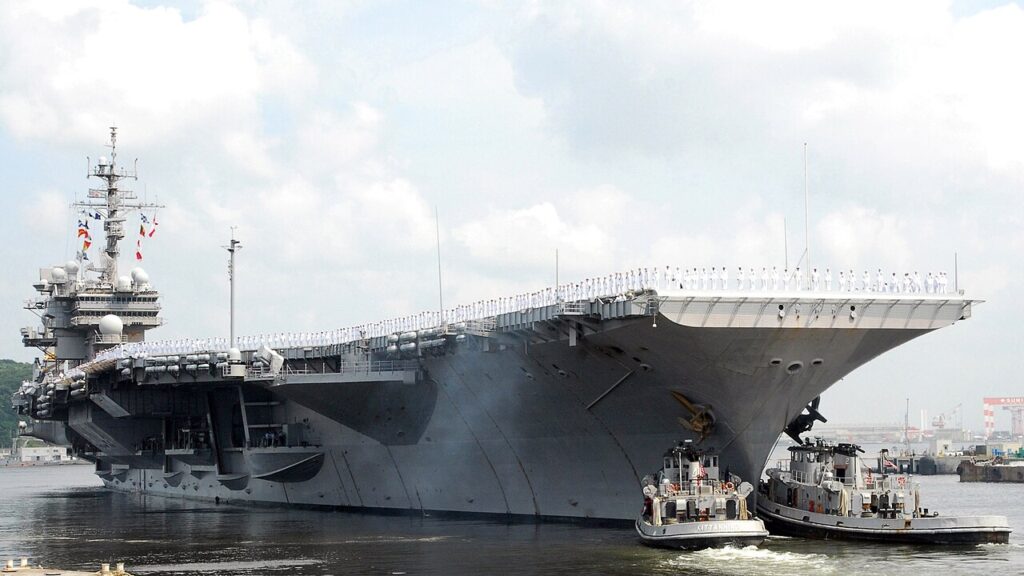
The Kitty Hawk class were the largest conventionally powered aircraft carriers ever operated by the United States. Entering service in the 1960s, the ships supported Cold War operations and Vietnam combat sorties. These ships introduced important innovations like angled decks and advanced radar systems.
Retired in 2009, the USS Kitty Hawk was America’s last non-nuclear super carrier. The class demonstrated that massive carrier aviation capability was possible, even without nuclear propulsion, though the cost of frequent refueling was burdensome.
3. USS Enterprise (CVN-65)
- US Navy
- In Service: 1961–2017 (left active service 2012)
- Number Built: 1
- Displacement: ~93,000–94,000 tons
- Air Wing: 60 (normal conditions); could surge to 90 during emergencies
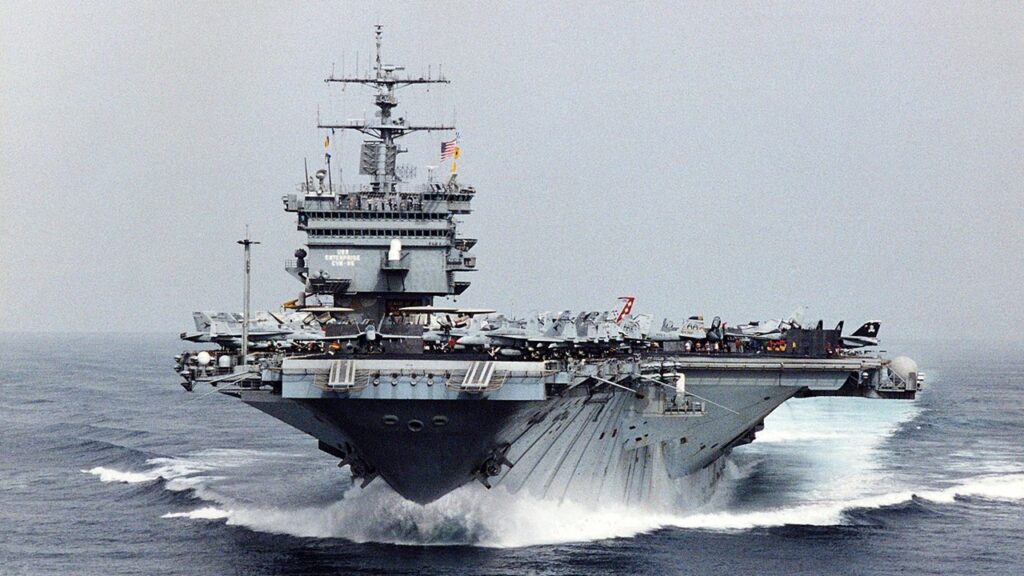
A one-off design, the USS Enterprise was the world’s first nuclear-powered aircraft carrier—and for many decades the longest warship ever built.
Commissioned in 1961, the ship used eight nuclear reactors and served prominently through the Vietnam War, various other conflicts of the Cold War, NATO’s intervention in Yugoslavia, and the War on Terror. Without the Enterprise, the modern super carriers of today likely wouldn’t exist;the Enterprise’s unprecedented endurance and power projection reshaped naval strategy, proving the viability of nuclear carriers, and directly influencing its successor, the Nimitz class.
2. Nimitz Class
- US Navy
- In Service: 1975–present
- Number Built: 10
- Displacement: ~100,000 tons
- Air Wing: ~90
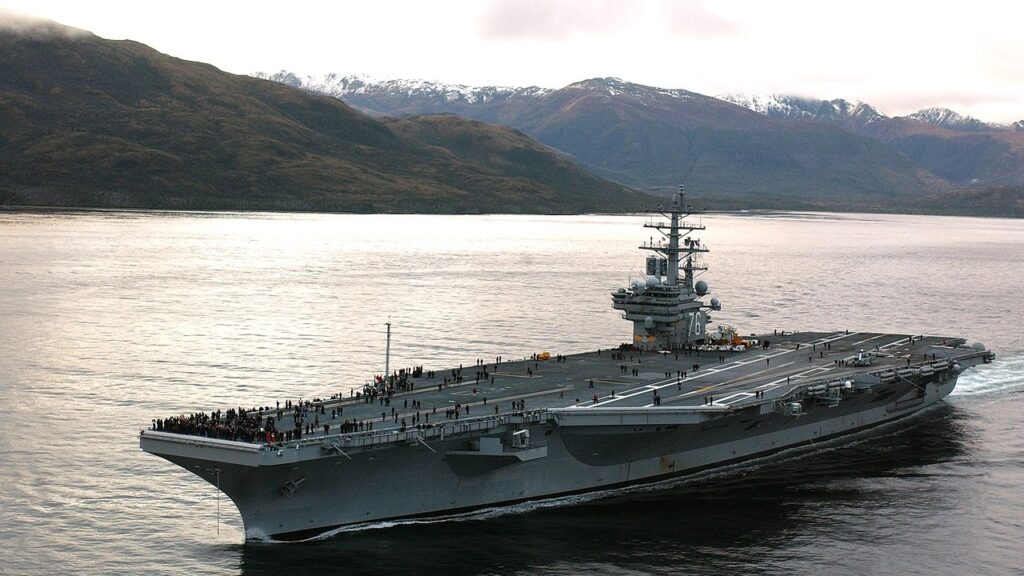
The Nimitz class defined the modern super carrier, serving as the backbone of US naval aviation since the 1970s. Still in service today, 10 Nimitz carriers were built, each capable of launching large air wings globally without reliance on refueling.
The ship has been central to US power projection in the Middle East, Balkans, and Indo-Pacific. Designed for sustained high-intensity conflict, the ships of the Nimitz class have participated in nearly every major US military operation of the past 50 years. The ship’s size, nuclear endurance, and sortie generation rate have essentially defined what a modern supercarrier is—and are the clear target that America’s various rivals, particularly the Chinese, are attempting to one day emulate.
1. Gerald R. Ford Class
- US Navy
- In Service: 2017–present
- Number Built: 1 (3 under construction, 10 planned)
- Displacement: 100,000+ tons
- Air Wing: ~90
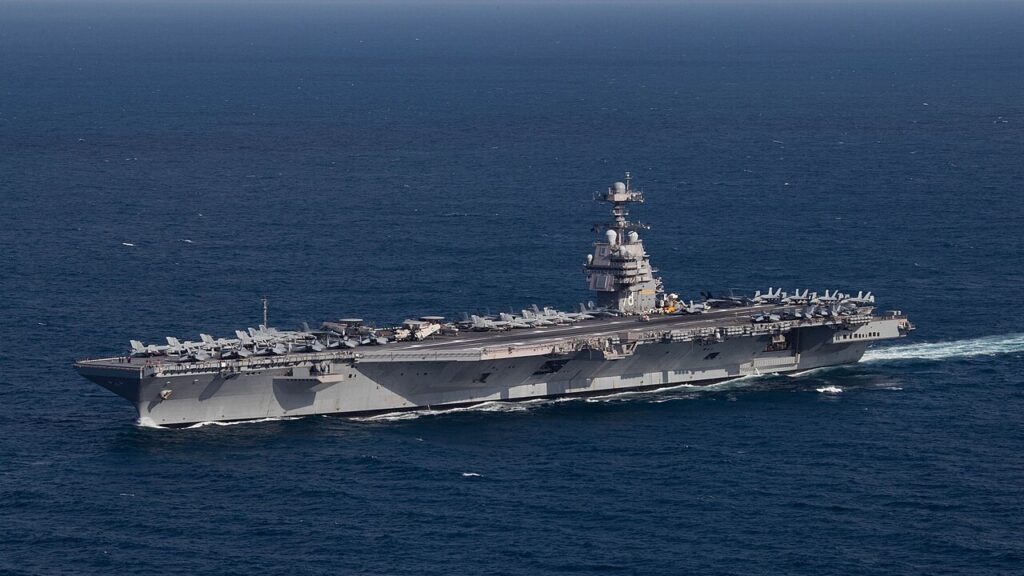
The Gerald R. Ford class is the new standard-bearer of naval aviation, the largest aircraft carrier ever built. Featuring electromagnetic catapults (EMALS), advanced arresting gear (AAG), modern reactors, increased automation, and increased electrical power, the Ford is on the cutting edge of naval technology. While the rollout hasn’t been perfectly smooth, the class is expected to operate for 50 years—showing concretely that the US expects the aircraft carrier to remain relevant well into the 21st century.
Despite concerns that carriers will be increasingly vulnerable in modern warfare, specifically to China’s A2/AD network, the US Navy is betting on the Ford—which, at an estimated cost of $13 billion per unit, will have much work to do to justify its massive investment!
About the Author: Harrison Kass
Harrison Kass is a senior defense and national security writer at The National Interest. Kass is an attorney and former political candidate who joined the US Air Force as a pilot trainee before being medically discharged. He focuses on military strategy, aerospace, and global security affairs. He holds a JD from the University of Oregon and a master’s in Global Journalism and International Relations from NYU.
Image: Shutterstock / Greg Meland.














_underway_near_Subic_Bay,_Philippines_-_DPLA_-_7c8cf6e077a6dd8dfadc056c87087859.jpeg)
_high_speed_bow_view.jpg)
