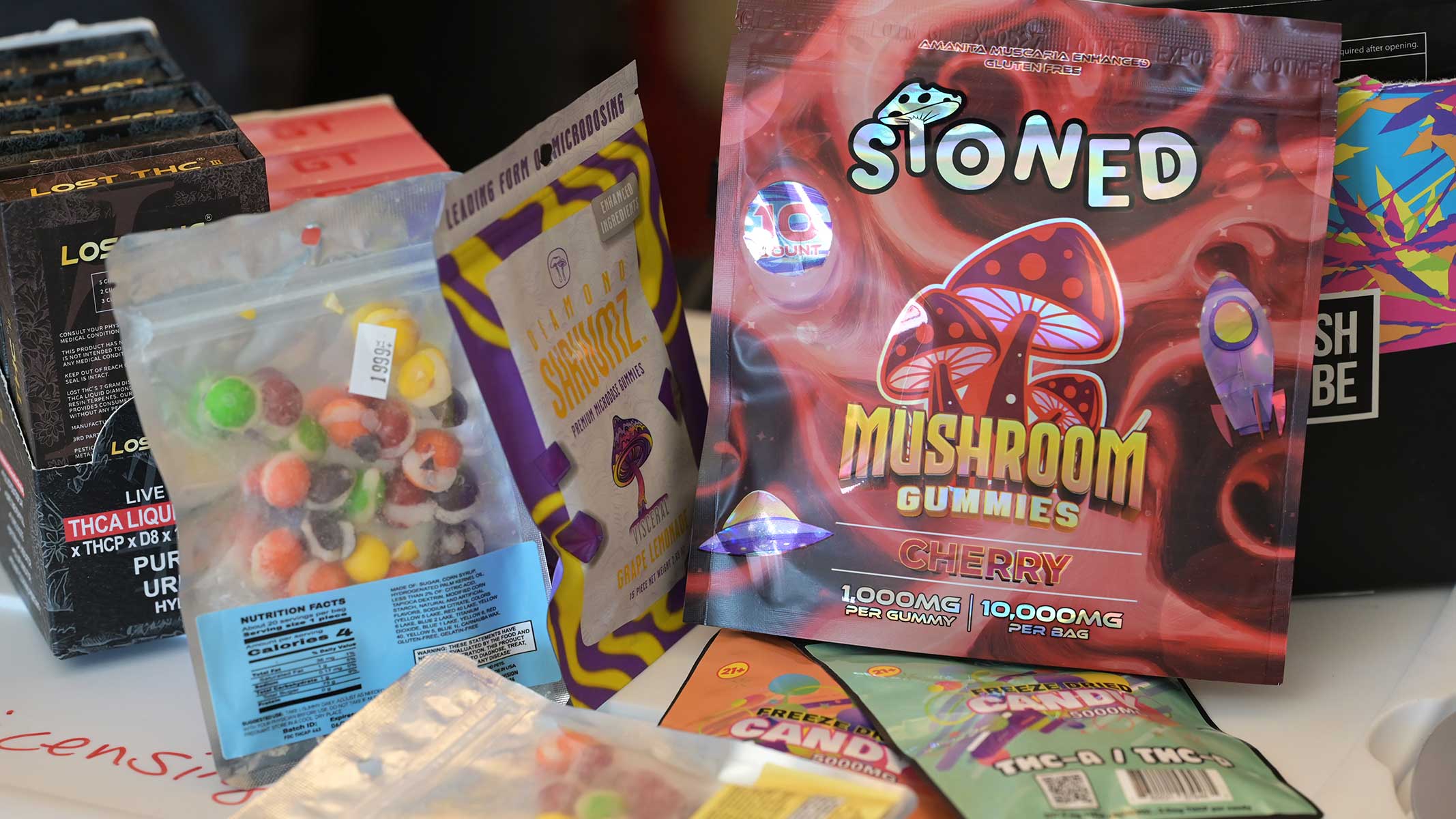
This week, as part of the bill to reopen the federal government, a bipartisan coalition ended the legal carve-out that allowed stores to sell intoxicating hemp products. By closing this loophole, lawmakers pushed back on the rise in cannabis-related poisonings and emergency-room visits across the country.
You’ve almost certainly seen so-called “THC edibles” for sale. These products are made with hemp-derived tetrahydrocannabinol (THC)—a psychoactive compound in the cannabis plant, which typically comes in a form called Delta-8 or Delta-10. These compounds are associated with various health risks, including “tachycardia, anxiety, dizziness, vomiting, hallucinations, discoordination, loss of consciousness, or even death.”
Finally, a reason to check your email.
Sign up for our free newsletter today.
In 2018, Congress included a provision in the annual farm bill that exempted hemp from regulation under the Controlled Substances Act. Retailers seized on the carve-out and laced candy and other edible products with hemp-derived THC. They sold these products in convenience stores, gas stations, grocery stores, and other locations where families with children shop.
The result was a predictable public-health disaster. Nationwide, America’s Poison Centers reported more than 10,000 poison-control incidents connected to Delta-8 between 2021 and 2025.
States have reported similar results. Ohio, for example, saw pediatric THC exposures increase by 424 percent between 2018 and 2024. Exposure among children aged 0 to 5 spiked by more than 1,100 percent and constituted about half of all pediatric exposures. Disturbingly, 61.4 percent of those poisoned by THC in the youngest age cohort required hospital or ICU admission.
Edible THC products were responsible for 61 percent of Ohio’s overall pediatric exposures. This reveals the folly of Big Hemp’s claim that its products are natural, harmless, and regulated.
In recent months, a bipartisan group of state leaders has regulated hemp products and called on Washington to do the same. Ohio governor Mike DeWine, a Republican, issued a ban on intoxicating hemp. California governor Gavin Newsom, a Democrat, severely restricted hemp sales. And in a remarkable bipartisan effort, 39 state attorneys general wrote to Congress urging it to close the federal hemp loophole.
As part of the bill to reopen the federal government, Congress inserted a ban on hemp intoxicants. The measure enjoyed overwhelming support, but it drew the ire of one member: Kentucky senator Rand Paul, who advanced a measure to strike it from the spending bill.
Paul’s home state, however, has been devastated by hemp products. Kentucky’s Injury Prevention and Research Center found that between 2023 and 2024, ER visits for marijuana-related poisonings among Kentuckians under 18 rose by 43 percent, even though non-hemp-derived THC products are illegal in the state. Between 2018 and 2024, ER visits for any marijuana-related disorder among that youthful cohort spiked by 96 percent. One of the report’s authors specifically cited edibles containing hemp-derived THC as a key element of this public health crisis.
Thankfully, 76 senators voted against Paul’s effort. On Thursday, President Trump signed the ban on hemp-derived intoxicants.
The new hemp law, however, has a catch: it doesn’t take effect for one year. Big Hemp will almost certainly flood Capitol Hill in an attempt further to stall its implementation.
That’s why it’s important that states remain committed to hemp-THC bans over the next year. Grassroots advocacy is critical in states like Texas, where Governor Greg Abbott vetoed a bill the state legislature passed that would have banned hemp products. By adopting the federal ban in their own laws, states can slam these markets shut.
Washington will almost certainly enforce the ban next year. The president supports it, as do a bipartisan majority of congressional lawmakers and red- and blue-state leaders. The public is sick of seeing high-potency THC drugs marketed to kids in gas stations.
Despite the delay, the ban represents a major victory for public health and bipartisan policymaking. If the new hemp law becomes a model for other drug-policy debates, the nation will be better for it.
Photo by Hyoung Chang/The Denver Post
City Journal is a publication of the Manhattan Institute for Policy Research (MI), a leading free-market think tank. Are you interested in supporting the magazine? As a 501(c)(3) nonprofit, donations in support of MI and City Journal are fully tax-deductible as provided by law (EIN #13-2912529).
Source link