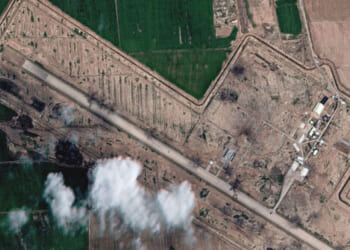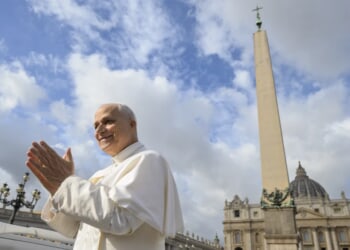
As early as September of 2014 Pope Francis warned that, “a ‘piecemeal’ World War III may have already begun with the current spate of crimes, massacres and destruction.” Referring to conflicts in Iraq, Syria, Gaza, Ukraine, and parts of Africa, conflicts which continue and escalate to this day, the late pope said, “War is madness…Humanity needs to weep, and this is the time to weep,”
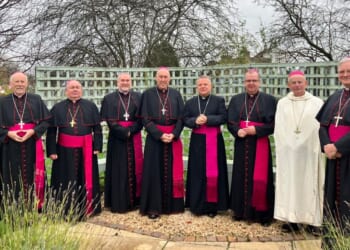
Today Pope Leo and our bishops in union speak out for an end to this madness of war, with March’s papal prayer intention providentially being for disarmament and peace:
Let us pray that nations move toward effective disarmament, particularly nuclear disarmament, and that world leaders choose the path of dialogue and diplomacy instead of violence.
For Catholics living in this “piecemeal World War III” learning the Church’s teachings on conflict between nations, especially the basics of Just War Theory, is incumbent upon us. Though our leaders would likely not explain it this way, the international actions being taken currently are in response to “structures of sin” in other nations, so an understanding of this Catholic idea is also helpful.
Understanding these two foundational ideas will not make us experts, nor qualify us as advisors to those in authority. But they will help us navigate these turbulent waters as we pray for our military, our leaders, and every human soul involved.
Structures of Sin
The idea of “structures of sin” developed over millennia of Catholic theology but came into more common usage in the last century. Magis AI defines these structures as, “unjust social institutional systems that perpetuate collective wrongdoing, injustice, and oppression beyond individual sins, requiring transformation into just and solidaristic structures promoting the common good.”
St. John Paul II adds to this definition with his description of social sin as “a direct attack on one’s neighbor…(and) every sin against the rights of the human person…(by) the individual against the community or by the community against the individual.” He goes on to specifically address structures of sin as, “relationships between the various human communities” which “are not always in accordance with the plan of God, who intends that there be justice in the world and freedom and peace between individuals, groups and peoples.”
John Paul II appealed to the individual conscience, as this collective behavior is “the result of the accumulation and concentration of many personal sins.” The structures of sin are not sins committed by a society per se, as a society is not a person, but rather laws, norms, and the worldview found in a society that influences its members.
These structures lead people away from God’s law and the pursuit of justice and peace, but it is individual people who commit individual sins. The Compendium gives the big picture in paragraph 117: “by virtue of human solidarity which is as mysterious and intangible as it is real and concrete, each individual’s sin in some way affects others.” Just as our good acts build up the Church and world, every sin has repercussions which harm.
Just War Theory
The Church’s moral doctrine that governs the justification and conduct of war is known as Just War Theory. It looks at four major conditions to determine whether entering the tragic reality of war is just, while hoping to mitigate the destruction that inevitably comes from it.
- Just Cause: The damage caused by the aggressor must be lasting, grave, and certain. The war must respond to a serious injustice or aggression.
- Last Resort: All other means to put an end to the aggression must be shown to be impractical or ineffective.
- Proportionality: The damage inflicted on the enemy to prevent the aggression cannot be greater than the evil suffered or the original aggression.
- Probability of Success:There must be a reasonable prospect of success to justify the use of force.
In addition to limiting harm, these principles respect the dignity of human life, while aligning with natural law and divine justice.
Wars are the result of sin writ large. Because justice means right relationship, sin and structures of sin carried out over time can create a situation where Just War Theory will demonstrate that war is required for the greater good. Lasting peace is that greater good, deeply rooted in justice and charity. Restoring it by means of war must only happen when injustice is so great as to make avoiding war impossible.
Injustices that allow for Just War may only involve defending innocent life, human rights, and the common good against grave aggression. Self-defense of a nation will fall within these constraints, but often the defense of others will too. The greatest sobriety must be brought to these questions due to the extreme gravity of harm caused by war, even when it is waged for the most noble and necessary reasons.
“Blessed are the Peacemakers”
These words spoken by Jesus in the Beatitudes align with the Jewish concept of shalom, which can be defined as “perfect communion and fulfillment with God.” Here peace is not simply the absence of war, but the foundation of a just society. By working towards justice at every level of society, and at eliminating personal sin as well as structures of sin, we are peacemakers, doing the work of God.
While it is important to know the Church’s teachings on war and the conduct of war, we must also acknowledge that, as individual Christians and citizens, we don’t have access to the same information that our government and military leaders do. If we truly believe in the power of prayer, which we should as Catholics, we must pray. We must pray for peace, for God’s guidance for our government and military leaders, for the protection of our military, for courage and strength for their families, and for all civilians living under injustice and especially in war.
We must pray for peace, for shalom, that includes justice as the best preventative to future wars. We must do whatever we are called to do as our small but crucial part of creating peace in our world. Everyone’s work is different because God has made us unique with specific gifts and talents for this time in human history.
To paraphrase St. Catherine of Siena, become who you were created to be, and you will bring shalom to the world. Yes, be informed, but take care not to be consumed by the 24/7 news cycle. Allowing this to happen will only sidetrack you from your work of becoming and will not increase peace in the world.
In one sense, and that the eternal sense, the thing is plain. The answer to the question “What is Wrong (with the world)?” is, or should be, “I am wrong.” Until a man can give that answer his idealism is only a hobby. (G.K. Chesterton)
In these waning days of Lent, let us consider the important truth that those structures of sin require individual sins to continue operating. By repentance and returning to the Gospel we each can wage peace and serve justice. May we make the most of this opportunity and make this Lent the beginning of a movement of true shalom.