On the night of October 23, 2020, Washington, D.C. police officers Terence Sutton, Andrew Zabavsky, and Cory Novick pursued a suspect fleeing on a motor scooter. The suspect cut through an alleyway and was struck by oncoming traffic. Federal prosecutors charged and convicted Sutton for second-degree murder and Zabavsky with obstruction of justice. Novick, who wasn’t charged, testified at the trial.
Saying prosecutors “put [the officers] in jail for going after a criminal,” President Donald Trump pardoned the officers in January. The Metropolitan Police Department later reinstated them with back pay. But Novick, who was never found to have made false statements, lost his career. Why? His testimony at times failed to support the government’s claims. He might have even made them look bad. Apparently, the U.S. Attorney’s office in D.C. wouldn’t forget.
Finally, a reason to check your email.
Sign up for our free newsletter today.
Federal prosecutors later put Novick on a blacklist. His new employer, the U.S. Marshals Service, fired him on the spot. Novick had been placed on the secret “Lewis List”—Washington, D.C.’s list of potentially impeachable officers and federal agents—without, he claims, being told or instructed how to appeal the designation.
Novick claims to have never learned who placed him on the list. The decision, he discovered upon his termination, was “related to his testimony” in the Sutton case. He is now suing for reinstatement to the U.S. Marshals Service—a lawsuit my organization, the Law Enforcement Legal Defense Fund, is funding.
Novick is not alone. Across the country, officers are unjustly tarred with a career-killing scarlet letter that precludes them from participating in most police work. States should pass legislation giving officers a clear explanation for their inclusion on these lists and a meaningful opportunity to appeal.
In 1963, the Supreme Court’s ruling in Brady v. Maryland required prosecutors to disclose potentially exculpatory evidence to the defense. That decision and subsequent precedents ensured transparency, due process, and remedies for defendants. But 60 years on, the same legal doctrine outlined in Brady has been twisted to target and tarnish police officers, offering them fewer rights than criminal defendants.
Many prosecutors’ offices maintain a list of law enforcement officers suspected, accused, or convicted of “integrity” violations or other misconduct. Drawing on Brady and another case (Giglio v. United States), prosecutors compile these lists to alert the defense if an officer involved in a defendant’s case has a record of relevant misconduct (e.g., perjury) that would affect his credibility as a trial witness.
But these lists are largely a black box—maintained in secret, without clear standards for inclusion, and without the possibility for appeal. Injustices pile up.
In Iowa, Travis Hamilton, a nearly 20-year police veteran, discovered his inclusion on the local prosecutor’s Giglio list accidentally in 2019. The county attorney’s office reportedly cited no specific reason for his inclusion and ignored his meeting requests. A public records request revealed the list but no explanations. Barred from court duties, Hamilton resigned and struggled to find work in law enforcement.
His advocacy, including lobbying legislators, spurred change. In June 2022, Iowa passed a law mandating that prosecutors set clear policies: written notice before listing, access to evidence, input opportunities, decision notifications, and reconsideration processes with timelines. Officers on prior lists got 90 days’ notice for appeals. The law also bans firing solely for list placement.
But Iowa’s reforms are the exception, as only a handful of states or localities have any rules governing these lists and affording officers due-process rights. Under prosecutorial immunity doctrine, local prosecutors have absolute, unreviewable authority over their listing decisions.
And the potential for retribution is not hypothetical. In Fairfax County, Virginia, chief prosecutor Steve Descano and a staffer got into an altercation with courthouse security over the use of a metal detector—an incident caught on camera. An internal sheriff’s office report called the local prosecutors’ behavior “unprofessional.” The deputies suddenly appeared on the Brady list and stayed on it even after the sheriff’s department’s internal investigation cleared them. Descano apparently did not appreciate their truthful, if embarrassing, account of his behavior.
The Brady decision, intended to promote transparency and due process in the justice system, has been perverted into a means of denying law enforcement those same protections. While the Trump Justice Department can strike Novick’s name from the Lewis List and petition for his reinstatement to the U.S. Marshals, a DOJ agency, many other officers have no such remedies. States should be required to make these lists public, clearly define the standards for inclusion, and afford officers an opportunity to appeal—in keeping with the due-process principles underlying Brady.
Otherwise, law enforcement officers remain vulnerable to prosecutorial retribution for telling inconvenient truths or offending a prickly prosecutor. It’s a system ripe for abuse.
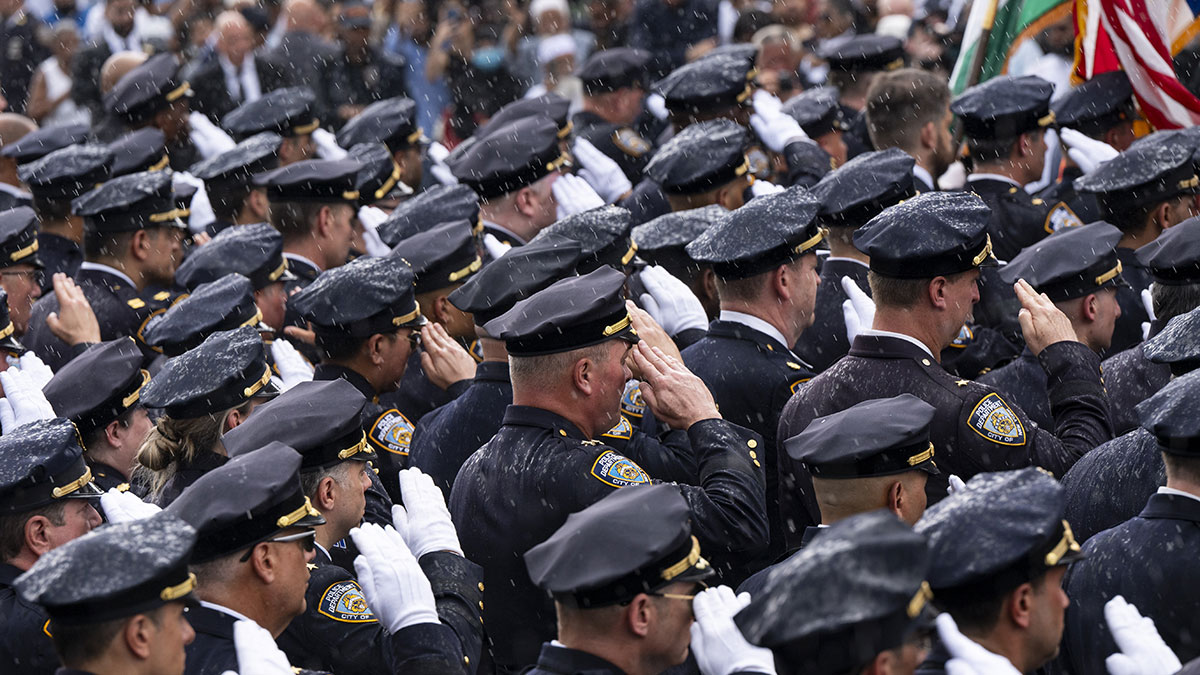
Photo by Mostafa Bassim/Anadolu via Getty Images
City Journal is a publication of the Manhattan Institute for Policy Research (MI), a leading free-market think tank. Are you interested in supporting the magazine? As a 501(c)(3) nonprofit, donations in support of MI and City Journal are fully tax-deductible as provided by law (EIN #13-2912529).
Source link