

Springfield, Ohio, featured prominently in 2024 election-time debates as a case study in the fallout of the Biden-Harris administration’s disastrous immigration policies — a place where President Donald Trump suggested migrants were “eating the pets of the people that live there.”
The blue-collar city, which had a population of just over 58,000 in 2020, was flooded in subsequent years by tens of thousands of Haitian migrants — migrants whom Springfield Mayor Rob Rue admitted “taxed” the “infrastructure of the city, our safety forces, our hospitals, our schools.” According to the city, there are upwards of 15,000 migrants presently residing in Clark County alone.
‘Temporary means temporary.’
Many of the Haitians who overwhelmed Springfield and other American cities initially entered the U.S. illegally but were spared deportation on account of Haiti’s Temporary Protected Status. That status, which Haitian migrants have enjoyed since January 2010 and roughly 350,000 Haitian migrants enjoy today, is set to expire on Tuesday.
In anticipation of a potential immigration crackdown following the designation’s expiration date, Mayor Rue and members of the Springfield City Commission approved a resolution on Tuesday urging federal law enforcement to “comply with city policies on masks and officer identification to preserve the public peace within the community.”
Blaze News has reached out to Mayor Rue for comment.
Former DHS Secretary Alejandro Mayorkas reinstated Haiti’s TPS in 2021, then doubled down in subsequent years, expanding eligibility for protection along the way.
The Trump Department of Homeland Security announced in July, however, that Haiti’s temporary status was coming to an end.
“After reviewing country conditions and consulting with appropriate U.S. Government agencies, the Secretary determined that Haiti no longer continues to meet the conditions for designation for TPS,” said the announcement in the Federal Register. “The Secretary, therefore, is terminating the TPS designation of Haiti as required by statute.”
RELATED: Trump administration halts visas for 75 nations whose people gobble up American welfare
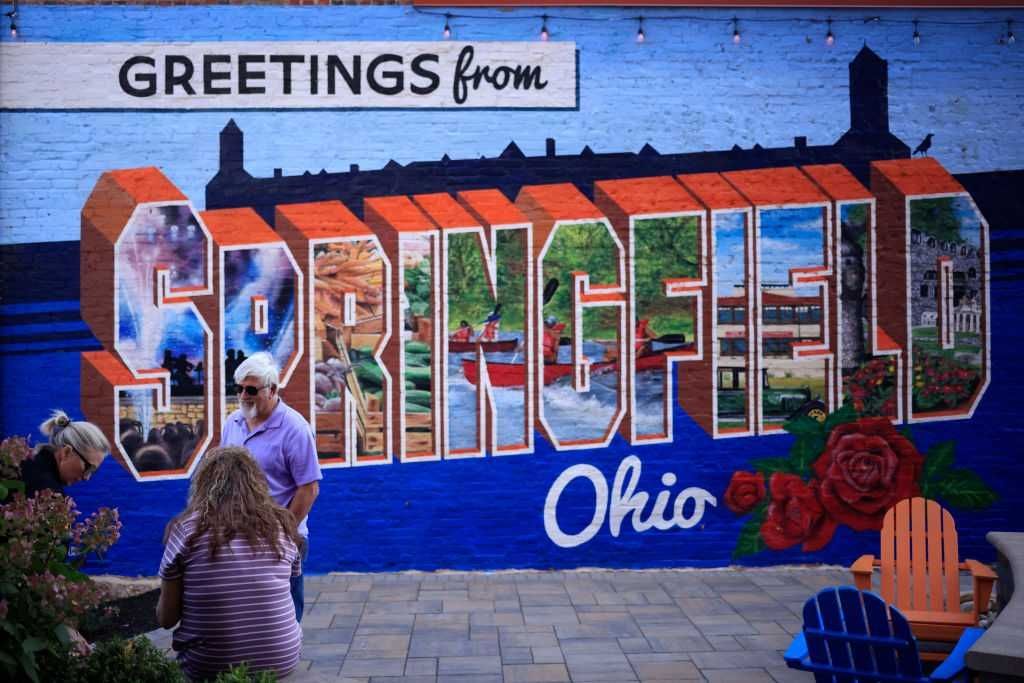 Photo by Luke Sharrett/Getty Images
While DHS initially sought to terminate the TPS designation for Haiti on Sept. 2, 2025, the termination was blocked and the status preserved until Feb. 3 by the New York-based U.S. district court judge overseeing the case Haitian Evangelical Clergy Association v. Trump.
In November, the DHS noted that “in compliance with the U.S. District Court for the Eastern District of New York’s final judgment, the current Temporary Protected Status designation period for Haiti ends February 3, 2026.”
The loss of status would not only mean that previously covered Haitians will lose their work authorization but that they could be given the boot.
Emily Brown, Ohio State University Moritz College of Law’s Immigration Clinic Director, told the Ohio Capital Journal, “At that point, they could potentially be arrested, detained, or put in removal proceedings unless they have already applied for some other form of relief they have in addition to TPS, or that they are applying for in addition to TPS.”
The ACLU of Ohio is among the liberal activist groups panicking over the prospect of U.S. Immigration and Customs Enforcement targeting Haitian migrants in Springfield starting on Feb. 4.
“This despicable surge in lawless ICE officers descending upon Springfield will ignite swells of fear within the Haitian community, terrorize our black and brown neighbors, and cause considerable damage to citizens and non-citizens alike,” stated J. Bennett Guess, executive director of the ACLU of Ohio.
“The ACLU of Ohio urges state and local elected officials to do everything in their power to protect the 30,000 Haitians living in Central Ohio,” he continued.
Prior to Tuesday, U.S. District Judge Ana Reyes — a Biden-appointed lesbian judge who previously worked as a lawyer to fight the first Trump administration’s immigration policy — could decide to suspend the expiration of Haiti’s TPS.
Reyes may be emboldened, after all, by a ruling on Wednesday from a three-judge panel of the 9th U.S. Circuit Court of Appeals.
The panel — comprising three Democrat-nominated judges — suggested Homeland Security Secretary Kristi Noem exceeded her authority when ending the TPS for Venezuela and Haiti.
The appellate court’s ruling won’t have an immediate effect, as the U.S. Supreme Court cleared Noem in October to revoke temporary legal statuses while litigation proceeds.
DHS Assistant Secretary Tricia McLaughlin said in response to the appellate court’s ruling, “Temporary means temporary, and this is yet another lawless and activist order from the federal judiciary who continues to undermine our immigration laws.”
Like Blaze News? Bypass the censors, sign up for our newsletters, and get stories like this direct to your inbox. Sign up here!