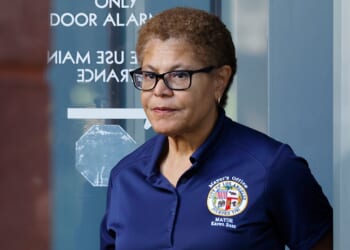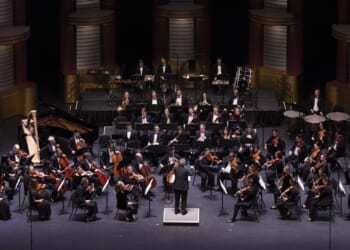
For two weeks in a row, Mirga Gražinytė-Tyla guest-conducted the New York Philharmonic. Her first week’s program included a Vaughan Williams work: the Fantasia on a Theme by Thomas Tallis. The second week’s program included an Elgar work: his Violin Concerto.
She is an honorary Englishwoman, this Lithuanian. From 2016 to 2022, she was the music director of the City of Birmingham Symphony Orchestra. She is still associated with the CBSO. Among her recording endeavors has been The British Project.
Not often do you hear the Elgar Violin Concerto. You certainly hear it less often than you do his cello concerto. In the 2010–11 season, Sir Colin Davis conducted the Philharmonic in the violin concerto, with Nikolaj Szeps-Znaider as soloist. He had done the same in the 2004–05 season, with Hilary Hahn as soloist.
Those were memorable occasions.
The soloist with Maestra Gražinytė-Tyla last week was Vilde Frang, the Norwegian. They were born ten days apart in August 1986.
Ms. Frang is a special musician: sincere, tasteful, soulful. A musical honesty comes from her. There’s an old expression, “You play who you are,” and she exemplifies it.
On Saturday night, she played the Elgar concerto beautifully. The second movement, Andante, was surpassing in its beauty. Ms. Frang did a little flatting, at several points in the concerto, but this did no serious harm. On the podium, Gražinytė-Tyla followed the contours of the music.
That is important, in conducting Elgar. His music is full of billows, and you, the interpreter, follow them, or ride them.
It seemed to me that, in the third and final movement, the performance ran out of steam. Was that Edward Elgar or Vilde Frang, Mirga Gražinytė-Tyla, and the New York Philharmonic?
I like this concerto very much. I also think it’s too long. Afterward, Frang was called back again and again, by an appreciative audience. She declined to play an encore, which I think was wise. It was time for intermission.
When the concert resumed, a group of players—just nine of them—played a work by György Kurtág, whose centennial is being observed by the music world. (Mr. Kurtág is still with us, mind you.) The New York Philharmonic nonet played Brefs messages, composed in 2010.
“Brief Messages.” Kurtág is known for his brevity right? So is his fellow Hungarian, and fellow György, György Ligeti (1923–2006).
Standing in front of the nine, conducting, was Gražinytė-Tyla. Was this necessary? Brefs messages is chamber music, after all, not orchestral music. I think it was, yes, or at least helpful. These tricky ditties could use some direction.
It was good to see players who usually sit in the middle or back—to see them “up close and personal.” I’m talking of the woodwind and brass players. It was good to hear them, individually, too.
The bass clarinet is a wonderful instrument. My ears prick up when I hear it in an orchestral piece. And the Philharmonic’s Barret Ham plays it well.
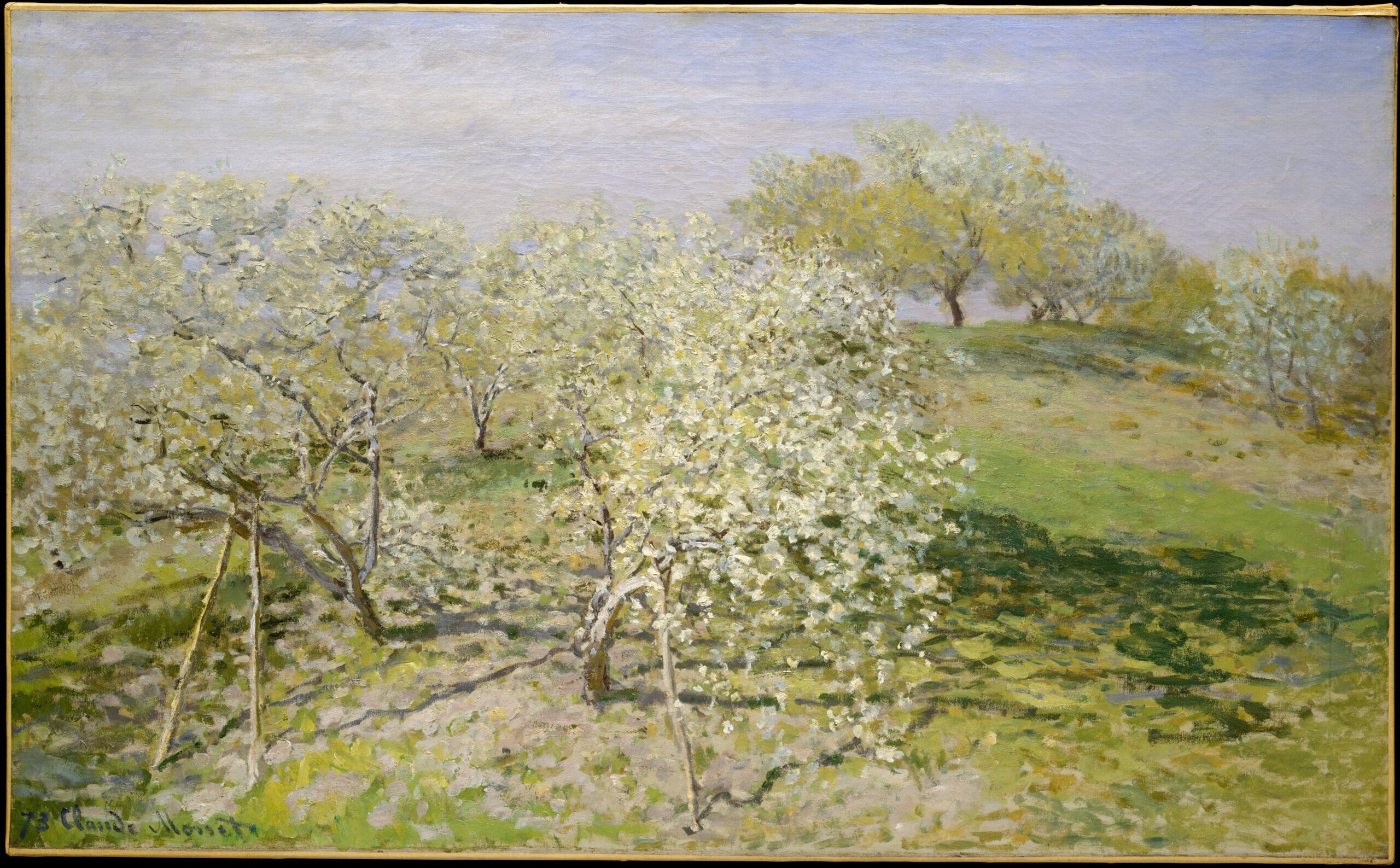
To conclude the program was a Schumann symphony: No. 1 in B flat, the “Spring.” Some of us had heard it two nights before, played in Carnegie Hall by the Academy of St Martin in the Fields, led by Joshua Bell. (For my review of that concert, go here.) Was I ready to hear it again on Saturday night?
Listen: I’d have been happy to hear it on Friday night, i.e., three nights in a row. It is one of the friendliest things any composer ever wrote: genial and noble, and uplifting, too.
By the New York Philharmonic, under Mirga Gražinytė-Tyla, it was very well played. The score had its geniality and nobility, both. And it duly uplifted. Dynamics were varied and vivid; rhythm was incisive. Never for a second was the symphony dull. Never for a second was it eccentric either.
In one section of the final movement, Gražinytė-Tyla was unusually slow. But she was musically convincing. I think Robert (Schumann) would have said, “Fine.”
A satisfying concert, this was (no matter Sir Edward’s longueurs).