While Japan is all-in on the Alaska LNG pipeline project, the South Korean government is more reluctant to fully commit.
After months of negotiations, Seoul and Washington released a “Joint Fact Sheet” on November 13 that laid out a trade and investment deal wherein South Korea, formally the Republic of Korea (ROK), offered numerous concessions in return for a reduction in US tariff rates. Despite the lengthy fact sheet, it remains largely a framework where many of the important details are to be determined. As one assessment noted, the devil will be in the details.
A provision not included in the fact sheet but one that has been part of the negotiations is South Korea’s pledge to buy more oil and liquified natural gas (LNG) from the United States, along with possible participation in an LNG pipeline project in Alaska that has long been favored by President Donald Trump. As a gesture to offset its trade surplus with the United States, South Korea agreed to increase its imports of US energy but has not committed to joining the pipeline project. Though a small part of the overall ROK effort to address the tariff threat, the LNG component has important implications for South Korea’s energy strategy and its strategic ties with the United States.
Tariff Woes Affect South Korea
In March, the Trump administration imposed a series of tariff measures that had a serious impact on the ROK’s economy. Despite having the 2012 Korea-US Free Trade Agreement (KORUS FTA) that lowered most ROK tariffs between them to near zero, Washington imposed a 25 percent tariff on steel and aluminum, followed by 25 percent on all auto imports and many types of auto parts.
The following month, Trump announced across-the-board tariffs on a long list of countries based on the rates they charged on US goods. Dubbed “Liberation Day,” the administration imposed duties ranging from 10 percent to 50 percent. For South Korea, and again, contrary to the KORUS FTA, the rate was set at 25 percent. When announcing these tariffs, Trump left open the possibility of negotiating deals to lower the percentages and, over the next few months, concluded agreements with the EU and Japan that reduced tariffs in exchange for pledges to invest significant amounts in the US economy, along with other concessions.
South Korea concluded a similar deal that lowered across-the-board tariffs from 25 percent to 15 percent and in return, agreed to invest $150 billion in US shipbuilding and $200 billion in other sectors, including semiconductors, batteries, and biotech. A key sticking point had been the timing and scale of these investments, with Washington calling for the entire amount upfront. This was a condition South Korea could not accept. Eventually, negotiators agreed to space out the investment to a level more acceptable to Seoul.
South Korea and US LNG
Early in negotiations, two proposals dealing with ROK energy imports were on the table to help offset its trade surplus with the United States. First, the South Korean government committed to buying $100 billion in energy, with a significant portion of this amount being LNG (though the precise amounts are to be determined). After negotiators concluded an initial framework agreement in July, a ROK official remarked: “The $100 billion energy purchase is a level we can fully manage. While there may be some changes in the composition of our energy imports, such as shifting from Middle Eastern sources to American ones, the purchase plan aligns with the amount of energy our economy needs, so it will not be a burden.”
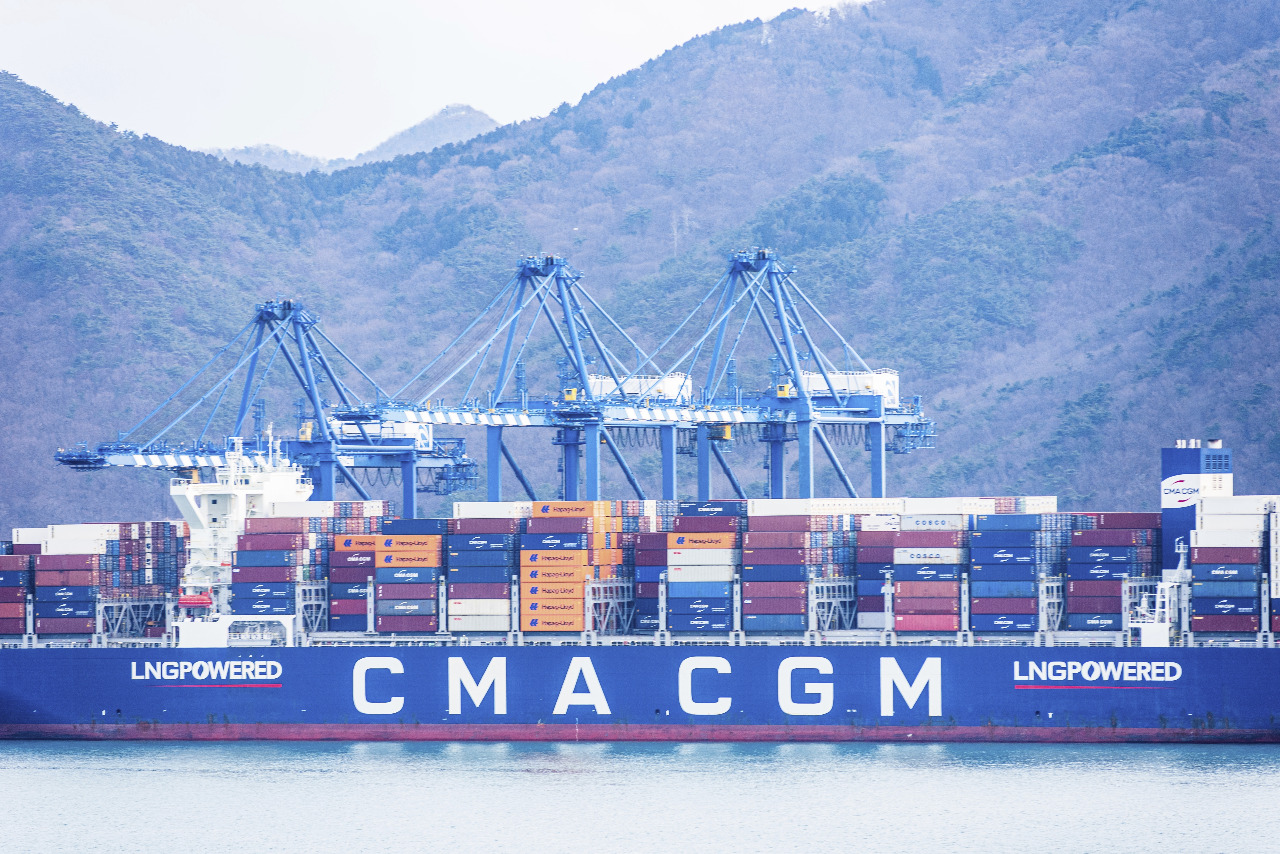
For LNG, contracts with Qatar and Oman, which supply 21 percent and 10 percent, respectively, of South Korea’s imports are set to expire allowing a shift of over 30 percent of its imports to US suppliers. Following the Lee-Trump summit in August, South Korea reiterated its pledge to purchase $100 billion in LNG and oil at $25 billion per year for the next four years. Soon after, publicly-owned Korea Gas (KOGAS) signed a deal to purchase 3.3 million tons of LNG annually for 10 years beginning in 2028.
A second but more challenging proposal pushed by the White House was South Korean cooperation to build, as well as buy, production from a planned Alaska LNG pipeline. During his March 2025 address to Congress, President Trump declared, “My administration is working on a gigantic natural gas pipeline in Alaska, among the largest in the world, where Japan, South Korea, and other nations want to be our partner with investments of trillions of dollars each.”
The US plan entails constructing a pipeline, over 800 miles long, with a 42-inch diameter pipe from the North Slope to a port terminal on the Gulf of Alaska for $44 billion. Throughout these early meetings, South Korea offered a willingness to cooperate but has been reluctant to formally join the project, either through investment or commitments to purchase LNG from a completed pipeline.
Though the ROK government has been hesitant, private firms have shown more interest. In August, POSCO, formerly Pohang Iron and Steel Company, signed a “non-binding letter of intent” to purchase one million tons of LNG annually when the pipeline is completed and possibly supply some of the steel to construct the pipeline. While US partners celebrated the arrangement, POSCO was more cautious, indicating this was a “pre-agreement” and more internal review was needed before a formal commitment could be concluded. While POSCO is the first South Korean firm to show this level of interest, others, such as SeAH Steel, HUSTEEL, and Nexsteel, may also be candidates.
When the final fact sheet was released, there was no mention of Korea’s participation in the Alaska project. In contrast to Japan, which has committed to the joint venture, Korean Minister of Trade, Industry, and Energy Kim Jung-kwan noted, “Korea will, for the time being, refrain from participating in it due to the absence of a commercial rationale” and added, “even if we participate, we are primarily considering the procurement aspect rather than direct project engagement.”
Benefits and Challenges of the LNG Deal
The decision to purchase more LNG, as well as the possibility of ROK firms joining the Alaska pipeline project, provides a more stable source of energy imports with less volatile pricing, greater supply stability, and less vulnerable transit routes for LNG carriers that avoid chokepoints in the Middle East and the Strait of Malacca. Moreover, at a time when many in South Korea are concerned about the reliability and credibility of their alliance with the United States, these projects help to deepen economic integration and embed them more firmly in an energy infrastructure that strengthens the alliance. Though the energy deals and other portions of the trade and investment agreement were born from tariff threats by Washington, the long-term strategic benefit may be a silver lining to the tariffs and costly agreements.
On the other side of the coin, the commitment to import more US LNG may conflict with South Korea’s efforts to reduce its reliance on fossil fuels. Imports of LNG had already begun to decline and, over the next decade, are expected to fall to 9.3 percent of South Korea’s power mix. At the 2023 UN COP28 (Conference of the Parties) meeting to address climate change, South Korea pledged to triple its use of renewable energy by 2030 and triple nuclear energy by 2050. At the recently concluded COP30 in Brazil, for the first time, South Korea joined the more than 180 countries that are part of the “Powering Past Coal Alliance” with an official commitment to halt building new coal power plants and phase out old ones.
Soon after COP30, the ROK government announced a goal to reduce its 2035 emission levels to somewhere between 53 percent and 61 percent of 2018 levels, a range that was criticized by climate activists as not going far enough and attacked by industry for going too far. The commitment to increase imports of LNG and other fossil fuels from the United States could be a significant challenge to meeting its climate goals.
Participation in the Alaska pipeline project by the South Korean government is unlikely, and further involvement by private Korean firms is uncertain. The commitment to purchase more oil and LNG from the United States makes more sense, though the specific arrangements may change in the future based on domestic politics in both countries. Yet, the challenge of managing South Korea’s commitment to reducing the use of fossil fuels remains. Time will tell.
About the Author: Terence Roehrig
Dr. Terence Roehrig is a lecturer in political science at the University of Wisconsin-Madison and professor emeritus at the US Naval War College. He was a research fellow at the Kennedy School at Harvard University and a past president of the Association of Korean Political Studies. Dr. Roehrig has written numerous books, articles, and book chapters on Korean and East Asian security issues, North Korea’s nuclear weapons program, the South Korean Navy, deterrence theory, and the US-South Korea alliance. He received his Ph.D. from the University of Wisconsin-Madison in political science.
Image: Shutterstock/Mariusz Bugno