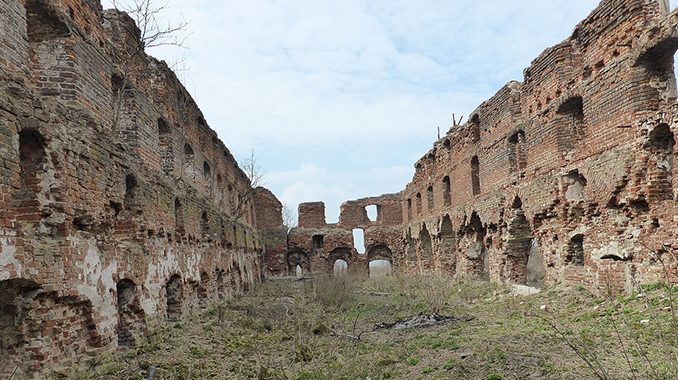
In the secular recounting of the history of the West, it is commonly asserted that Christianity held a many-centuries-long dominance over the peoples of Europe, stifling (supposedly) intellectual and moral development because of its superstitious beliefs and practices.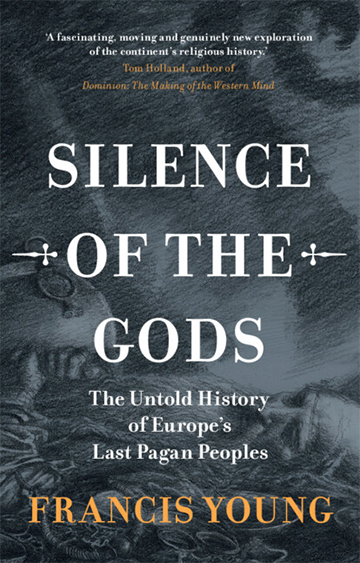
Though it is true that the Church held sway over many parts of the European continent for well over a millennia, this was decidedly not the case in much of eastern Europe, from what is now the Baltic states of Lithuania, Latvia, and Estonia, to the Great Bend of the Volga a thousand miles to the east, where pagan practices survived well into the eighteenth-century. The reasons for this are complex, with the slow Christianization of the Baltics and the Russian interior offering an illuminating and cautionary tale about evangelization, as Francis Young recounts in Silence of the Gods: The Untold History of Europe’s Last Pagan Peoples.
Though some of the eastern European peoples of this region, such as the Estonians, Latvians, and perhaps even the reindeer-herding Sámi are familiar to our ears, others, such as Karelians, Mordvins, Chuvashes, Maris, and Udmurts, are exotic to Western audiences (the Finno-Ugric Udmurts of the Russian interior, for example, are disproportionately redheaded). Still others, such as the Baltic Prussians, whose language was once spoken widely in what is now northern Poland, the Russian oblast of Kaliningrad, and Lithuania, no longer exist as a distinct people.
Some pagan practices were common among these peoples, including sacrifices and libations to pre-Christian deities, worship of images of pre-Christian deities, and veneration of natural features such as trees, rocks, and bodies of water. Among the Baltic peoples, the cult of snakes, including feeding serpents during ritual meals, was ubiquitous into the sixteenth century. The Sámi were known for their shamanistic trances; Latvians believed people capable of turning into werewolves; and the Mordvins of the Great Bend of the Volga would, during exceptional circumstances, offer a human sacrifice to Modava, the god of the earth.
Unsurprisingly, Christian missionaries found many of these practices alarming, if not demonic. As Young recounts:
The further Christians ventured north and east in Europe, the more they encountered peoples who had little interest in being Christianized, and whose ways of life, languages, and cultures bore little relation to anything missionaries had encountered before.
Moreover, the animism encountered by missionaries was noticeably different from the paganism they had read about in the Bible or in Classical texts.
Even more salient, as it related to missionary work, the paganism of eastern Europe was worlds apart from late medieval Christianity, which encompassed not just particular rites such as Baptism and the Eucharist, but a broader theological and philosophical reality. Young explains:
But while the church was concerned with matters of identity, eternal salvation, and sacred authority, the cults and rites of the gods marked the ritual, natural, and agricultural years and were focused on ensuring equilibrium between the divine, human, and natural worlds and the continuance of natural cycles.
The collision of Christianity eastern European animism occurred less over abstract ideas taught in seminaries, but rather a “complex matrix of cultural practices.
The result of this was what Young describes as religious creolization, “a complex continuum of newly fashioned creolized religions that synthesized elements of Christianity and traditional ritual practices.” To various degrees, the pagan peoples of eastern Europe were willing to integrate various Christian practices into their daily lives while retaining certain pagan practices, because the very idea that a new religion could entirely supersede their way of life was almost inconceivable. The long process of assimilation into Christianity was further enervated by other factors such as negligent missionaries, poor church infrastructure, geographical remoteness, language barriers, and active resistance by the local population.
Several major historical events framed the character of Christianization in the Baltics and the Russian interior. The first of these was the Baltic Crusades, encouraged by Pope Alexander III in his 1171 papal bull Non parum animus noster, which empowered the Teutonic Order to pursue military conquest in the region, and continued into the fifteenth century. Throughout the conquest and occupation of Prussia and Livonia by Germanic crusaders, the Teutonic Order focused less on the conversion of existing territories under their control but rather on the prosecution of crusades against resisting pagans. It’s perhaps unsurprising then that the Baltic Crusades were defined by periodic rebellions of those subject to Christian rule. For example, during the St. George’s Night Uprising in Estonia in 1345, locals brutally massacred many German settlers and missionaries, including women and children, and set fire to churches.
Other missionary efforts were more successful. Stephan Khrap (or Stepan of Perm) relied on persuasion rather than violence with the animist Komis in the Vychegda basin. Emulating the methods of Saints Cyril and Methodius, the apostles of the Slavs, he devised a distinctive alphabet for the Komi language. Stephan was also uncompromising when it came to idolatry, eradicating images he found in the forest and destroying valuable offerings of furs (a principal trading commodity). Stephan’s hagiographer, Epiphany the Wise, notes that it was this particular dramatic act of renunciation of wealth in particular that impressed the Komis and persuaded them to embrace Christianity.
While the Teutonic Order pursued a missionary policy of military subjugation, the Poles to the south followed an indirect, less aggressive route. In 1386, Lithuanian Grand Duke Władysław II Jagiełło converted to the Catholic faith and married a Catholic Polish princess, which initiated a slow, centuries-long process by which the Lithuanian people became Catholic. Surveying the complexities of continued pagan practice within the Polish-Lithuanian Commonwealth, fifteenth-century Polish Catholic scholar Paweł Włodkowic could thus distinguish between “gentle and peacekeeping, quiet pagans… [who] have voluntarily made themselves subject to their Christian governors,” and “savage pagans,” who violently resisted.
Catholic competition over eastern Europe reached a head in the late fourteenth and early fifteenth centuries, with the now-united Catholic Poles and Lithuanians engaging in an open war against the Teutonic Order. At the Battle of Grunwald in 1410, the Germans were soundly defeated, initiating a slow decline of the Teutonic Order’s influence. In 1525, Grand Master Albert of Brandenburg converted to Lutheranism. That decision in time would definitively reshape how Western Europe understood and related to the paganism still remnant in the Baltics.
The Reformation and Counter-Reformation significantly intensified hostilities towards Europe’s last unchristianized peoples, while paradoxically triggering growing curiosity about paganism. For many, anxiety about the continued survival of pockets of unconverted pagans drew accusations of religious indifference from both Catholics and Protestants. The Reformation significantly intensified the demonization of pre-Christian religions, much of it labeled as witchcraft. In Protestant German areas, formal judicial functions of the church to prosecute such activity came under the purview of the state, which made lethal persecution much easier.
While Protestants tended to leverage the coercive arm of the state to accelerate Christianization, a new wave of Catholic missionaries established themselves in direct competition to traditional practices, Jesuit missionaries engaging in regular exorcisms of pagan sites. In 1657, for example, the Jesuit Jakub Paszkiewicz decided the best way to address the use of sorcerer-concocted magical herbs was to distribute blessed rue and sage on the Feast of the Assumption. Many, it was recorded, “used these herbs as a very efficacious medicine against all illnesses.” Similarly, the Catholic archbishop of Gniezno authorized construction of a church on the site of a rock venerated by local people at Gelvonai.
The Catholic approach did not necessarily reap immediate dividends. As late as 1666, Jesuit missionaries reported that only one in a hundred people in the Lithuanian region inhabited by the Samogitians had ever heard of the Incarnation or the Trinity, a fact that had much to do with the absence of an established clergy and a functional parish system. As remarkable as it may be, the Sámi, Estonians, Latvians, and Lithuanians did not fully adopt Christianity until the end of the eighteenth century, by which time Jesuit missions elsewhere, such as in the New World or East Asia, were centuries old. And, remarkably, Catholicism did not become a core fixture of Lithuanian identity until the end of the eighteenth century, just as Enlightenment philosophes were encouraging political regimes to expel the Church from the nations of Western Europe.
Even as Christianity came to be the dominant religious and cultural force in the Baltics and interior regions of Russia, the remnants of that creolization remained. As Young argues, one sees this, for example, in the Sami’s adoption of ecstatic varieties of Pietist Lutheranism that resonated with their own shamanistic trances. Other times, embracing a certain brand of Christianity served to perpetuate a people’s distinctiveness in a novel way, as in the case of Lithuanian Catholics confronting the late eighteenth-century partition of the Polish-Lithuanian Commonwealth by Orthodox Russia.
“Christianization,” writes Young, “is the long process of cultural assimilation of Christianity into all aspects of life that follows the conversion event, including catechization of the population so that they understand Christianity as well as simply deciding to identify with it.” Across the Baltic region and interior of Russia, Christianization took many centuries and included new creole belief systems and cults adapted to various Christian ideas and practices.
Sometimes, dramatic acts of self-renunciation accelerated the adoption of the Christian faith; at other times, a carefully construed, creative reorientation of certain pagan practices made the faith more palatable to such audiences. As St. Paul so cleverly declared to the polytheist Athenians: “What therefore you worship as unknown, this I proclaim to you” (Acts 17:23).
Silence of the Gods: The Untold History of Europe’s Last Pagan Peoples
By Francis Young
Cambridge University Press, 2025
Hardcover, 456 pages
If you value the news and views Catholic World Report provides, please consider donating to support our efforts. Your contribution will help us continue to make CWR available to all readers worldwide for free, without a subscription. Thank you for your generosity!
Click here for more information on donating to CWR. Click here to sign up for our newsletter.