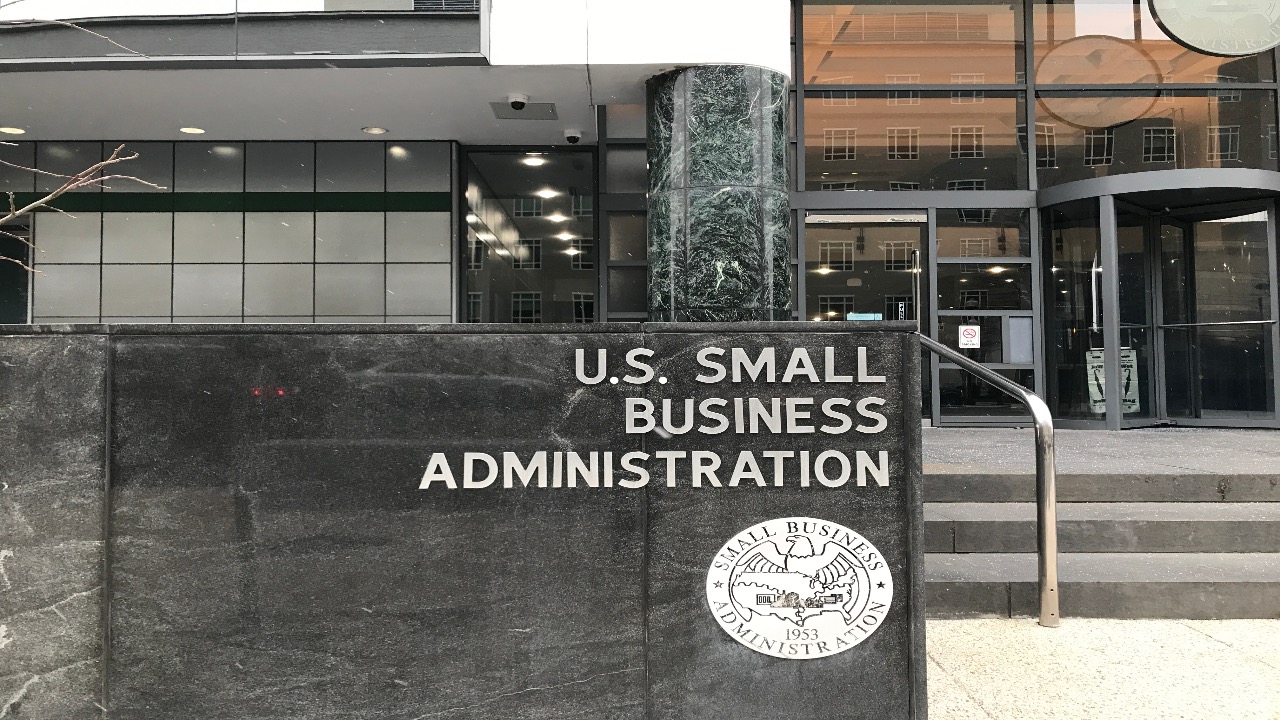
SBIR reform should be judged by one question: does it turn grants into a launchpad toward real markets and customers, or lock firms into permanent, grant-dependent life support?
Washington is treating the Small Business Innovation Research (SBIR) program like a pawn in a partisan fight. One side wants to make it bigger and permanent. The other wants to bolt on caps, metrics, and new award types. Meanwhile, SBIR itself is dark: the program’s core authority lapsed on October 1, and agencies are delaying or cancelling solicitations while Congress debates the fine print, leaving numerous early-stage innovations in limbo.
If you only follow the floor speeches, you’d think the real question is whether Senator Joni Ernst (R-IA) or Senator Ed Markey (D-MA) has the better bill. That’s the wrong lens.
The real story is that America’s research and defense agencies are trying to move from funding proposals to funding outcomes. SBIR is one of the few levers they have for early-stage innovation and commercialization, and it is misaligned with that shift.
Any serious reform, from either party, should be judged on one question: Does it widen access and improve commercialization pathways, or does it just pour more money into the same plumbing?
SBIR should be a launchpad into the warfighting and commercial economy, not a lifestyle subsidy. Reform is about making that launchpad real.
SBIR’s Real Job: Catalyst, Not Life Support
SBIR is often described as a “lifeline” for small businesses. That sounds compassionate. It is also a tell. If SBIR is your lifeline, you probably do not have a business. You have a grant habit.
The numbers make the point. Typical Phase II awards run in the low seven figures over two years. That is meaningful research and development (R&D) money, but it does not pay to build, certify, and scale the most serious products in defense, space, or biotech. The only companies SBIR can sustain indefinitely are the so-called “SBIR Mills” that treat proposal writing as their primary product.
When SBIR works, it does two things:
- Funds a real experiment against a government problem. Not a white paper, not a science project, but a testable step toward a capability.
- Sends a credible signal that helps a team raise follow-on capital or win a true production contract.
That turns SBIR into catalytic capital plus signal, not life support.
The interesting policy question is not whether SBIR should exist. It is whether SBIR is being used as an experiment and signal, or as an annuity. Right now, too much of the money behaves like the latter.
Four Design Tensions of SBIR Reform Congress Can’t Wish Away
Instead of treating Ernst versus Markey as a morality play, it’s more honest to talk about the design tensions any SBIR reform has to navigate.
1. Access vs. Concentration
The program is supposed to broaden participation. In practice, a small group of highly capable, highly repeat awardees capture a large share of Phase II money. A 2024 Government Accountability Office (GAO) review found that just 22 firms, less than one percent of awardees, received 50 or more Phase II awards over a decade and took home about 10 percent of all Phase II dollars.
Some of those firms are excellent performers. Some are simply excellent at proposals. Either way, this is a design choice. If you never put any upper bound on how much one company can draw, you are implicitly deciding that SBIR Mills are an acceptable feature, not a bug.
2. R&D Activity vs. Fielded Capability
It is easy to count how many Phase I and Phase II awards an agency makes. It is much harder to track Phase III contracts, non-SBIR revenues, and actual users in or out of government.
The result is what many founders experience as the Phase II cul-de-sac: technically interesting projects with no acquisition owner, no private capital, and no way out. Reform that only celebrates more awards, without changing how many projects graduate into real customers, confuses motion for progress.
3. Security and Foreign Risk vs. Openness
Congress is rightly worried about adversarial capital, intellectual property (IP) leakage, and nominally American firms whose ownership or control sits in Beijing or elsewhere. Recent hearings and bill text reflect that concern.
The challenge is to manage that risk without scaring off the immigrant-founded and globally networked companies we absolutely need in the industrial base. Heavy-handed rules that treat every foreign tie as suspect are a good way to push the most ambitious founders toward purely commercial markets.
4. Complexity vs. Speed
Every time Washington fixes something with another form, certification, or benchmark, it slows down the system. That is survivable for incumbents with in-house proposal factories. It is lethal for the first-time founder in Phoenix or Pittsburgh who cannot afford to learn a new compliance scheme every year.
Reform that only adds processes is not reform. It is job security for the process.
The bottom line is that every serious bill on the table is just a different way of trading off these four tensions. The question for lawmakers is whether they are doing it on purpose or by accident.
What “Good SBIR” Would Look Like in 10 Years
If you strip away the talking points, a healthy SBIR ecosystem is not hard to picture.
Three things would be true:
- New companies could get in quickly. That means real on-ramps for first-time applicants, including smaller, faster awards with simpler applications. Some Ernst-backed ideas, like a dedicated “Phase IA” for firms that have never received an SBIR award, are aimed directly at this problem. Done well, these on-ramps would broaden participation beyond the usual coastal ZIP codes and Rolodexes.
- We would track and reward what happens after SBIR. Congress already required tighter performance standards for chronic multiple awardees in the 2022 reauthorization, but only for a tiny sliver of firms. In a mature system, agencies and the Small Business Administration (SBA) would publish clear, comparable metrics on Phase III contracts, non-SBIR revenues, and private capital attracted. Program managers would be judged less on how many Phase II checks they write and more on how many teams they help escape the cul-de-sac.
- Agencies would have the tools to cut off SBIR Mills and real foreign risk without freezing the entire pipeline. That means hard caps or performance triggers for companies that want to live on SBIR forever, national-security waivers for genuinely critical technologies, and standardized foreign-risk rules that target actual adversarial control, not a founder’s birthplace or accent.
In that world, SBIR would behave less like a small-business entitlement and more like a disciplined, distributed portfolio of early-stage bets that regularly feed the warfighting and commercial economies.
How to Judge the Current Crop of SBIR Reforms
Viewed through this lens, the Ernst and Markey camps start to look less like heroes and villains and more like partial answers to the same question.
One side leans toward permanence and volume: make SBIR and Small Business Technology Transfer (STTR) programs permanent, grow the set-aside percentages, extend commercialization pilots, and add training for acquisition officials and “technology commercialization” designees inside agencies.
The other leans toward breadth and guardrails: introduce new Phase IA awards for first-time firms, create large Phase III-style awards for defense capabilities, impose lifetime caps on how much any one company can pull from Phase I and II, and tighten foreign-risk screens.
Both say they want more innovation and more small businesses in the mix. The split is over which volume they care about: volume measured in total dollars flowing through the program, with fewer brakes on repeat players, vs. volume measured in the number of distinct companies that get a real shot and then graduate into the broader industrial base.
My bias is straightforward: reforms that increase the number of companies that successfully navigate the pipeline and graduate matter more than reforms that simply increase the total dollar figure or add new titles with “commercialization” on the door.
The instinct in Washington is always to add a training module and declare victory. SBIR reform should be judged instead on whether it changes the flow of money and the path to market, not whether it creates another office with a shinier organizational chart.
Launchpads, Not Lifestyle Subsidies
Most Americans will never hear the phrase “Phase III data rights.” They will never read GAO tables breaking down how many firms got 50+ Phase II awards. What they will see, eventually, is whether the United States has more than a handful of vendors who can build the radars, batteries, software, and space systems we actually need.
SBIR is one of the few tools we have to seed that future supplier base with real technology, not just slogans. If we get the design wrong, we bake in fragility for another decade.
So by all means, Congress should debate caps, waivers, and timelines. But it should do so with a simple standard in mind:
- Does this change make SBIR behave more like a launchpad into the warfighting and commercial economy, where companies are expected to grow up and leave?
- Or does it entrench SBIR as a lifestyle subsidy for a narrow tier of professional grantees?
Get that answer right, and the program will justify the “seed fund” label its champions love. Get it wrong, and no amount of rebranding will save us from the consequences.
About the Author: Brian Miller
Brian Miller is senior vice president at BMNT, leading federal acquisition and go-to-market strategy across business development, product, and government affairs. He is a former national security advisor and professional staff member for the Senate Select Committee on Intelligence.
Image: DCStockPhotography/shutterstock