The recent US-Saudi critical minerals deal provides a way for the United States to circumvent China’s rare earth monopoly.
Alongside some other summit deliverables that turned out to be less ambitious than had been expected, the Strategic Framework for Cooperation on critical minerals, metals, and uranium stands out as one of the more important developments from Crown Prince Mohammed bin Salman’s visit to Washington last week.
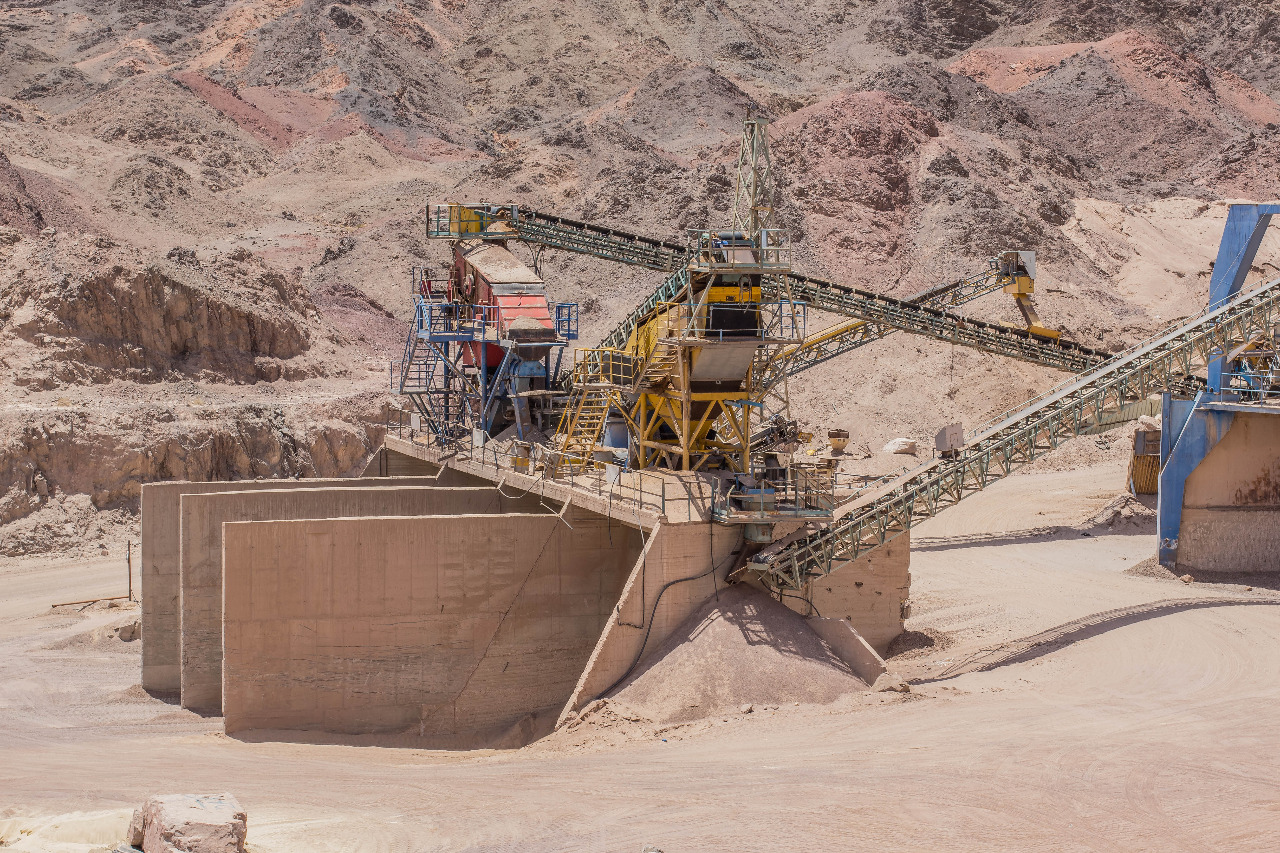
The US Department of Defense will finance 49 percent of the cost of a new rare earth minerals processing plant in Saudi Arabia in cooperation with MP Materials, alongside majority owner Ma’aden, the Saudi state-owned mining company, which will have a 51 percent ownership stake. MP Materials currently operates the only US-based rare earth minerals mine and processing plant, and the backing of the Department of Defense mitigates the financial risks for their shareholders.
Saudi Arabia has the world’s fourth-largest known deposit of rare earth minerals at Jabal Sayid. Deposits of rare earth minerals exist in many countries, however. A previous deal the US made with Ukraine last February, for example, has fallen out of the headlines as it became clear that the commercial potential was lacking. This one is different. Not only are the Saudi reserves large enough and concentrated enough to be commercially viable, but they also exist in a country where it is very easy for extractive industries to get permits.
China’s Path to Rare Earth Dominance
A large part of the reason for the concentration of rare earth production in China in the late 20th century was the difficulty and cost of containing the environmental externalities of processing the ores. This pushed production to China, which had relatively permissive standards in that era. Some of the waste from these facilities is mildly radioactive, adding to the difficulty for the US or other Western facilities that are seeking to compete.
China actually imports some of the ore that is processed domestically, but the combination of the environmental externalities and the immense technical complexity of separating rare earth ores into their component elements has given Chinese facilities a near-monopoly. MP Materials has been working to improve its extraction process and build a US competitor, but it’s still not profitable as of Q3 2025. Part of this challenge has been the relatively low prices available for Chinese-produced rare earth minerals, even with tariffs now tilting the playing field a bit.
Reading between the lines, it seems that part of the impetus behind this deal from the US standpoint, and that of MP Materials, is that Saudi Arabia could potentially provide it a more permissive operating environment than its main facility in California. If MBS wants a project to move forward, there is no NIMBY-ism and no battles with local stakeholders, state-level environmental regulators, and the like. That also might make the facility more cost-effective. The lack of any political strength among environmentalists in the kingdom really seems to be the main attraction and could make it far easier for the project to succeed.
Ramifications of the Saudi-US Minerals Deal
If Saudi Arabia does succeed in becoming a secondary rare earth processing center alongside China, with volumes greater than US facilities are producing, that obviously would be a big win for the kingdom.
While oil is a global fungible commodity and Saudi Arabia still plays a unique role as a locus of spare capacity in the system, the redirection of Saudi Arabia’s crude away from the US as shale oil has taken off since the late 2000s has caused some American politicians to see it as less critical to US interests than it used to be. A successful critical minerals plant that plays a unique role would be another critical interest for the United States until, and unless, the US develops ample domestic capacity. We will have to watch this space to see how it develops, but Saudi Arabia’s advantages here seem clear.
This would also fit well with the kingdom’s multi-vectored foreign policy. While this seems to be tacking back toward the US, alongside some of the agreements on AI, nuclear cooperation, and the proposed F-35 sale, the deal still leaves plenty of room for China. Outside of the services for the upstream oil and gas industry and security ties (where the US and other Western partners are dominant), China has eclipsed the United States as a trading partner. China also dominates the renewable energy space and is a growing presence in the Saudi automotive sector, both as an exporter and as a potential investor in domestic production.
A key Saudi role in critical minerals would be a win for both the kingdom and the United States, reducing China’s chokehold, but it also could eventually be a key source of leverage for Riyadh vis-à-vis the United States if the United States were to become heavily dependent on it as a source.
About the Author: Greg Priddy
Greg Priddy is a senior fellow for the Middle East at the Center for the National Interest. He also consults for corporate and financial clients on political risk in the region and global energy markets. From 2006 to 2018, Mr. Priddy was Director, Global Oil, at Eurasia Group. His work there focused on forward-looking analysis of how political risk, sanctions, and public policy variables impact energy markets and the global industry, with a heavy emphasis on the Persian Gulf region. Prior to that, from 1999 to 2006, Mr. Priddy worked as a contractor for the US Energy Information Administration (EIA) at the US Department of Energy. Mr. Priddy’s writing has been published in The New York Times, The National Interest, Barron’s, and the Nikkei Asian Review, among others.
Image: Shutterstock/Artem Kniaz