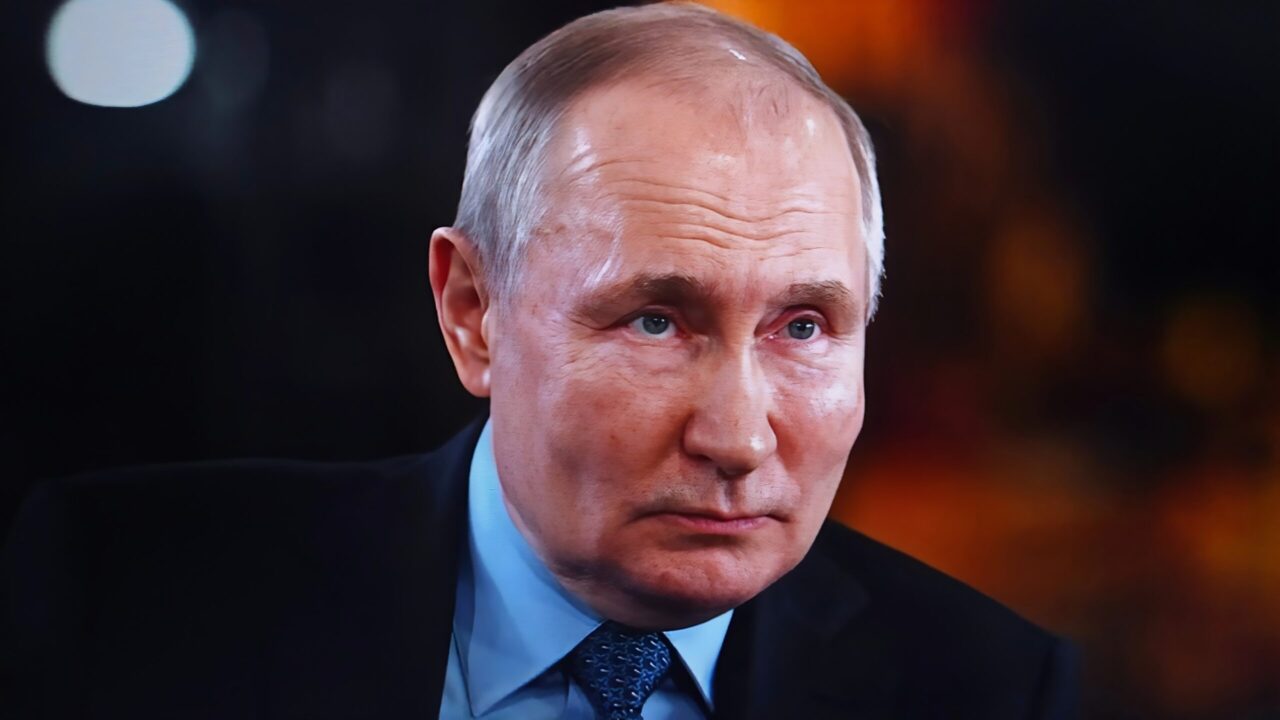
Putin is trying to drive a wedge between the United States and Europe and take advantage of any disagreement to further his foreign policy goals in Ukraine.
“We are not planning to go to war with Europe, but if Europe wants to and starts, we are ready right now,” Russian president Vladimir Putin said on Tuesday.
The Russian leader added that the Europeans “are on the side of war.”
Putin’s direct threat to Europe comes in the wake of numerous acts of aggression against NATO and the European Union.
Russia’s Threats of War
After several weeks of unmanned aerial drone, fighter jet, ship, and even saboteur intrusion into European countries, Putin openly threatened Europe with war. Of course, this is not the first time he has done so since he took the ill-fated decision to invade Ukraine. But now, there is more at play.
Putin is trying to drive a wedge between the United States and Europe and take advantage of any disagreement to further his foreign policy goals in Ukraine. The ongoing peace negotiations among Ukraine, the United States, NATO, and the European Union are already revealing some different positions. Ukraine’s European partners, mainly France, Germany, and the United Kingdom, are adamant that Ukraine receives a fair deal. The White House, on the other hand, is pushing for an end to the war, even if that end finds Russia more compensated than it should be.
Threatening Europe with war, however, could easily backfire for Putin. Although the White House is currently extending a hand to the Kremlin, the United States’ military, economic, legal, and cultural ties with Europe run deep. In making his threats, Putin ignores NATO’s Article 5, which would require a common response to an attack on any member state. Although triggered only once in the history of the transatlantic alliance (by the United States after the 9/11 terrorist attacks), Article 5 offers a strong deterrence against any thoughts of attacking a NATO member state.
Moreover, it is highly unlikely that the Russian military is capable of waging war against Europe and NATO. Indeed, if the conflict in Ukraine has shown anything, it is that the Russian armed forces are much weaker than the Kremlin expected. It has taken almost four years of combat and over 1.2 million killed and wounded troops for the Russian military to capture a small part of Ukraine. To be sure, the Russian military has a potent nuclear arsenal. However, in conventional terms, the Russian armed forces have proven to be a paper tiger compared to NATO.
What Ukraine Wants from Peace Negotiations
Meanwhile, the Ukrainian government is trying to balance the interests of Ukraine with the outside pressure to end the deadliest conflict on European soil since World War II.
Ukrainian president Volodymyr Zelenskyy keeps highlighting that any final peace plan requires substantial involvement from Kyiv’s European partners.
“Our diplomats are actively working with all partners to ensure that European countries and other participants in the Coalition of the Willing are meaningfully involved in developing decisions,” the Ukrainian leader said on X.
Zelenskyy wants his European partners to be part of any peace plan. His country’s postwar rebuilding and security would hinge on the goodwill (and pockets) of the Europeans.
About the Author: Stavros Atlamazoglou
Stavros Atlamazoglou is a seasoned defense journalist specializing in special operations and a Hellenic Army veteran (national service with the 575th Marine Battalion and Army HQ). He holds a BA from the Johns Hopkins University and an MA from the Johns Hopkins’ School of Advanced International Studies (SAIS). His work has been featured in Business Insider, Sandboxx, and SOFREP.
Image: Shutterstock.