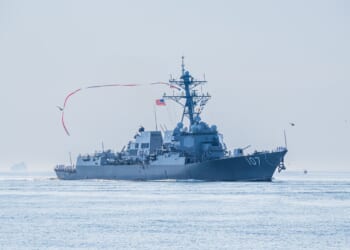
Russia is increasingly escorting its “ghost fleet” vessels with naval assets—helping to protect them from Western seizure, but making their affiliation with the Kremlin far more obvious.
The Royal Navy deployed warships and air assets to intercept a Russian warship accompanying an oil tanker sailing through the English Channel.
Last week, two Royal Navy warships, supported by an AW-159 Wildcat helicopter, intercepted the Russian corvette Boikiy and the oil tanker MT General Skobelev.
Interception in the English Channel
For yet another time in the past months, the Royal Navy deployed warships and air assets to intercept Russian warships.
The Royal Navy deployed the HMS Mersey and HMS Severn patrol ships to intercept the Russian vessels.
The Russian vessels were returning from a deployment in the Mediterranean Sea. Although the Ukrainian conflict is taking a heavy toll on the Russian fleet, Moscow continues to send warships, surveillance ships, and support vessels around the world on various missions.
“In what has been a busy start to the year, this operation provided another opportunity for my Ship’s Company to demonstrate their continued readiness and ability to safeguard the United Kingdom’s maritime interests,” Lieutenant Commander Dan Wardle, the commanding officer of the HMS Mersey, stated in a service press release.
Supporting the two patrol ships was an AW-159 Wildcat helicopter. Armed with advanced anti-ship munitions and sensors, the Wildcat can prove to be a real nuisance for a warship or merchant vessel. The helicopter was assigned to the 815 Naval Air Squadron and provided intelligence, surveillance, and reconnaissance support to the two patrol ships, allowing the naval task force to have a constant and reliable picture of the Russian vessels’ actions.
Corvettes are the smallest possible surface combatant and are usually limited to escort duties, coastal defense, and patrol duties.
“Operating in close coordination with our sister vessel HMS Severn and alongside other NATO allies has enabled the sharing of experience and best practice, further highlighting the strength and unique nature of the relationships between our nations,” Wardle added.
The two Russian ships were under close surveillance by NATO warships and air assets throughout their journey.
“With this operation, our sailors have once again sent a message to Putin – we know exactly what his navy is doing. Every time a Russian ship comes near the UK, the Navy is ready to track, deter, and defend. I want to pay tribute to the professionalism of our personnel who work 24/7, 365 days a year to keep our nation safe,” Minister for the Armed Forces Al Carns said.
NATO Is Intercepting Russian Warships—and Suspicious Tankers
Over the past several weeks, the United States military and NATO have been intercepting vessels suspected of breaking the embargo on Venezuela. Many of the intercepted vessels are of Russian origin and part of Moscow’s so-called “ghost fleet,” but do not carry a Russian flag.
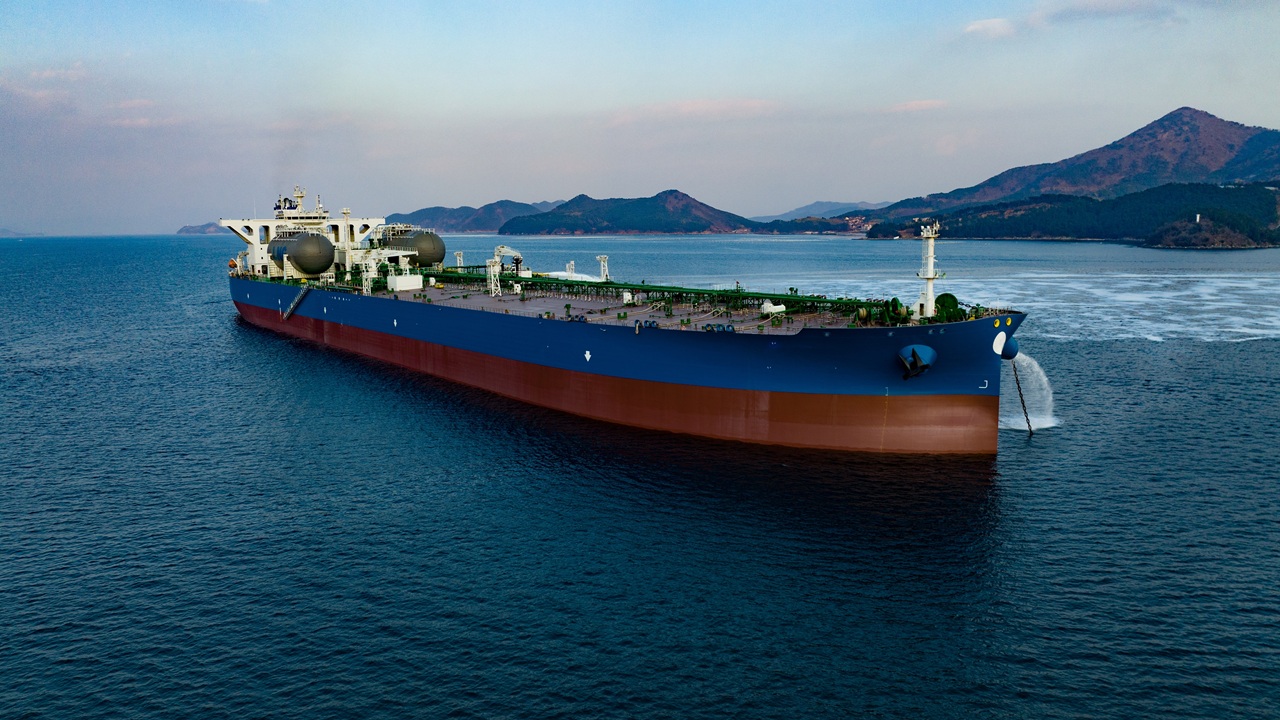
The tanker in question carries a Russian flag and thus could not be touched without provoking an open response from Moscow. Moreover, it was accompanied by the Russian corvette to ensure that there was no physical interference with the ship.
Despite repeated interceptions and seizures, the Kremlin continues to rely on its shadow fleet to move around embargoed goods around the world.
About the Author: Stavros Atlamazoglou
Stavros Atlamazoglou is a seasoned defense journalist specializing in special operations and a Hellenic Army veteran (national service with the 575th Marine Battalion and Army HQ). He holds a BA from the Johns Hopkins University and an MA from the Johns Hopkins’ School of Advanced International Studies (SAIS). His work has been featured in Business Insider, Sandboxx, and SOFREP.
Image: Shutterstock / Capt. Tymur Rudov.