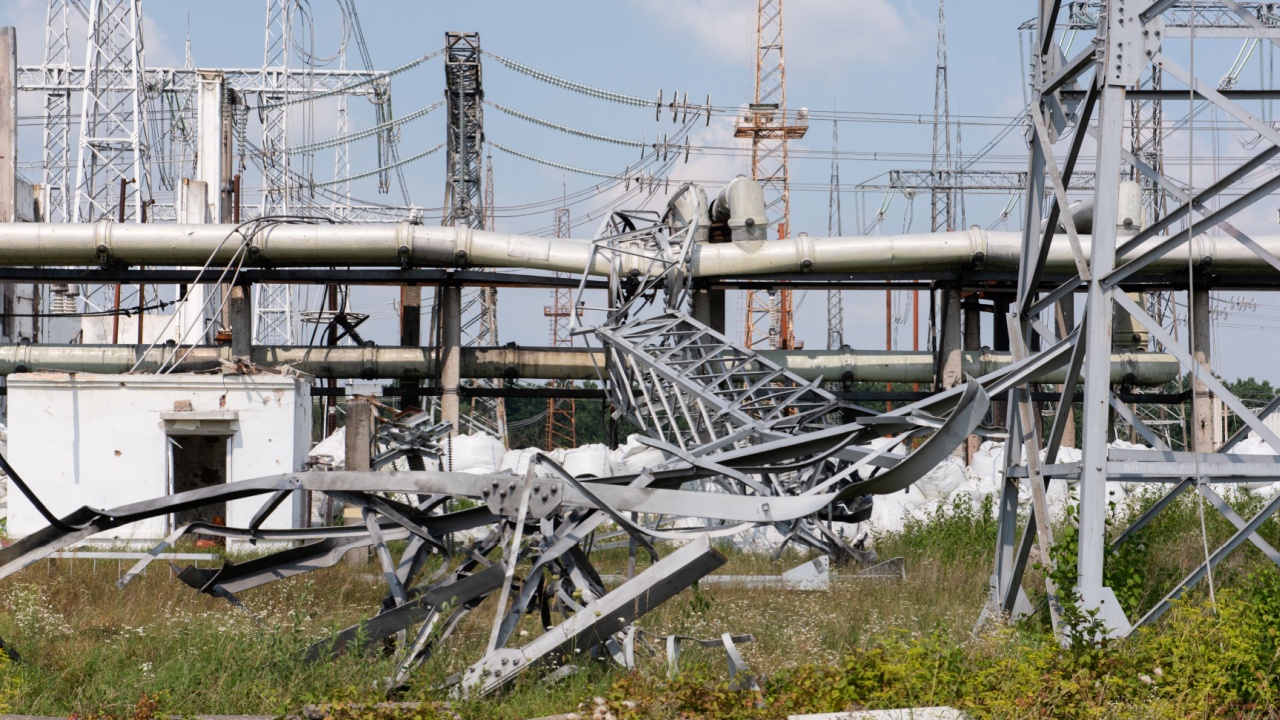
Russian forces have targeted Ukraine as part of their unconventional warfare tactics.
Ukraine’s energy infrastructure was targeted amidst Russia’s latest large-scale drone barrage. Several people were killed in the overnight attack earlier this month, which included a direct strike on a civilian apartment complex in Dnipro. According to Ukrainian news outlets, the city’s energy infrastructure was the clear target of the assault. In total, Moscow fired nearly 460 drones and 45 missiles as part of the barrage that ultimately struck more than two dozen locations. Ukrainian Prime Minister Yulia Svyrydenko said in a post on X that the strikes damaged “several major energy facilities” around Kharkiv and Kyiv, as well as in the central Poltava region. Since the invasion began back in February 2022, Russia has strived to weaken Kyiv’s capacity to defend against its military offensives by striking the nation’s energy infrastructure. Specifically, Ukraine’s electric stations, oil and gas production sites, and thermal power plants have been targeted.
Russia’s War Against Ukraine’s Critical Infrastructure
This summer, a report published by the International Institute for Strategic Studies (IISS) outlined Moscow’s unconventional warfare methods in terms of critical infrastructure strikes. As stated in the comprehensive open-source database shared by IISS, “The cumulative impact of Russian attacks on physical targets, on virtual targets and via informational operations has been to undermine Western resilience and divide European societies. The effect has also been to lower the threshold for future escalation and increase the risk of strategic miscalculation on both sides.”
Russian forces have targeted Ukraine as part of their unconventional warfare tactics. Beginning in 2022, Moscow was accused of sabotaging undersea cables in a wide-scale effort to disrupt the global economy. Similar attacks in the Baltic Sea have continued over the last few years. Telecom, gas, and power links connecting European countries like Finland, Sweden, Latvia, Germany, and Estonia have been targeted. Since it is extremely challenging to pinpoint the culprit behind undersea assaults, Russia has not been charged with any crime. However, the Kremlin is widely believed to be behind such operations.
What Russian Weapons Are Targeting Ukrainian Critical Infrastructure?
Russia often uses Iranian-delivered unmanned aerial vehicles in its barrages in Ukraine. In 2023, a report published by The Guardian cited analysts with the US Defense Intelligence Agency stating how Tehran evolved from primarily a regional drone supplier to “Moscow’s most significant military backer” through the course of the invasion in Eastern Europe. Specifically, Iranian-made Shahed-131 and Shahed-136 lethal drones have been used heavily in the conflict.
Developed by Shahed Aviation Industries, the Shaheds are loitering munitions often referred to as “suicide” drones. Able to linger around their targets prior to detonating, the Shaheds have proven to be cheap and deadly contributors to Russia’s war efforts in Ukraine. Last year, an Iranian-designed Mohajer-6 unmanned aerial vehicle fully armed with Qaem-5 air-to-ground bombs was used in a Russian attack targeting Kursk Oblast in Ukraine. Clearly, the partnership between Tehran and Moscow is only expanding as the war rages on.
About the Author: Maya Carlin
Maya Carlin, national security writer with The National Interest, is an analyst with the Center for Security Policy and a former Anna Sobol Levy Fellow at IDC Herzliya in Israel. She has over 1,000 articles published over the last several years on various defense issues. Carlin has bylines in many publications, including The National Interest, Jerusalem Post, and Times of Israel. You can follow her on Twitter: @MayaCarlin.
Image: Shutterstock.