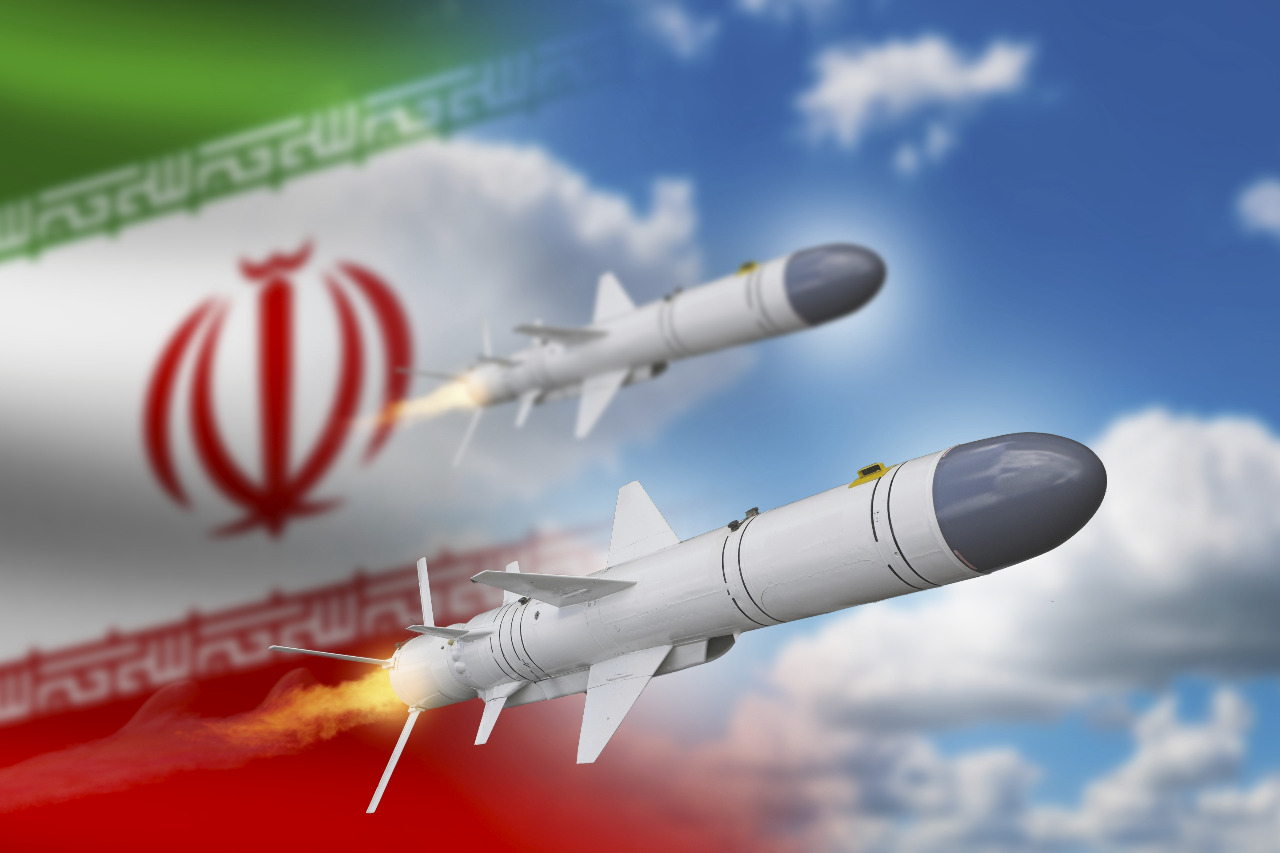
The risks of an Iranian strike on Gulf energy assets have frequently been dismissed as “crying wolf.” Is the wolf finally at the door?
With President Donald Trump apparently again facing a near-term decision point on whether to launch military strikes on Iran, the world oil market has taken notice, with global benchmark Brent crude oil settling at over $70 per barrel, the highest since July. This came amid a rather bearish consensus expectation of excess supply and building inventories this year.
That reaction, which is still up only about 10 percent on concerns about Iran, seems justified, as there are plenty of reasons to see the risk of an actual supply disruption taking place as being significantly higher than in June, when Israel and Iran traded strikes for 12 days. The United States joined in on the last night of the campaign to hit hardened nuclear sites, which required bombs larger than what Israel could deliver.
The History of Supply Risk and Oil Prices
The relationship between perceptions of security-driven supply risk and oil prices has changed a bit since the shale boom began in the United States in the late 2000s. During the long price run-up on perceived scarcity in the mid-2000s, concerns related to Iran, pipeline bombings in Iraq, and outages in the Niger Delta in Nigeria frequently made substantial waves in the market. There were long periods when crude markets clearly carried a “risk premium” relative to where they would have been without those perceived risks, even if they had not yet materialized.
The shale boom changed that relationship without ending it. Since the development lead time for shale wells is less than one year, a rise in prices without an actual loss of volume would translate much more quickly into actual oversupply, as shale producers would hedge their production in the futures market and lock in their revenues. It became difficult for the market to maintain a risk premium for any length of time without an actual disruption event. The market would react to headlines, but the effect would be short-lived unless the notional risk came to fruition.
During the June 2025 strikes, the rise in crude peaked at the beginning and began to come down when Iran did not immediately escalate to hit energy infrastructure. Instead, it focused its retaliation on Israel, and it launched only one well-telegraphed strike on a US base in Qatar after the United States joined in on the last night of the campaign. As I had pointed out at the time, Iran had a lot of reasons to be restrained in its reaction, not wanting to undermine its relations with Gulf Arab neighbors nor provoke strikes against its own energy assets. The premium did not hold through the air campaign, because the market consensus solidified quickly that the situation was contained.
The situation now could not be more different. With President Trump having given Iran an ultimatum based on halting the killing of protestors, rather than simply striking their nuclear program, he is aiming at undermining the clerical regime’s hold on power.
The Impact of Iran’s Retaliation
As the United States has brought in the needed military assets, it also has been asking Iran via intermediaries for concessions on their nuclear program and missile programs as well, which Iran is unlikely to agree to. The United States will also be participating in the strikes from the outset this time, unlike when Israel took the lead in June and the US was only involved for a single night.
This almost certainly will lead to Iran making good on its threat of hitting US bases and warships in the region, but the immediate risk of escalation beyond that will depend on what was targeted. If the Supreme Leader Ayatollah Ali Khamenei is killed, or if regime leaders fear an immediate loss of their hold on power, this will eliminate most of the incentives for restraint in Iran’s retaliation. Even if the targeting is not that bold, this will still be perceived by the regime as intended to eventually bring about the demise of the clerical regime, which is a much different military objective than simply preventing Iran from having nuclear weapons or enrichment capabilities.
This could make for a wild ride for the market. If Khamenei is not targeted and Iran’s retaliation sticks solely to Israeli and US military targets, prices could pull back after the first night or two of strikes. Discounting the risk of further escalation might turn out to be a mistake later, but “Iran fatigue” in the market is real, and most oil traders think the risk of Iran lashing out successfully against the oil market is a red herring.
A truly momentous rise in prices — say $80+ per barrel — would not happen without an actual large-scale disruption. As I outlined in June, Iran could probably do that if it made Gulf Arab energy infrastructure a priority in its use of missiles. After all these years of “crying wolf” over this risk, could the wolf perhaps actually be here this time?
About the Author: Greg Priddy
Greg Priddy is a senior fellow for the Middle East at the Center for the National Interest. He also consults for corporate and financial clients on political risk in the region and global energy markets. From 2006 to 2018, Mr. Priddy was Director, Global Oil, at Eurasia Group. His work there focused on forward-looking analysis of how political risk, sanctions, and public policy variables impact energy markets and the global industry, with a heavy emphasis on the Persian Gulf region. Prior to that, from 1999 to 2006, Mr. Priddy worked as a contractor for the US Energy Information Administration (EIA) at the US Department of Energy. Mr. Priddy’s writing has been published in The New York Times, The National Interest, Barron’s, and the Nikkei Asian Review, among others.
Image: Shutterstock/FOTOGRIN