I used to believe I couldn’t begin the life I longed for until I lived somewhere else. I dreamed of a homestead: wide open space, chickens, rows of vegetables stretching toward the sky. I read every how-to book, watched YouTube videos of families living the life I wanted, and waited—aching—for the circumstances that would finally make it possible.
Meanwhile, the small suburban lot we actually lived on—a patch of lawn, a scraggly tree, a few planter boxes—sat underused and unnoticed. And I remained sick, tired, and overwhelmed.
It wasn’t until my autoimmune diagnosis brought everything to a halt that I began to see clearly: I didn’t need to be somewhere else to begin. The healing I longed for wouldn’t come through escape or reinvention. It would come through stewardship—through tending what I’d already been given.
So, I planted a garden.
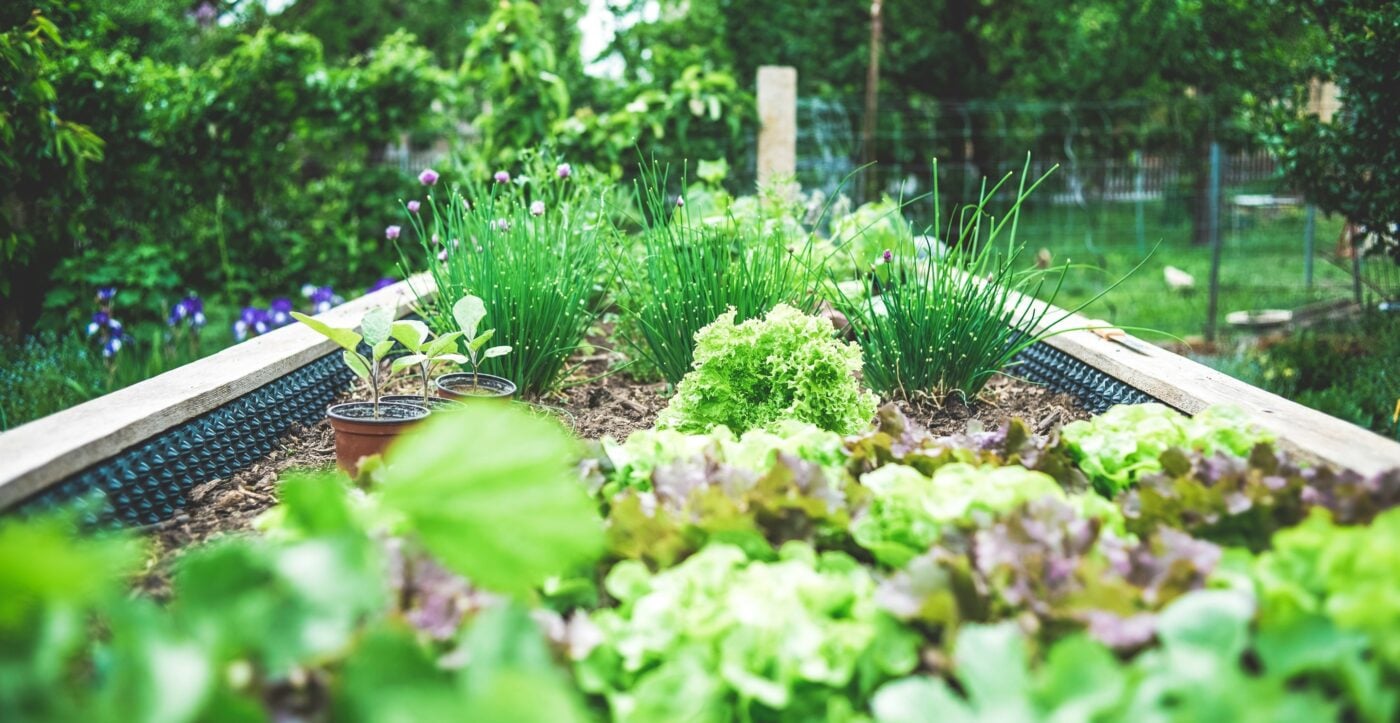
Not a perfect one, not an Instagram-worthy one—just a humble square of raised beds on our one-third acre. It didn’t look like much. But the act of planting changed something in me. For the first time in a long while, I felt hope. Something was growing. And so was I.
Learning to Live with the Seasons
As the tomatoes swelled and the cucumbers twisted their way up the trellis, I started paying closer attention to the natural seasons—not just the liturgical ones I’d always loved, but the quieter rhythms of the soil: sowing, growing, harvesting, resting.
These rhythms became teachers.
Spring called for courage—the humility to begin again. Summer required persistence and watchfulness. Autumn taught gratitude and the grace of letting go. And winter, which I’d always dreaded, turned out to be a holy invitation to rest, to root, to prepare.
Ora et labora, the Benedictines taught, “pray and work.” The garden showed me how the two are intertwined. Tending the soil, hauling compost, watering seedlings—these became prayer, too, as acts of reverence and ways of saying, “Thank you.”
The Gift of Limits
We live in a culture that exalts expansion—bigger houses, broader reach, more of everything. But gardening, especially in a small space, teaches the beauty of limits.
You can’t grow everything. You can’t harvest out of season. You have to learn your place—its climate, its soil, its particular gifts and constraints—and work with it rather than against it.
This posture of cooperation, of humility, is deeply countercultural. And it is deeply healing, especially for a mother learning to live gently in her body again, and to raise children who see creation not as a resource to exploit but as a wonder to steward.
I started learning lost skills—how to preserve, ferment, compost, propagate. How to say “no” to the convenience of industrial agriculture and “yes” to the slow, regenerative work of growing what we eat. The garden reduced our grocery bill. It expanded our sense of abundance. It reminded me of the dignity of domestic life and the grace to be found in simple things.
Raising Little Gardeners
Children, it turns out, are natural stewards. They don’t need convincing to love the earth; they just need time in it: dirt under their nails, watering cans that spill more than they pour, the joy of watching worms wriggle, and the taste of strawberries warmed by the sun.
Each season, I invite my children more deeply into the work—letting them choose seeds, start compost, harvest with sticky fingers. I want them to know where food comes from. I want them to know the power of planting and the humility of waiting.
And I want them to learn what I am still learning—that we are not the masters of creation; we are its caretakers.
I still dream of land sometimes. But I no longer believe that’s where my real life begins. It began when I stopped waiting and started tending. When I embraced the grace of enough. When I realized that Eden isn’t a place we recover by relocating; it’s a garden we reclaim, one bed at a time, wherever we are.
This summer, I’ll be planting again. You can find me in the backyard with dirt on my hands, a basket on my hip, and children laughing in the sprinkler nearby. It’s not a farm, but it is holy ground.
And we’re growing.
Author’s Note: This reflection is drawn in part from my book, Grow Where You’re Planted: Reclaiming Eden in Your Own Backyard, a family guide to seasonal abundance and self-sufficient living wherever you are.
Photo by Markus Spiske on Unsplash