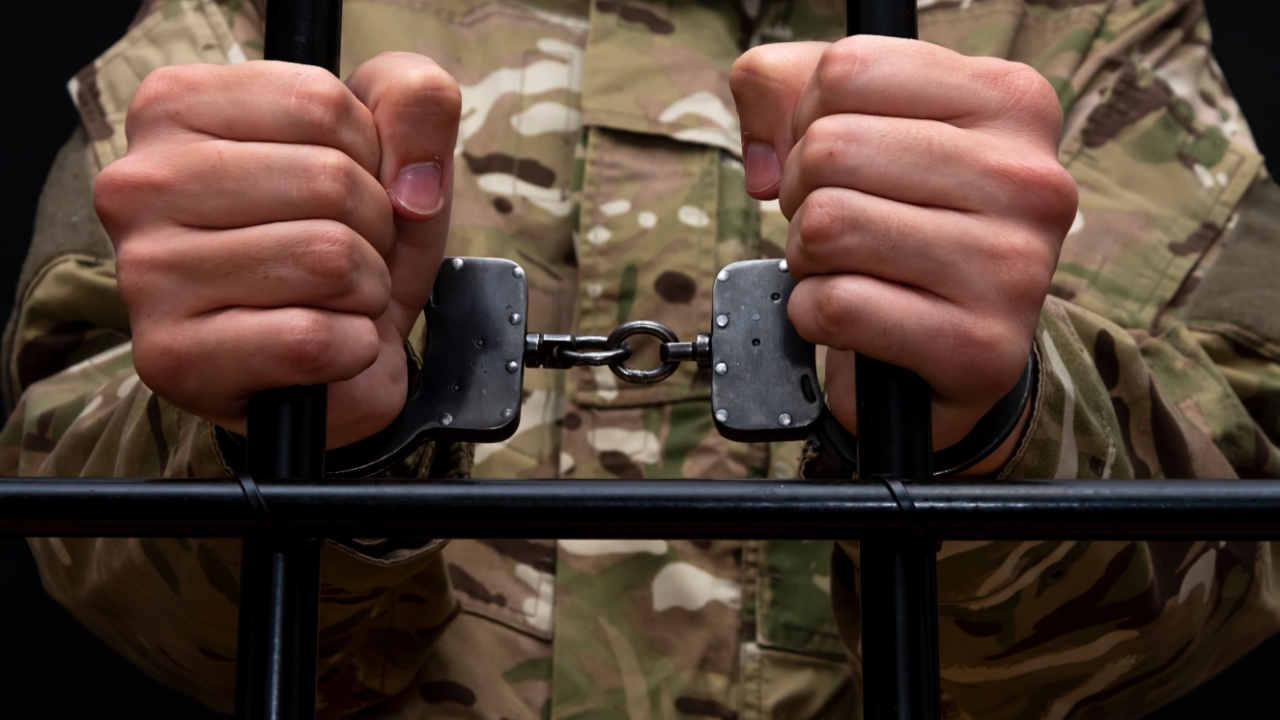
The Russian military has recruited approximately 180,000 convicts to fight in Ukraine.
One of the Kremlin’s most controversial decisions in the war in Ukraine is backfiring on Russian society.
Former convicts who fought in Ukraine in exchange for the commutation of their sentences have murdered and injured hundreds of Russian civilians, according to reports.
Russian Convict Soldiers Unleashed
Citing the findings of an independent Russian media outlet, the British Ministry of Defence assessed that former convicts are wreaking havoc in Russian society after their return from the trenches of Ukraine.
“A significant number of Russian military veterans returning from fighting in the illegal invasion of Ukraine have reportedly perpetrated violent crimes against Russian civilians,” the British Ministry of Defence stated.
According to the independent Russian media outlet Vertska, Russian veterans returning from the frontlines in Ukraine have killed approximately 550 civilians and injured 465. The Russian media outlet also found that over half of the incidents were caused by former prisoners who went to fight in Ukraine with the promise of freedom.
The Russian military has recruited approximately 180,000 convicts to fight in Ukraine. At the start, these former prisoners fought for paramilitary organizations, such as the infamous Wagner Group. However, following a failed coup d’etat in the summer of 2023, the Russian military assumed control of most paramilitary units.
“The challenge presented to Russian society by tens of thousands of violent offenders with recent and often traumatic combat experience returning to civilian life, particularly having been subject to the brutality of Russia’s armed forces, is significant, and will likely increase in scale in the medium term,” the British Ministry of Defence stated.
“The Russian senior leadership highly likely considers the issue to be a matter of growing concern,” the British Ministry of Defence concluded in its latest intelligence assessment.
Wagner Group recruiters started touring Russia’s vast penal system in search of potential recruits in 2022. Eventually, the paramilitary group would draw to its ranks almost 50,000 prisoners with the promise of freedom after six months of frontline service in Ukraine.
However, after the Wagner Group and its leader, Yevgeny Prigozhin, fell out of the Kremlin’s graces, the Russian Ministry of Defense assumed control of prisoner recruiting. Indeed, in October 2024, Russian President Vladimir Putin even signed a law that allows defendants in criminal cases to avoid litigation and the potential prison sentencing that could bring in exchange for enlisting in the Russian Armed Forces.
Russian Paramilitary Units in Ukraine
The widespread reliance on paramilitary units to fight in Ukraine reinvigorated the Kremlin’s “special military operation” at a critical junction in the war.
After the initial gains in the opening months of the conflict, the Russian military suffered significant setbacks in eastern, northern, and southern Ukraine. Using bold tactics and Western firepower, the Ukrainians liberated hundreds of square miles of territory in the fall of 2022. Subsequent Russian offensives failed to capture their objectives at the cost of increasingly heavy casualties.
Then, in early 2023, the Wagner Group assumed command of the Battle of Bakhmut, a Ukrainian town in the Donbas under siege by the Russian military for months. Wagner Group mercenaries captured the Ukrainian town, but at a heavy loss. Western intelligence assessments put the number of Russian casualties, including Wagner Group mercenaries, up to 100,000 men in the fight to capture Bakhmut.
However, frictions with the Russian high command spelled the end for Wagner Group and Prigozhin a few weeks later. Their legacy still lives on and is now, evidently, terrorizing Russian society.
About the Author: Stavros Atlamazoglou
Stavros Atlamazoglou is a seasoned defense journalist specializing in special operations and a Hellenic Army veteran (national service with the 575th Marine Battalion and Army HQ). He holds a BA from the Johns Hopkins University and an MA from the Johns Hopkins’ School of Advanced International Studies (SAIS). His work has been featured in Business Insider, Sandboxx, and SOFREP.
Image: Shutterstock