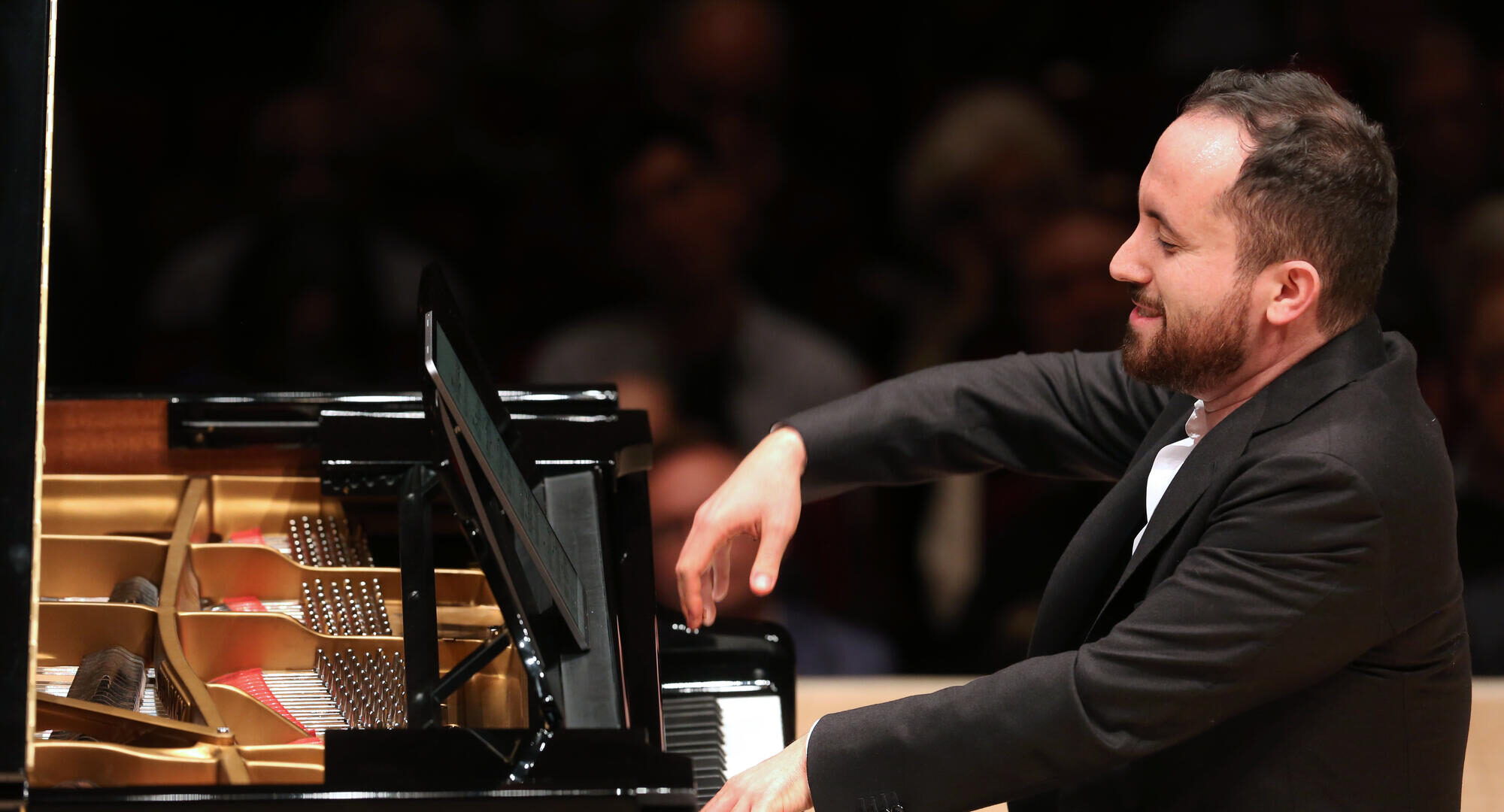
Sometime before Christmas, I saw that Igor Levit would be playing a recital in Carnegie Hall on January 22. (He is the Soviet-born pianist who did most of his growing up in Germany.) When I saw his program, my heart sank a little: “Again?”
Levit would play two works, two big works: Beethoven’s Diabelli Variations and Frederic Rzewski’s Variations on “The People United Will Never Be Defeated.” What’s wrong with that? Nothing. It’s just that Levit has played these works over and over, and I have written about him in these works over and over. His repertoire is vast. Couldn’t he play something else?
But look: he does not schedule his programs to suit the wishes of one critic. He plays for the public. Almost certainly, 90 percent of the people in Carnegie Hall last night had never heard Levit play either the Beethoven or the Rzewski.
No one plays these pieces better.
Now, let me give you a tip, stemming from my thirty-plus years as a professional writer: no one reads. I mean, they read, but they read what they want to read, rather than what you wrote.
If you say, “No one plays these pieces better than Smith,” they’ll think you wrote, “Smith plays these pieces better than anyone else”—when Smith could be tied with Jones, Brown, and a hundred others.
Anyway, I’ll repeat myself: no one plays the Diabelli Variations or the “People” thing better than Igor Levit.
At Carnegie Hall last night, he was settling in to play the Beethoven. Then someone’s phone dinged. Levit looked into the audience and smiled. Then, before he began, he quipped, “Almost in the right key!” (meaning the phone).
After a page or two of the Beethoven, I thought, “Jay, you moron. How could you have objected to hearing Igor Levit play this music? Even if you’re hearing it for the umpteenth time? You don’t tire of grilled cheese sandwiches or rocky road ice cream, do you?”
No.
If I wrote a full and proper review of last night, it would not differ from my reviews of Levit in the Beethoven and the Rzewski on previous occasions. I will record a few generalities, briefly.
In the Beethoven, he was brisk and concise. And graceful and nimble. He produces a coiled feeling, a feeling of pouncing. I remember exactly those feelings from Rudolf Serkin in the Diabelli Variations. (I heard him in Boston in about 1985.)
Levit concentrated fiercely, as though engaged in the most important thing in the world. Nothing was on autopilot. Then again, nothing was overthought either (which is equally important). Never for a second was Levit dull. Never was he eccentric or self-regarding either.
He knows the importance of rests—the role of rests in the music. He also knows how long to pause between variations. There can be a long pause, and then no pause at all.
Through all thirty-three variations, he played with a sense of proportion. Also a sense of the dance—Diabelli’s waltz. He was clean and bracing, giving you a cold, refreshing bath of Beethoven.
Here’s an aside: “People still get the joke,” I scribbled in my notes. When Levit started Var. 22, which parodies a Mozart aria, a man in front of me elbowed his companion and grinned.
Okay, on to Frederic Rzweski and his “People United” opus. Levit played it as he does—with devotion and brilliance. Rzewski himself was a very good pianist, but he must have been tickled pink to have the championship of this young man. (The composer died in 2021.)
Let me give you a few sentences from a review of mine in the 2016–17 season:
Taking some bows with Igor Levit was the composer himself, Frederic Rzewski. Levit was wearing a smart hanky in his breast pocket, and Rzewski seemed to tease him about it, charmingly. Too bourgeois for the composer?
Last night, playing the variations, Levit did some crying out and whistling. I can’t remember hearing him do this before. In any event, if Eileen Farrell had “a right to sing the blues,” Igor Levit has a right to cry out and whistle in this piece he loves so well and serves so well.
I have written enough. But before signing off, I’ll say: if Levit wants to play these pieces again next week—“same time, same station”—fine.