
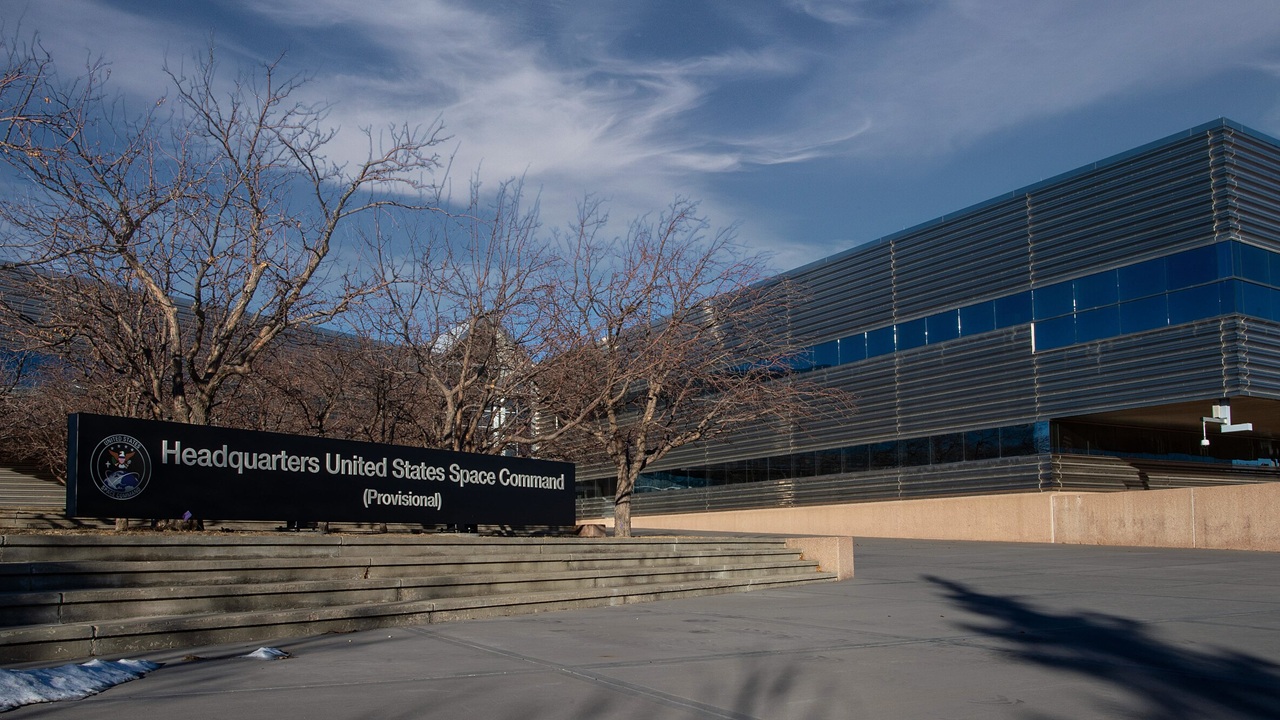
A Colorado congressman estimated that the move would cost Colorado only around 1,000 jobs over several years—and that more jobs would be added in the interim.
It has been more than two months since President Donald Trump announced that the United States Space Command would relocate from its current headquarters in Colorado Springs, Colorado, to Huntsville, Alabama. The latter location was designated as the command’s future HQ during Trump’s first term. The Redstone Arsenal in Huntsville, also known as “Rocket City,” was selected as the preferred final location for the command, edging out Kirtland Air Force Base (AFB) in New Mexico, Offutt AFB in Nebraska, Joint Base San Antonio in Texas, and Patrick Space Force Base in Florida—as well as SPACECOM’s interim location at Peterson AFB, Colorado Springs.
During the Biden administration, the decision was made to keep the headquarters in Colorado, citing concerns about the costs and disruption that moving it would cause. That decision was supported by multiple US military commanders, who also warned that uprooting the command would interfere with space operations. Currently, about 64 percent of SPACECOM’s personnel are in Colorado.
However, a battle began as soon as Huntsville was named, with lawmakers from the other states crying foul. Trump has been especially critical of Colorado, decrying the Centennial State’s use of mail-in ballots—which he claimed resulted in “automatically crooked elections.”
SPACECOM’s Move to Alabama Seems Inevitable
Lawmakers in Colorado have attempted to sue to block the move, but it was considered a last-ditch effort unlikely to succeed. Last week, SPACECOM began the relocation process.
“On US Space Command’s headquarters, we continue to carry out the President’s direction to relocate deliberately and responsibly. As we’re still in the early stages of this transition, specific information or precise numbers related to personnel or other logistical details are extremely limited,” the command explained.
Even as the HQ moves from Colorado Springs to Huntsville, fewer people than expected may be relocated to the Redstone Arsenal.
US Space Command Commander General Stephen Whiting hasn’t confirmed how many individuals will go, but many United States Space Force personnel now in Colorado Springs won’t be heading to Heart of Dixie.
“While we at US Space Command will be moving to Huntsville, many other space organizations will maintain their presence and operations in Colorado’s Front Range, including Space Force organizations like the Combat Forces Command (formerly Space Operations Command),” SPACECOM added.
It noted that those units are distinct from US Space Command, one of the Department of Defense’s (DoD’s) 11 combatant commands, consisting of all branches of the military and responsible for protecting and defending the space domain.
“It isn’t all of the operational components of Space Command. It’s just the headquarters staff,” Rep. Jeff Crank (R-Colorado), who represents Colorado Springs, told The Hill after he received assurances from the Trump administration that the relocation won’t be as bad as he originally feared. “About 1,000 people. 600 or so will be civilian jobs and 400 military positions.”
The move will also likely take years to complete. During that time, the Pentagon’s presence in Colorado could expand further, outweighing negative economic impacts to the state. The United States Space Force, the sixth and newest branch of the US military, will continue to have a significant presence in Colorado, which could help offset any losses when Space Command finally relocates to Rocket City.
The Space Force Is Also Building Up “Task Force Voyager”
This month, the Pentagon also established “Task Force Voyager,” an internal planning team that will oversee the relocation logistics. Last week, Secretary of Defense Pete Hegseth met with Whiting, where the two discussed the progress made to date.
“Gen. Whiting presented current relocation courses of action on efforts to relocate personnel and mission capabilities expeditiously and responsibly to support the President’s directive,” chief Pentagon spokesman Sean Parnell said in a statement. “Both leaders discussed ways to accelerate the military construction process, additional requirements to cut through bureaucratic red tape, and the balance between cost, speed, and the uninterrupted execution of the command’s warfighting mission.”
Although there is a small chance Colorado’s lawsuit could stop the move, Alabama has continued to prepare to host SPACECOM. It has pledged to invest $425 million to secure the future HQ, including $10 million for temporary office space and an additional $385 million for infrastructure and other upgrades.
Space may be the final frontier, but it could be a while before the showdown for SPACECOM is finally settled.
About the Author: Peter Suciu
Peter Suciu has contributed over 3,200 published pieces to more than four dozen magazines and websites over a 30-year career in journalism. He regularly writes about military hardware, firearms history, cybersecurity, politics, and international affairs. Peter is also a contributing writer for Forbes and Clearance Jobs. He is based in Michigan. You can follow him on Twitter: @PeterSuciu. You can email the author: [email protected].
Image: Wikimedia Commons.
















.jpg)