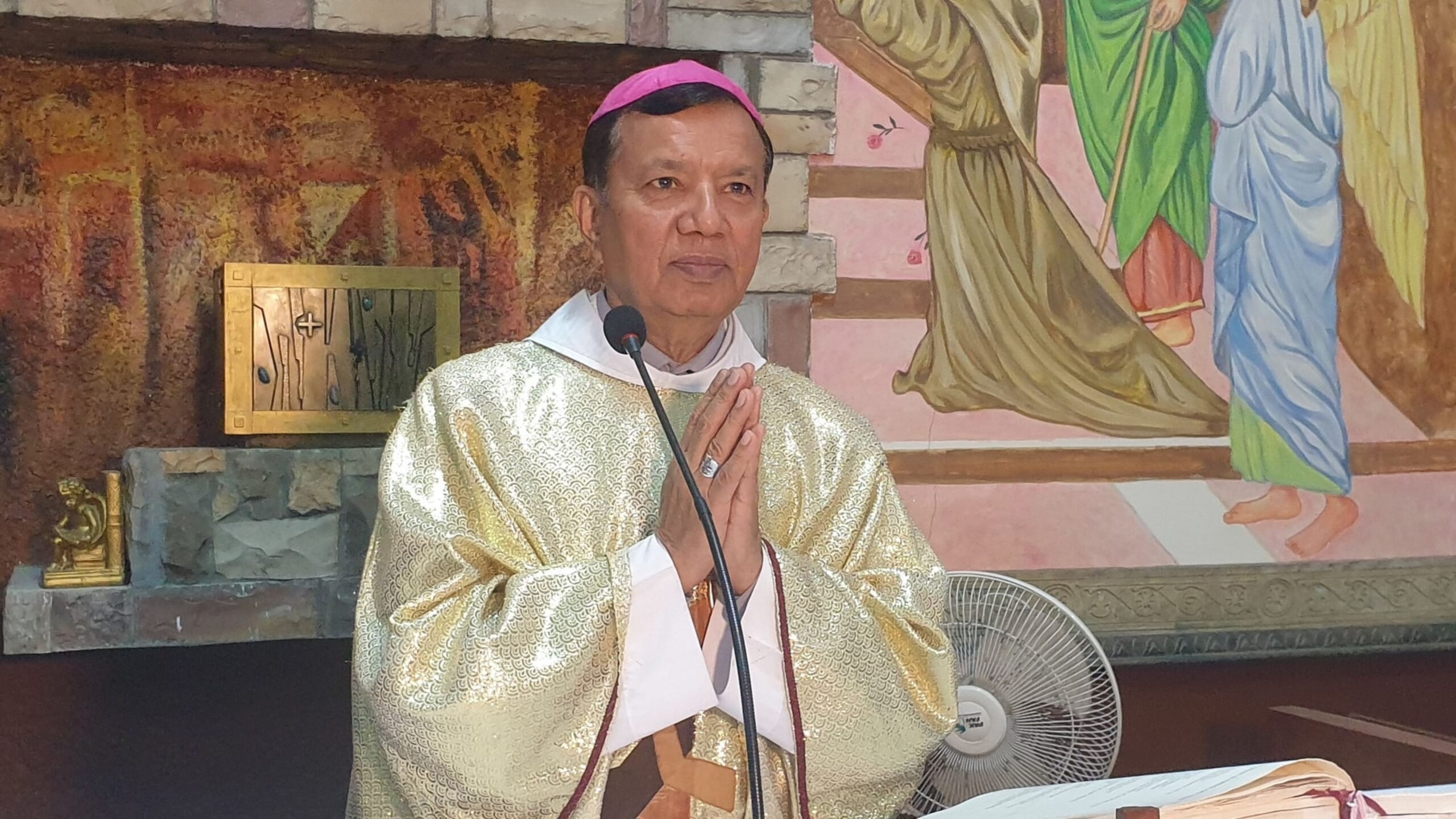
LAHORE, Pakistan — Catholics in Pakistan have reacted with mixed emotions after Pope Leo XIV reshuffled two senior Church leaders, appointing Sebastian Francis Shaw to lead the Quetta Apostolic Vicariate more than a year after he was removed as archbishop of Lahore amid controversy.
The Holy See Press Office announced March 10 that Bishop Khalid Rehmat, OFM Cap, until now vicar apostolic of Quetta, has been appointed metropolitan archbishop of Lahore.
Bishop Samson Shukardin of Hyderabad, president of the Catholic Bishops’ Conference of Pakistan, welcomed both appointments.
“Capuchins have a long history of serving in the country’s most populous Catholic diocese. Installation of a bishop of their own will be a source of blessing,” Shukardin told EWTN News on March 11, referring to Archbishop-designate Rehmat, a member of the Capuchin Franciscans.
“Good things will come, as he has served in Lahore, including as editor of the bimonthly diocesan magazine Catholic Naqeeb for three years.”
He described Shaw’s appointment to Quetta as equally positive.
“The confusion regarding Shaw has been cleared with his reinstatement in a Catholic jurisdiction. Accountability is very important for the Church in Pakistan right now, as it guides pastoral vision. We cannot fully understand the Church if we do not accompany Rome,” Shukardin said.
Allegations and background
Shaw had been stationed at the Franciscan Friars Minor Custos house in Karachi since his removal and the appointment of an apostolic administrator in August 2024 following allegations of sexual misconduct and financial impropriety.
In 2017, Shaw drew widespread criticism for allowing Maryam Nawaz — Punjab’s current chief minister and daughter of former Prime Minister Nawaz Sharif — to deliver a political speech at Lahore Cathedral during an election campaign.
Church officials said Shaw’s removal followed two separate investigations whose findings were submitted to the Vatican.
Shaw’s absence created uncertainty among clergy and laity alike, with his name omitted from the Eucharistic Prayer even as his images remained in parishes and diocesan media.
An official from the Lahore Archdiocese, speaking on condition of anonymity, questioned the delay in Shaw’s status following 2024.
“If the bishop was innocent, why the gap, the delay, the propaganda, and the transfer?” the official asked. “The Vatican intervenes after much damage has been done. Nobody knows the financial losses. There was no statement or justification; the confusion continues.”
The official said that had Shaw been reinstated in Lahore, it might have helped restore the trust of the faithful; instead, his transfer to Quetta appears largely face-saving.
Archbishop-designate Rehmat
Archbishop-designate Rehmat was born in 1968 in Mianwali, within the Islamabad-Rawalpindi Diocese. He made his solemn vows for the Capuchin Franciscans in 2007 and was ordained a priest for the order in 2008. In 2021, he was named vicar apostolic of Quetta and received episcopal ordination the same year.
He chairs the bishops’ conference commissions for Consecrated Life, Evangelization, and the Pontifical Mission Societies, and served as a delegate to the Synod on Synodality.
Archbishop Shaw
Shaw, 68, was born in Padri-Jo-Goth village in Sindh province, within the Hyderabad Diocese. He was ordained a priest in 1991, appointed titular bishop of Tino and auxiliary bishop of Lahore in 2009, became apostolic administrator in 2010, and became metropolitan archbishop in 2013.
He has chaired commissions for Interreligious Dialogue, Family, Education, and Caritas within the bishops’ conference.
Rojar Randhawa, a former Caritas Pakistan Lahore official and prominent critic of the archdiocese, described the latest developments as “a simple change of faces” and urged Church leaders to pair administrative changes with meaningful reflection and accountability.
“Transparency is not a threat to the Church; it is a path to truth and credibility,” he said. “Rebuilding confidence requires dialogue, listening, and pastoral closeness, especially for marginalized and suffering communities.”
Belgian Capuchins led the then-Lahore Diocese from its founding in 1886 until 1975. Today, the archdiocese counts 577,000 Catholics.
The Quetta Apostolic Vicariate, mostly served by Oblates, is Pakistan’s largest geographically but poorest diocese, with 33,388 Catholics.