Nuclear Energy Now tracks the latest nuclear energy developments across technology, diplomacy, industry trends, and geopolitics.
Completing the VC Summer Nuclear Power Plant Could Deliver a Major Economic Boost
A new report, prepared by PricewaterhouseCoopers LLP (PwC) for Westinghouse, has found that completing the VC Summer Nuclear Power plant would have significant economic gains for South Caroline and the US economy. According to the report, completing the two AP1000 units would boost South Carolina’s economy by $7.3 billion during construction and add $1.6 billion annually to South Carolina’s gross domestic product (GDP) once operational. Over the course of seven years, which covers the manufacturing, engineering, and installation phases, the project would support an average of 7,300 jobs and contribute approximately $13.8 billion in total to the national GDP. During the plant’s operational lifetime, which is expected to be at least 80 years, the plant would also add $130 billion to the state’s economy—an economically meaningful contribution in a state with a roughly $266 billion GDP as of 2024.
Construction at the plant was suspended in 2017 when Westinghouse filed for bankruptcy. However, life was breathed back into the project earlier this year when Santee Cooper began searching for proposals from companies interested in completing the units. With AP1000 units now operating at the Vogtle Nuclear Power Plant in Georgia, and lessons learned from that build, VC Summer is increasingly viewed as a viable candidate to become the next completed large-scale nuclear project in the United States
EU Clears State Aid for Poland’s First Nuclear Power Plant
The European Commission has approved Poland’s state aid package for its first nuclear power plant, concluding that public support complies with European Union (EU) competition rules. As part of the Commission’s approval, Poland revised the aid structure, including shortening the contract for difference (CfD) period from 60 to 40 years and committing to sell at least 70 percent of the plant’s output on open power markets. Poland selected Westinghouse’sAP1000 reactor technology in 2022 for the planned Lubiatowo-Kopalino Nuclear Power Plant, with Westinghouse, Bechtel, and state-owned developer Polskie Elektrownie Jądrowe (PEJ) signing a delivery agreement in 2023. The project is expected to cost approximately $47 billion and aims to bring the first reactor online by 2033. The project will be supported through state equity, government-backed loan guarantees, and a two-way CfD to provide long-term revenue stability.
Poland’s decision to pursue nuclear energy reflects a dual agenda: decreasing fossil fuel use and strengthening energy security by reducing dependence on Russia. As of 2024, fossil fuels accounted for the majority of Poland’s energy mix, with coal and oil each contributing almost 33 percent, and natural gas contributing 17.6 percent. At the same time, Poland has made great strides in reducing dependence on Russian energy: a decade ago, 84 percent of Poland’s energy imports came from Russia, but by 2025, it has phased out Russian oil and gas. Warsaw has also emerged as a key voice in the EU, encouraging other member states, such as Hungary and Slovakia, to stop buying Russian energy.
Brazil Moves to Expand Uranium Production
Following the 2024 announcement that Brazilian state-owned company Indústrias Nucleares do Brasil (INB) would resume uranium exploration, Brazil, through the state-run development bank (BNDES), is now searching for private partners to participate in its Pró-Urânio programme. The program aims to increase ore production, guaranteeing supply for the Angra 1 and Angra 2 nuclear power plants, export the surplus, and reduce reliance on foreign partners for downstream fuel-cycle services, where Russia has historically played a role in conversion and enrichment services. BNDES will structure the process for a partnership offering as well as the selection process.
Brazil has assured uranium resources of roughly 210,000 tonnes, making it one of the top ten largest reserve holders in the world. It has three main deposits, which include Pocos de Caldas, Lagoa Real, and Santa Quitéria; however, the only operating mine is Lagoa Real, operated by INB. The push to explore uranium production also reflects expectations of higher future demand, including from the long-delayed Angra-3 project, and comes as uranium prices remain above their ten-year average amid growing global interest in nuclear power.
About the Author: Emily Day
Emily Day is an experienced researcher, writer, and editor with expertise in geopolitics, nuclear energy, and global security. She is an associate editor of Energy World and Techland at The National Interest and a senior research associate at Longview Global Advisors, where she provides insights on global political and economic trends with a specialization in utilities, risk, sustainability, and technology. She was previously a Della Ratta Energy and Global Security Fellow at the Partnership for Global Security.
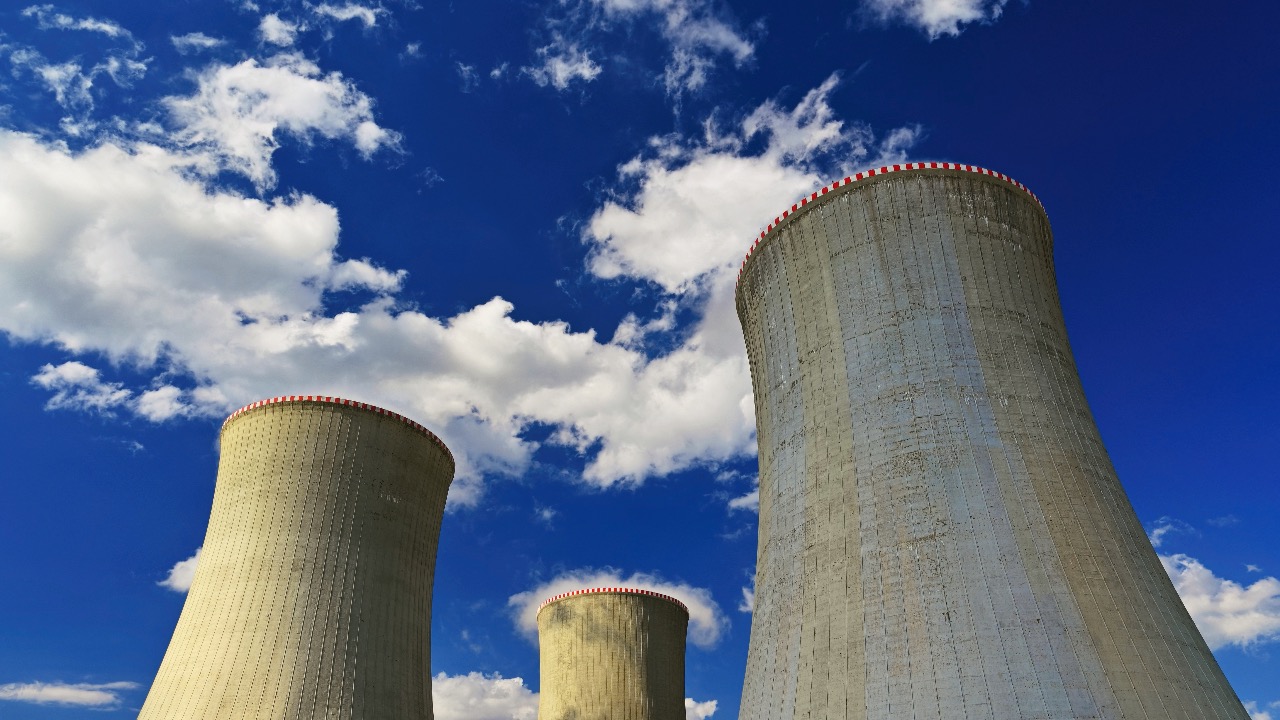
Image: Montypeter/shutterstock