Nuclear Energy Now tracks the latest nuclear energy developments across technology, diplomacy, industry trends, and geopolitics.
A US-Saudi Arabia 123 Agreement Is Still a Work in Progress
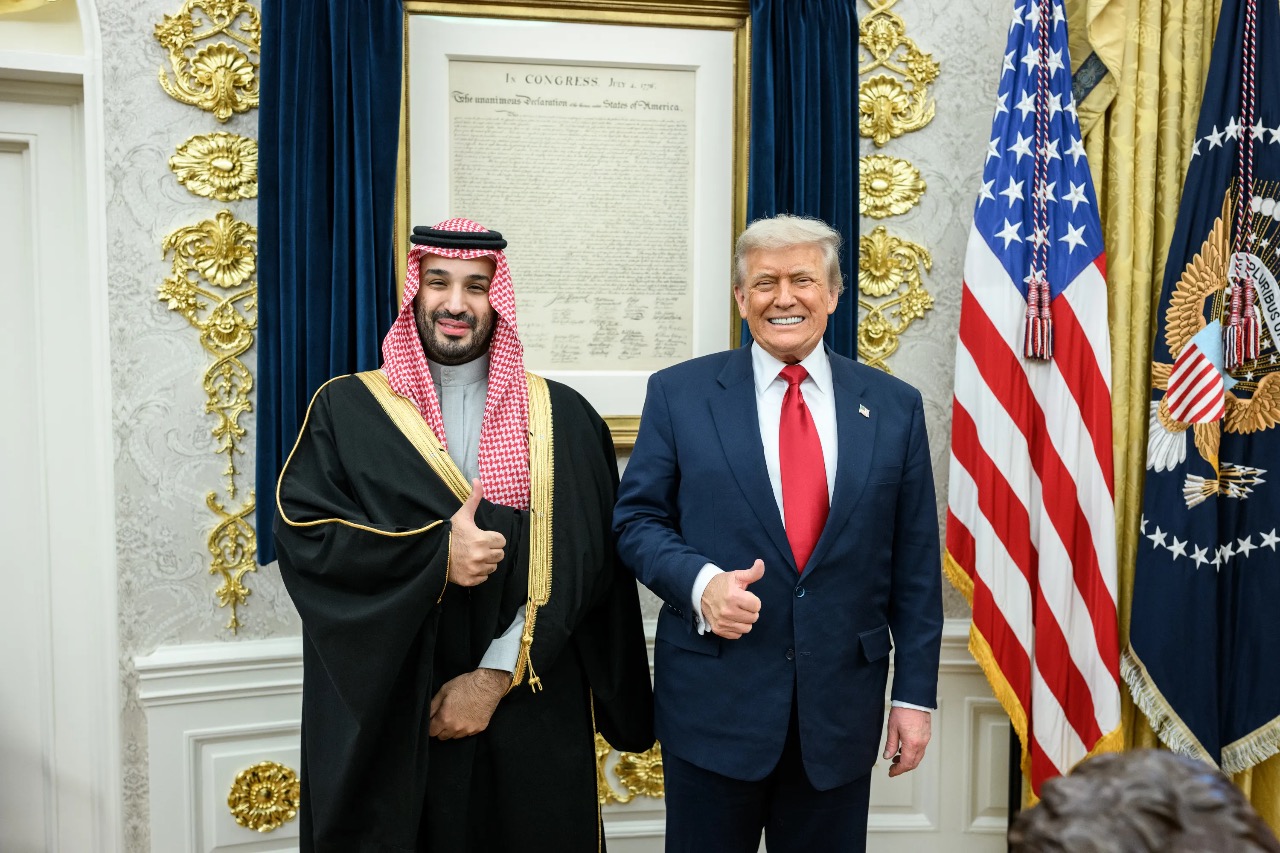
During Crown Prince Mohammed bin Salman’s visit to Washington, the United States and Saudi Arabia announced a “Joint Declaration on the Completion of Negotiations” on civil nuclear cooperation, laying the legal groundwork for a formal 123 Agreement—which is legally required for the export of US reactors, fuel, and nuclear technology. While US-Saudi discussions over a formal nuclear agreement have been taking place for many years, enrichment has remained a holdup on negotiations, especially after Saudi leaders confirmed that they would pursue a nuclear weapons program if Iran developed one. To limit proliferation risks, Washington continues to insist on the “gold standard,” which prohibits domestic enrichment and reprocessing, but Riyadh maintains that it should be allowed to enrich uranium. The Kingdom has long sought a nuclear program—once envisioning 17 gigawatt electric (GWe) of capacity—and recent geological surveys suggest it holds significant uranium reserves. The White House fact sheet emphasized that cooperation will follow strong nonproliferation standards and “that the United States and American companies will be the Kingdom’s civil nuclear cooperation partners of choice.” US Secretary of Energy Chris Wright also reiterated that any deal would exclude enrichment, describing the declaration as focused strictly on constructing a US-built nuclear power plant. Still, no details have been released about a formal 123 Agreement, which would require Congressional approval, and when asked about whether a formal civil nuclear deal would happen, President Donald Trump said, “I can see that happening,” but “It’s not urgent.”
The US Army Identifies Potential Microreactor Sites Under Janus Program
The US Army has named nine potential sites for deploying microreactor nuclear power plants under the Janus Program, an initiative launched in October following Trump’s May Executive Order, “Deploying Advanced Nuclear Reactor Technologies for National Security,” which required it. The Executive Order directs the Army to begin operating an Army-regulated microreactor at a domestic installation by September 30, 2028. The identified candidate sites span bases across the country—including Fort Benning, Fort Bragg, Fort Campbell, Fort Drum, Fort Hood, Fort Wainwright, Holston Army Ammunition Plant, Joint Base Lewis-McChord, and Redstone Arsenal—and were selected based on mission requirements, infrastructure needs, and resiliency gaps. However, final decisions on the number and location of sites will be made during the acquisition process. At the same time, the Army has also executed an agreement with the Defense Innovation Unit (DIU) to use its Commercial Solutions Opening (CSO) process and Other Transaction Authority (OTA) to solicit advanced reactor designs, with an Area of Interest released to gather industry concepts for microreactor deployment on military installations.
South Korea and the United Arab Emirates Strengthen Nuclear Partnership
South Korea and the United Arab Emirates signed seven memorandums of understanding (MoUs) during President Lee Jae-myung’s visit to the United Arab Emirates (UAE) to boost cooperation across artificial intelligence (AI), aerospace, and nuclear energy. The agreements build on the countries’ partnership anchored by South Korea’s construction of the UAE’s Barakah nuclear power plant, which was led by Korea Electric Power Corporation (KEPCO). At the meeting, KEPCO and the Emirates Nuclear Energy Company (ENEC) signed new agreements to enhance collaboration on advanced nuclear technologies, including small modular reactors (SMRs) as well as advanced reactor systems, fuel-cycle innovation, radioactive-waste management, and AI-enabled digital transformation—including predictive maintenance and plant-optimization tools supported by a joint AI Innovation Laboratory. The MOUs also outline plans to jointly pursue nuclear power projects in third countries, positing the UAE–South Korea partnership to evolve from a successful vendor-client relationship into a broader nuclear export and technology alliance. The UAE has been expanding its nuclear ambitions, signaling interest in a second nuclear power plant, and in July, ENEC signed agreements with Hyundai Engineering & Construction and Westinghouse. Amid growing calls for the United States to work more closely with South Korea to compete with China and Russia in civil-nuclear exports, the UAE’s expanding nuclear program could strengthen US-South Korea-UAE cooperation.
China Advances Construction of New Hualong One Reactors
China continues to expand its large-scale reactor fleet with new construction starts at two multi-unit Hualong One sites. China General Nuclear (CGN) began building Unit 3 at the six-reactor San’ao Nuclear Power Plant in Zhejiang Province after receiving regulatory approval from the National Nuclear Safety Administration (NNSA) for construction of both units 3 and 4, marking the launch of Phase II at the site. Units 3 and 4 were among the 11 reactors approved by China’s State Council in 2024. Units 1 and 2, approved in 2020, remain on track to enter operation in 2026 and 2027, and once all six units are completed, San’ao is expected to supply more than 54 terawatt hours (TWh) of electricity annually to Zhejiang Province. In Shandong Province, China also poured the first safety-related concrete for Unit 1 of the new Zhaoyuan Nuclear Power Plant, the first of six planned Hualong One reactors that will ultimately provide 7.2 GWe of capacity and generate roughly 50 TWh per year. Both projects reinforce China’s rapid nuclear buildout, with 35 reactors currently under construction as Beijing scales Hualong One deployment to meet rising electricity demand and reduce reliance on coal.
About the Author: Emily Day
Emily Day is an experienced researcher, writer, and editor with expertise in geopolitics, nuclear energy, and global security. She is an Associate Editor of Energy World and Techland at The National Interest and a Senior Research Associate at Longview Global Advisors, where she provides insights on global political and economic trends with a specialization in utilities, risk, sustainability, and technology. She was previously a Della Ratta Energy and Global Security Fellow at the Partnership for Global Security.
Image: The White House