Israeli Prime Minister Benjamin Netanyahu said Thursday the war with Iran could pave the way for new oil and gas routes across the Arabian Peninsula to Israel’s Mediterranean ports, allowing global energy flows to bypass Iranian threats in the Strait of Hormuz and other vulnerable maritime chokepoints.
Answering questions at an English-language news conference as the war entered its 20th day, Netanyahu said Israel and the United States are pursuing “achievable goals” in close coordination, expressing confidence that once those objectives are secured, the region can shift toward more secure and reliable energy pathways.
“It is vital to have alternative routes instead of going through the chokepoints of the Hormuz Strait and the Bab el-Mandeb Strait in order to have the flow of oil,” Netanyahu said.
He outlined a post-war framework in which oil and gas pipelines would run west through the Arabian Peninsula to Israel’s Mediterranean ports, providing a direct overland alternative to vulnerable sea lanes.
“Oil pipelines and gas pipelines going west through the Arabian Peninsula right up to Israel, right up to our Mediterranean ports — and you’ve just done away with the chokepoints forever,” he said, adding that the concept is “definitely possible.”
“I see that as a real change that will follow this war,” Netanyahu added, while predicting the conflict itself could end “a lot faster than people think.”
The need for such alternatives has been underscored by Iran’s escalating attacks on energy infrastructure across the Gulf and its continued ability to threaten shipping through the Strait of Hormuz, a strategic waterway through which roughly one-fifth of the world’s oil supply typically passes, straining global markets and driving up energy prices.
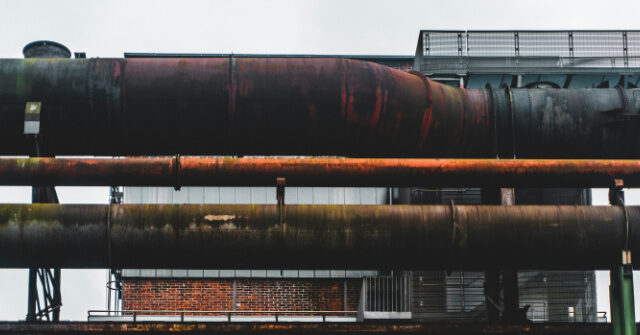
Existing pipeline systems are already helping offset some of the disruption, including Saudi Arabia’s east-west Petroline and the UAE’s Habshan-Fujairah pipeline, which allow energy exports to bypass Hormuz as regional producers work to maintain supply.
The concept aligns with analysis published earlier this week by Brig. Gen. (Res.) Amir Avivi, founder of the Israel Defense and Security Forum, who argued that the current crisis highlights the urgency of developing land-based energy corridors anchored in existing infrastructure.
Avivi pointed to the potential integration of Saudi Arabia’s east-west pipeline with Israel’s Eilat–Ashkelon pipeline, allowing Gulf oil to move via the Red Sea to Eilat and onward to Mediterranean ports — effectively creating a continuous land bridge between Asian energy supplies and European markets.
Such a corridor, he argued, would help stabilize global energy flows while positioning Israel as a central transit hub and reducing exposure to recurring disruptions in the Gulf.
Framing the broader campaign against Iran, Netanyahu warned that the regime’s nuclear and missile ambitions pose a severe threat if left unchecked.
Invoking Winston Churchill, he said democracies often awaken too late to danger, warning that a nuclear-armed Iran would represent “an apocalypse.”
“The jarring gong of danger is Iran gets nuclear weapons and ballistic missiles,” Netanyahu said. “That’s not a jarring gong — that is an apocalypse. Don’t let it happen.”
He credited President Donald Trump’s leadership and emphasized the joint nature of the campaign, saying the United States and Israel are acting together “for a common goal: to protect our future, to protect civilization.”
Netanyahu added that Iran’s military capabilities are being steadily degraded as the operation continues, expressing confidence in the trajectory of the campaign as it approaches its third week.
Joshua Klein is a reporter for Breitbart News. Email him at jklein@breitbart.com. Follow him on Twitter @JoshuaKlein.