European NATO allies are frustrated with Trump’s decision to launch a war in Iran without consulting them—and wary of his shifting aims for the campaign.
President Donald Trump and many of his closest allies are declaring “victory” over the Islamic Republic of Iran in the ongoing Operation Epic Fury. In spite of this pronouncement, however, the Strait of Hormuz—the critical chokepoint through which 20 percent of the world’s oil passes—remains largely closed.
In order to protect shipping through the strait, Trump has requested the assistance of the NATO alliance, asking member states to send naval forces to escort tankers through the waterway. This week, most members explicitly refused to do so—and Trump has voiced frustration, even as he has sought to downplay the importance of the resistance they would face.
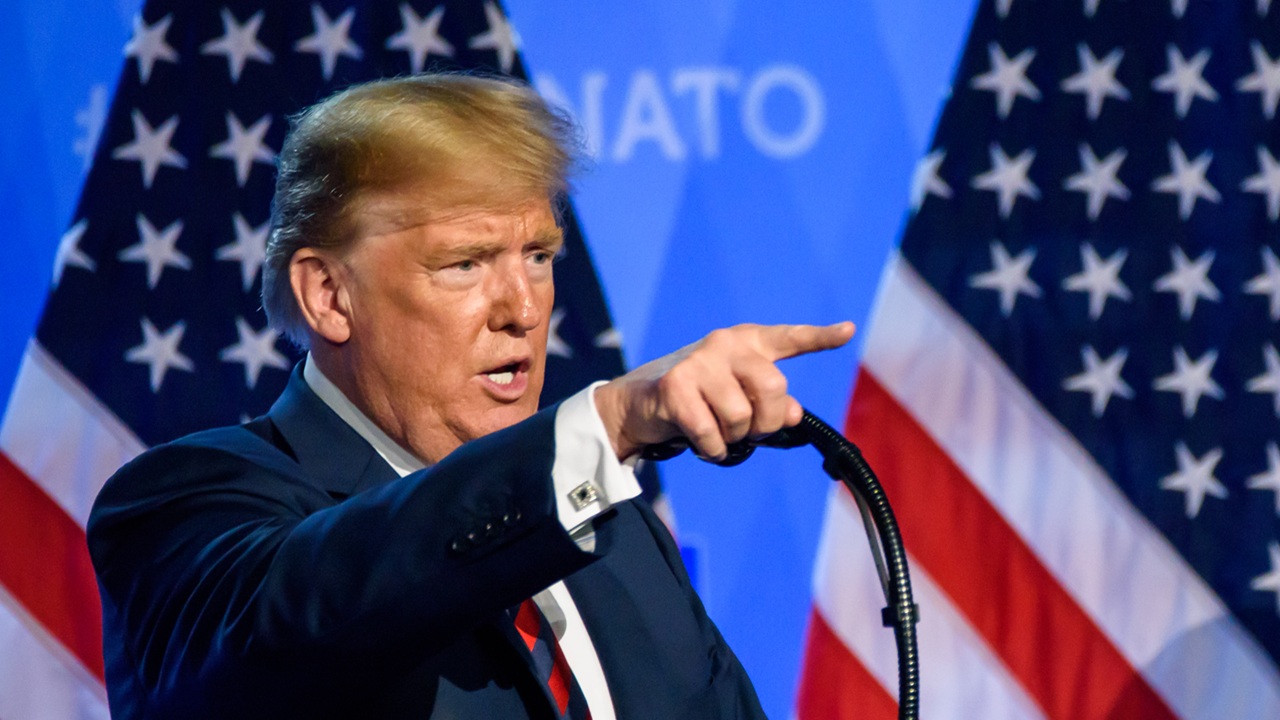
“All of our NATO allies were very much in favor of what we did. They thought it was very important,” Trump said in remarks from the Oval Office during a visit by Ireland’s Taoiseach Micheál Martin. “Everyone agrees with us, but they don’t want to help. And we, as the United States, have to remember that, because we think it’s pretty shocking.”
Trump also insisted that the United States doesn’t need help from other countries, as Iran’s military capabilities have been largely destroyed.
“I think NATO is making a very foolish mistake. And I’ve long said that, you know, I wonder whether or not NATO would ever be there for us,” Trump said. “So this is a, this was a great test, because we don’t need them, but they should have been there.”
“The only NATO members that have come out in support of the US-Israel strikes on Iran are the Czech Republic, Albania, North Macedonia, Lithuania, and Latvia,” Forbes reported earlier in the week. Several other NATO nations have remained neutral in their stance. A handful of NATO countries have explicitly criticized the US bombing campaign and outright refused to work alongside the United States—notably Germany, whose defense minister recently declared that Operation Epic Fury was “not our war.”
Trump and NATO Don’t See Eye-to-Eye on Article 5
Trump’s supporters online have been critical of NATO’s decision—suggesting that the alliance is failing to honor Article 5, which calls an attack on one to be an attack on all. Skeptics have noted that the language of the article doesn’t seem to apply to Iran, as the United States initiated the war there.
The only time Article 5 has been invoked was after the 9/11 terrorist attacks on the World Trade Center and the Pentagon. Trump dismissed contributions from America’s allies in the ensuing Global War on Terrorism, suggesting they were minimal and that most troops were far behind the front lines. That isn’t true; many countries sent combat troops and saw casualties.
Trump’s calls for NATO to step up in opening the Strait of Hormuz also came after he spent weeks demanding that Denmark, a US ally and NATO member, cede Greenland to the United States. The White House said that American acquisition of Greenland was “vital” to national security—a point the Danes didn’t agree on. Moreover, Trump’s tariffs have also been imposed on nearly all NATO member nations.
“Trump’s bullying and tendency to negotiate by megaphone don’t go down well with European allies,” Peter Westmacott, a former British ambassador to the United States, recently told NBC News.
European Leaders Aren’t Reassured by Trump’s Vague Plan
The Trump administration has been inconsistent on why it launched Operation Epic Fury when it did. It claimed at the outset that Tehran was weeks away from obtaining a nuclear weapon—seeming to contradict its claims the previous summer that the country’s nuclear program had been “obliterated” in the June 2025 strikes, and “suggestions otherwise are fake news.”
The White House and Pentagon have also said the attacks were a preemptive, defensive measure to stop imminent, alleged Iranian plans to attack Israel and US forces in the Middle East, and that it was meant to target Iran’s long-range ballistic missiles, navy, and drone capabilities. It also claimed that the attacks were aimed at diminishing Iran’s regional influence and the power of the ruling Islamic regime.
All of those things can be true, but they don’t alter the fact that Trump failed to consult with allies before the attack. Nor was there any attempt to build a coalition. It was only after the attacks began, and Tehran closed the Strait of Hormuz, that Trump demanded that NATO aid in addressing the issue.
What Europe can do at this point is limited. It would take weeks or longer for any forces to be prepared and deployed to the region, but even once they arrived, it may not open the strait.
“He’s asking us to help for a war he started,” a European diplomat said to NBC News. “There is not much enthusiasm for this. And even if European navies are sent to the Gulf, it would not ensure the strait is reopened. Iran can keep it closed as long as it likes because all it takes is a drone or a mine.”
For now, Trump has support from nations in the region, but it is unclear what they can do to open the strait.
“We’ve had great support from the Middle East. Qatar has been great. UAE has been absolutely great. Saudi Arabia has been terrific. Bahrain has been very good,” Trump said. “The Middle Eastern countries have been very strong in their support. And of course, Israel has been our partner.”
Trump had campaigned on a promise of no new “forever wars” in the Middle East, yet this one seems to have no clear off ramp. Trump has said the war will be over when he “feels it” in his “bones,” which could mean days or weeks. But regardless of how long it lasts, it is likely to be a war alone for the US, with regional support from Israel and some Arab partners at best.
Even if it doesn’t result in regime change, the war is likely to impact Trump’s approval rating—and not in the way he may have hoped!
About the Author: Peter Suciu
Peter Suciu has contributed to dozens of newspapers, magazines and websites over a 30-year career in journalism. He regularly writes about military hardware, firearms history, cybersecurity, politics, and international affairs. Peter is also a contributing writer for Forbes and Clearance Jobs. He is based in Michigan. You can follow him on Twitter: @PeterSuciu. You can email the author: [email protected].