This is not the first time the Royal Navy and NATO have had to scramble ships and aircraft to track Russian vessels passing through the English Channel on their way to the Atlantic Ocean.
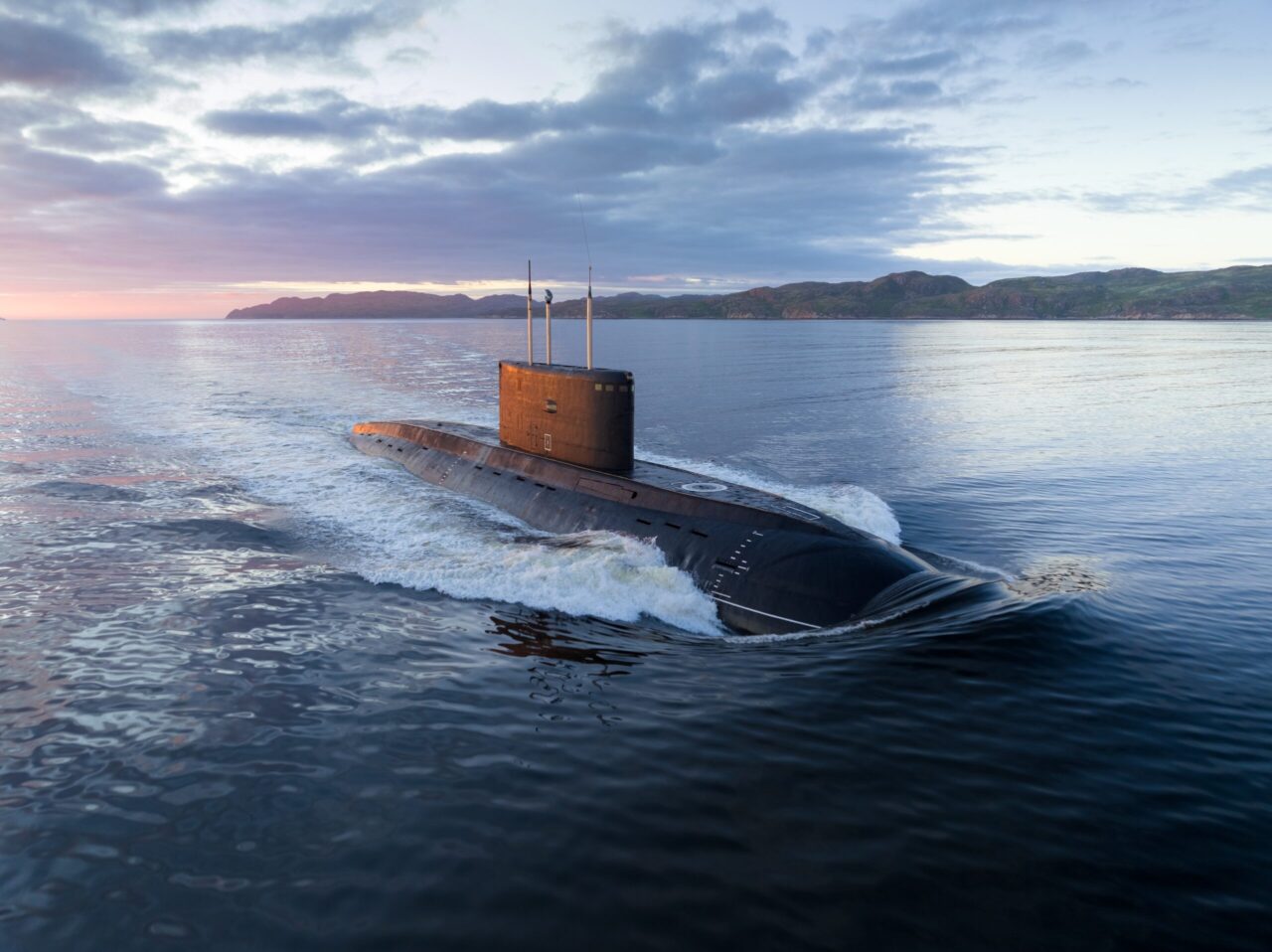
This week, the Royal Navy and NATO deployed significant assets to track a Russian submarine sailing through the English Channel.
Russian warships, submarines, and spy ships coming out of the Baltic Sea often have to pass through the English Channel on their way to the Atlantic Ocean.
Tracking a Russian Submarine
The RFS Krasnodar, a Kilo-class submarine, sailed westbound from the North Sea, through the Strait of Dover, and into the English Channel. It was accompanied by the tug boat Altay.
“There is nothing like a Russian submarine to focus the mind for any mariner,” Captain James Allen, the commanding officer of the RFA Tidesurge, said in a service press release.
According to the British Ministry of Defence, the Royal Navy support vessel and its organic helicopter maintained a close and overt watch over the Russian submarine and its tug boat for three days. Once the Russian vessels reached the island of Ushant, the Royal Navy passed the tracking torch to its French counterpart.
“Our tasking over the course of three days involved the teamwork and professionalism of all RFA Tidesurge ship’s company, embarked 814 Naval Air Squadron Atlantic Flight and interoperability with near regional NATO allies,” Allen added. “We worked together as a show of presence and deterrence as we transited from the North Sea to the English Channel.”
The RFA Tidesurge is a Tide-class tanker designed to provide underway replenishment-at-sea services to Royal Navy and NATO warships. The support vessel was specifically designed to support the Royal Navy’s two newest aircraft carriers, the HMS Queen Elizabeth and HMS Prince of Wales. The vessel can also host helicopters.
“Maintaining an overt presence and continued over watch of Russian vessels in UK waters is vital for national security,” Lieutenant Commander David Emery, flight commander of 814 Naval Air Squadron’s Atlantic Flight, stated.
“The flexibility and professionalism of the crew of RFA Tidesurge allows us to project our helicopter wherever, day or night, in the maritime environment,” Emery added.
The RFS Krasnodar is very likely heading to the Mediterranean Sea to replace the RFS Novorossiysk, which made the opposite journey in October. The Russian Navy has lost control of the Black Sea, with Ukrainian missile and unmanned naval systems making the passage of any Russian warship or submarine precarious.
Britain and NATO Routinely Track Russian Navy Ships
This is not the first time the Royal Navy and NATO have had to scramble ships and aircraft to track Russian vessels passing through the English Channel on their way to the Atlantic Ocean.
A couple of weeks ago, the Royal Navy scrambled HMS Somerset, a Type 23 frigate, to intercept the Russian spy ship Yantar in the North Sea. Then, the Royal Navy also deployed the HMS Severn, a patrol ship, to intercept the RFN Stoikiy, a Russian Steregushchiy-class corvette, and the tanker Yelnya.
Moreover, in October, the HMS Iron Duke, another Type 23 frigate, tracked the RFS Novorossiysk as it was heading home to Russia.
And in February, the Royal Navy scrambled the RFA Tidesurge to track Russian vessels in a similar incident.
About the Author: Stavros Atlamazoglou
Stavros Atlamazoglou is a seasoned defense journalist specializing in special operations and a Hellenic Army veteran (national service with the 575th Marine Battalion and Army HQ). He holds a BA from the Johns Hopkins University and an MA from the Johns Hopkins’ School of Advanced International Studies (SAIS). His work has been featured in Business Insider, Sandboxx, and SOFREP.
Image: Shutterstock.com / Aleksandr Merkushev