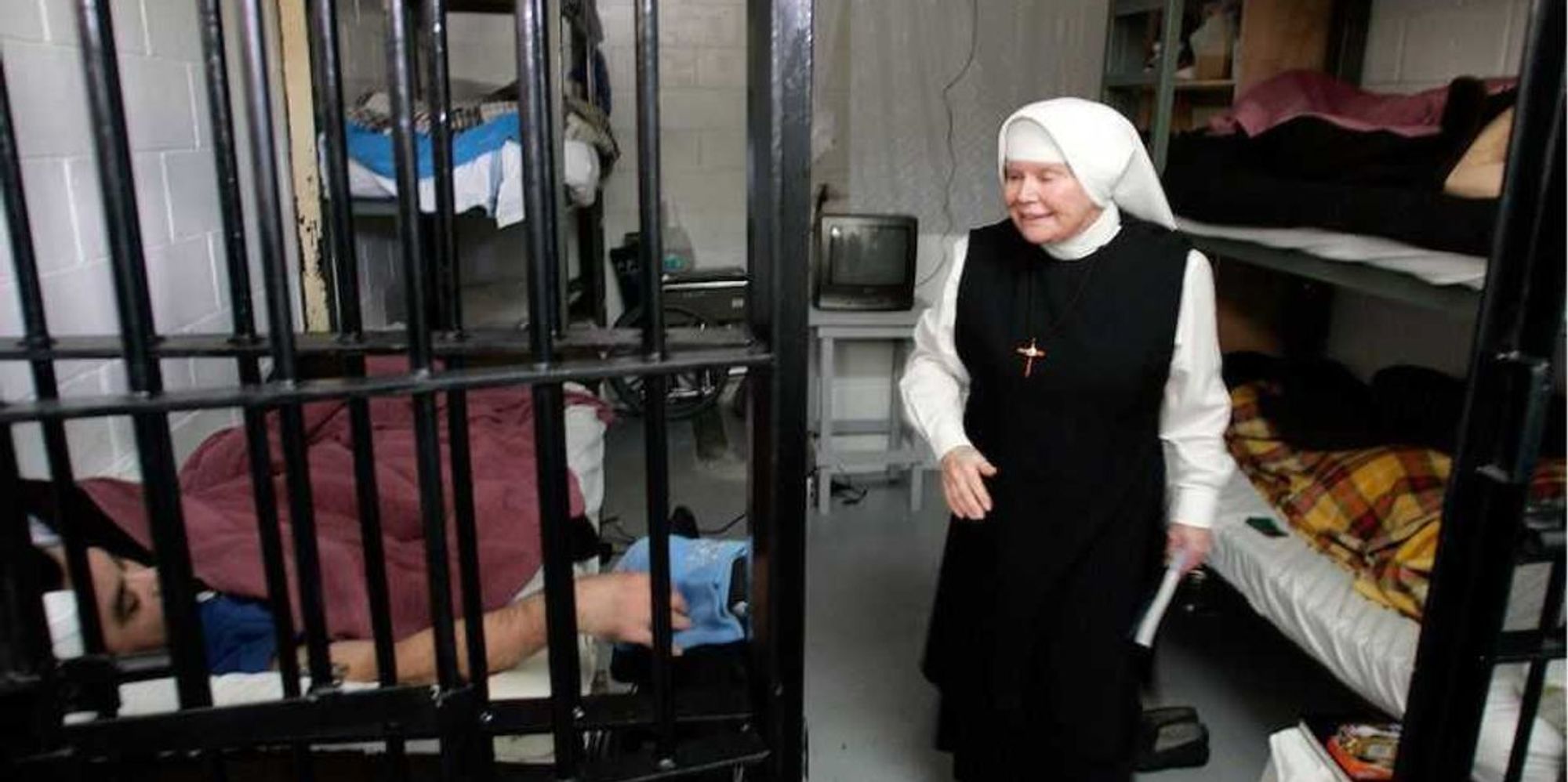
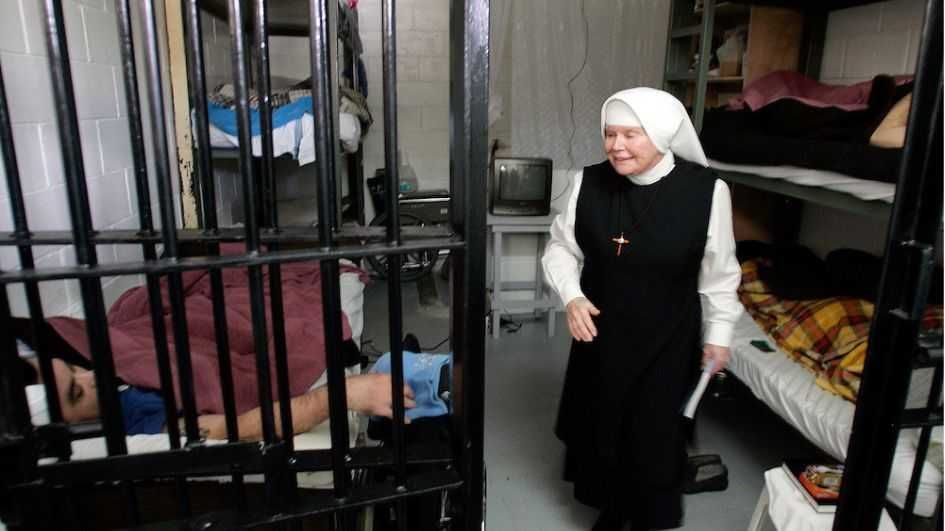
Mary Clarke grew up in Beverly Hills, surrounded by mink coats and parties hosted by Hollywood stars. She died in a ten-by-ten concrete room inside a Mexican prison.
In between, she raised seven children, survived two marriages, ran a business, and eventually walked away from comfort to live among violent criminals and forgotten men. If her life unsettles your assumptions about what holiness looks like, it should.
The institutional Church, for its part, did not immediately know what to do with a twice-divorced woman living inside a men’s prison and calling herself a nun.
She was born in 1926 to Irish immigrant parents who had clawed their way into California comfort without losing their faith or their social conscience. Her father built a successful business and moved the family to Beverly Hills, but he made sure his daughter understood that glamour was not the point. Mary absorbed the lesson, even if it took several decades and two divorces before she fully acted on it.
Broken promises
Her personal life was, to put it charitably, complicated. She married at 19 and watched the union fail due to gambling debts and broken promises. She married again and eventually found herself running her father’s company and managing what looked, from the outside, like a well-ordered life. It wasn’t enough. She hadn’t failed at life. She had excelled at a version of it that no longer satisfied her.
The turning point came in 1965, when she crossed the border into Tijuana with a priest and walked into La Mesa prison. What she saw there — the overcrowding, the degradation, the absence of basic dignity — did not strike her as someone else’s problem. She drove back to California and could not stop thinking about the faces she had seen.
So she went back. Then again. And again.
Each time she loaded her car with medicine, food, and clothing. Eventually the prison visits stopped being a charity project and became the center of her life. Beverly Hills was no longer home. It was the detour.
Heroic or insane
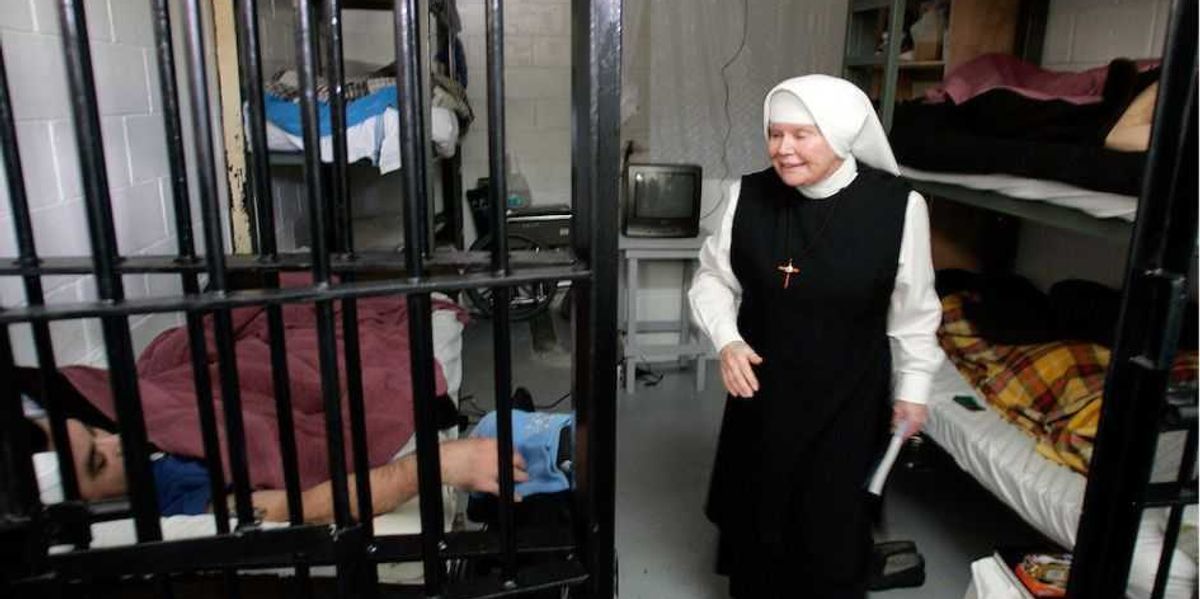
By 1977 her children were grown, her second marriage was over, and she made a decision that most people around her considered either heroic or insane. She sold or gave away nearly everything she owned, sewed herself a simple habit, took private vows, and moved into a concrete room inside one of the most feared prisons in Mexico, with nothing but a cot, a Bible, and a Spanish dictionary.
La Mesa was not a rehabilitation center in any optimistic sense. Drug traffickers ran the economy. Poorer prisoners slept on bare floors. Violence arrived without warning or apology. Into this world entered a middle-aged American woman with no official authority, no institutional backing, and an apparently unshakable conviction that every man in that prison still bore the image of God — however obscured it might be by crime, cruelty, or despair.
She walked into riots. She stepped between armed men. She spoke calmly into chaos. And more often than seemed statistically reasonable, people put their weapons down. She coaxed dentists to offer free clinics, persuaded bakers to donate bread, and reportedly sourced secondhand toilets from junkyards so that prisoners might have something the rest of the world takes for granted. She sat with the dying, prayed with guards, and confronted judges who handed lighter sentences to the wealthy than to the poor.
RELATED: Norma McCorvey: Reluctant Jane Roe who answered to higher judge
 Joe Raedle/Getty Images
The weight of years
The institutional Church, for its part, did not immediately know what to do with a twice-divorced woman living inside a men’s prison and calling herself a nun. For years she lacked formal status and could not even receive Holy Communion. She carried on anyway.
Eventually church leaders recognized the depth of her vocation. Bishop Posadas of Tijuana and Bishop Maher of San Diego both blessed her work, and she was received as an auxiliary Mercedarian, an order with a historic mission to prisoners. She later founded her own community, the Eudist Servants of the 11th Hour, specifically for older women called to serve after raising families or finishing careers.
That last detail matters. She was not looking for women who had not yet lived. She wanted the ones who had — women who carried the weight of years, of mistakes, of choices made and unmade — and she asked them a simple question: What now? It lands differently when you are old enough to realize that time is not infinite.
Mother Antonia Brenner died on October 17, 2013, at age 86. By conventional Catholic measures, she was a complicated figure: divorced twice, lacking formal vows for years, living far outside the expected parameters of religious life.
By any other measure, she spent three decades feeding the hungry, clothing the naked, and visiting the imprisoned — the precise works the gospel names without ambiguity.
She was fond of saying she had never met a prisoner not worth everything she could give.
The record suggests she meant it.