I discovered the works of Paul Kingsnorth 2-3 years ago. He confirmed a growing sense I had: that social media and artificial intelligence (AI) are leading us in a dangerous direction. We are being led blindly into a disincarnate world. We recently celebrated the Incarnation, when God took on human flesh and became one of us. This boldly reaffirms the truth that our body-and-soul creaturehood matters. Thus, a world that seeks to divorce us from our incarnate nature is the antithesis of the Christian message.
Kingsnorth tackles the reality of our human nature in the Age of the Machine in his recent book, Against the Machine: On the Unmaking of Humanity. Some things I didn’t fully agree with, but there is still much with which I do agree. His overall thesis, that the Machine is unmaking us, is very well articulated and deserves to be taken seriously.
Unfortunately, it has been hard to find clear, unapologetic prophetic voices that are able to read the signs of the times in relation to technology. In a social media and AI age, we seem to imprudently jump on every bandwagon that is pushed upon us, to our detriment. We should have been discerning what all of this “connection” would do to us: how it would impact our relationships and the way we think and act. We didn’t, and now entire generations are paying the price.
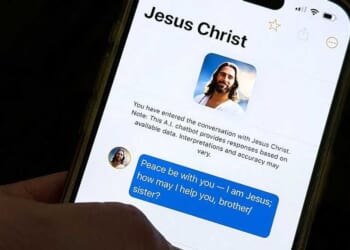
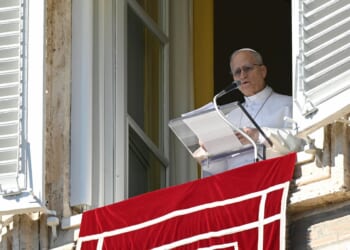
Thankfully, Pope Leo, almost immediately upon becoming pope, began warning against the dangers of AI. It seems the Catholic world is slowly starting to catch up with an undercurrent that has been at the forefront in the Orthodox world for years now. In fact, it was among our Eastern brothers and sisters that I first found people who shared my concerns. The Catholic world seemed much too enamored with every new technology that claimed to connect us. In reality, that technology is often an inversion of true communion since it divorces the mind and the body, as well as the soul, from communication and relationships.
Deep down we know something is wrong. Everyone I talk to has the growing sense that something is seriously wrong in the world, even if no one can pinpoint exactly the cause. As AI continues to advance at breakneck speed, while we embrace it wholeheartedly, there is a growing contingent of people who are feeling despair about the future. Young people no longer possess the optimism of youth. They are haggard, tired, and disconnected from everyone else. Many of them cannot carry a conversation with a person standing in front of them. They worry there will not be much of a future for them to look forward to.
Social psychologists like Jonathan Haidt have been tracking the mental health crisis in young people from smartphone and social media usage through is books and Substack, After Babel. The stats are startling.
With the advent of new AI technologies, each passing day makes it harder and harder to tell what is real from what is fake online. If we are honest, we’d admit that we have already been fooled multiple times. I have.
Kingsnorth talks about living in the fake:
All across the culture now, there is an inverse relationship between reality and its presentation, between nature and simulation, between map and territory. This applies to TV ads, general elections, Hollywood films and the daily news. As a result, it increasingly feels like nothing is true and nothing is real—and yet we can’t quite see what is actually wrong. Where are the joins? How are they held together? What is this amongst all this? Whatever it is, it is this feeling, more than any event or argument, which seems to define our times. Everything is fake now, and we all know it—but how else can we feed ourselves?
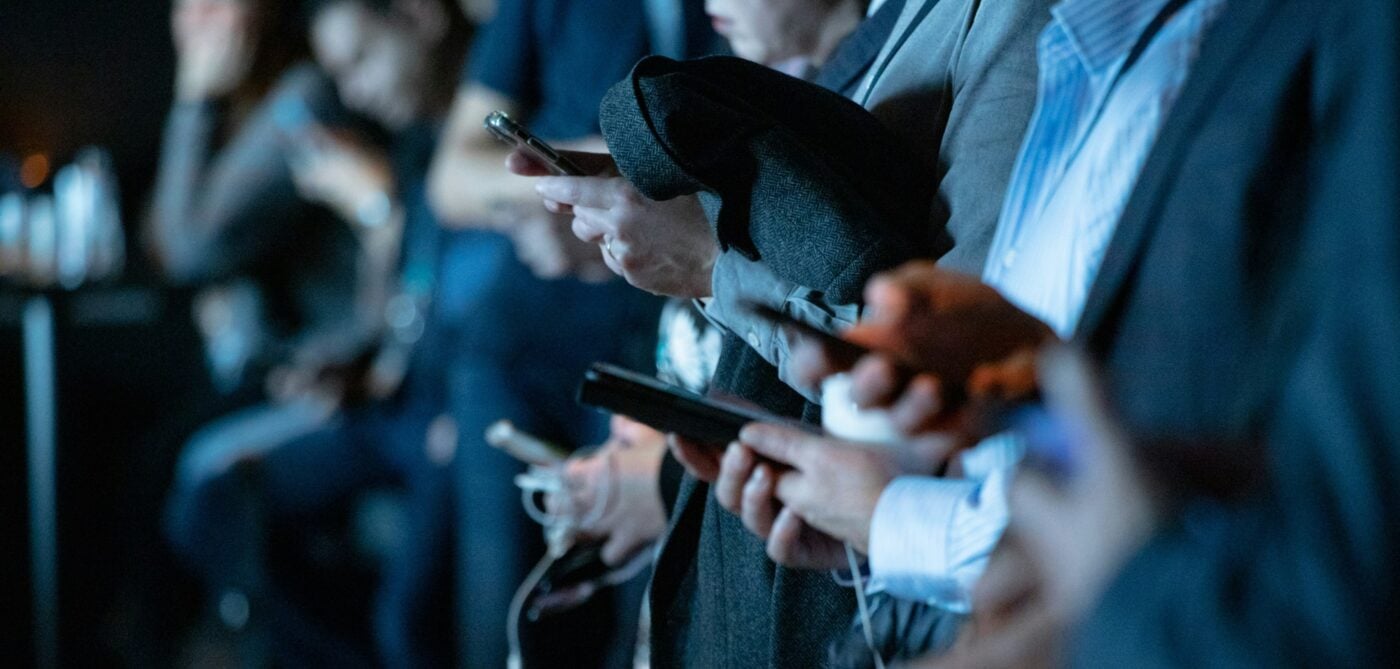
We were not created to live in a disincarnate world of blue light emanating from screens. Social media and AI are moving us further and further away from one another, even as we claim to be more connected than ever.
Even our churches are enslaved by the smartphone. Youth groups are hampered by young people who cannot turn their phones off for an hour or two, and no one wants to do anything about it, which only exacerbates the addiction and disconnection. The Church has not confronted the threat that all this technology poses to human beings. The warnings of what smartphones, social media, and AI are doing to our humanity have been late in coming and are still nonexistent or halfhearted in too many corners of the Church.
Ironically, we perpetuate the mental health crisis and addiction because we too are endlessly creating and posting content rather than attempting to build lasting, rich communities of people in person. We have made relationships more shallow in our attempt to incessantly evangelize the internet. The massive amounts of content create a cacophonous din. We can boast many online followers, but in actuality many people are lonelier than ever. Like Kingsnorth, I am not unaware of the irony that I am a writer online.
A moment is fast approaching when we will have to decide who we want to be and how we want to live as followers of Christ. Will we be light in the darkness or be swallowed up by the zeitgeist of the technocratic age?
The first step is in many ways the same one Neo was given in The Matrix movies. We must take the red pill in order to see what this virtual reality is doing to us and how sick it is making us spiritually, emotionally, physically, and intellectually.
There is an exponentially growing mountain of data demonstrating how harmful social media is to the mental health of young people and how it is designed to ideologically divide people. AI chatbots have already resulted in multiple suicides, and a growing trend of chatbot romances with people is being reported.
The constant call that we must be involved in every new technological advancement for the sake of the Kingdom of God is short-sighted. The saints often chose to radically oppose or live outside established systems and technology so they could be more luminous witnesses to Christ, who has called us to be in this world but not of it.
Kingsnorth points out that we are living in a fake world created by the Machine, but he also offers suggestions for how we should utilize technology moving forward. He doesn’t leave us trapped in the grip of the Machine; instead, he suggests a path forward. Next week, I will examine that path forward. The first proposal is a compromise, and the other follows in the tradition of a completely radical form of life lived by many of the saints.
Editor’s Note: Come back next Thursday for part 2—on how to break free of the Machine!
Photo by camilo jimenez on Unsplash