Much like the post-2003 Iraq quagmire, a Venezuela without Nicolas Maduro could become a far more dangerous security challenge for the United States than a Venezuela with him.
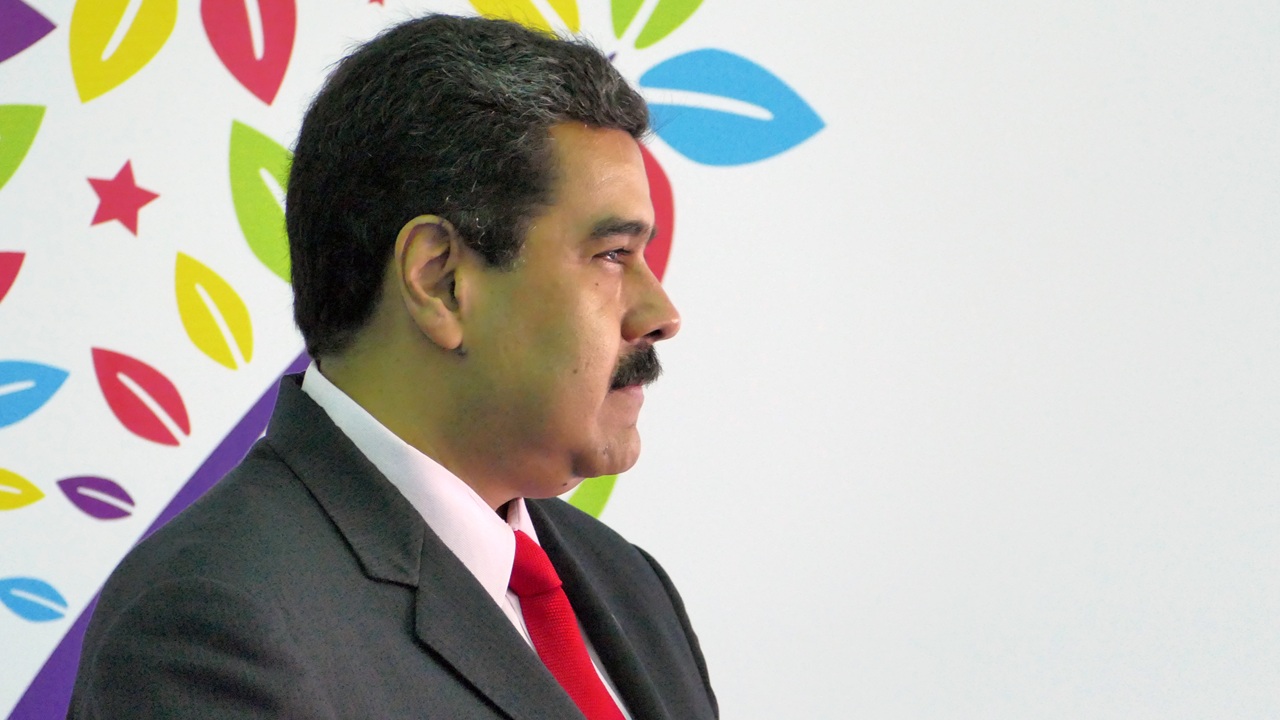
In a stunning development that could reshape the Western Hemisphere, an explosive phone call erupted between President Donald Trump and embattled Venezuelan dictator Nicolás Maduro last week. In that raucous phone call between the two world leaders, the 47th American president instructed the Venezuelan strongman to leave his country immediately and give up power…or face ominous consequences.
According to multiple sources, Maduro tried to negotiate his survival, demanding a so-called “global pardon” for his crimes and the right to control the armed forces while handpicking his successor. Trump flatly refused. The conversation detonated whatever diplomatic bridge remained between Caracas and Washington.
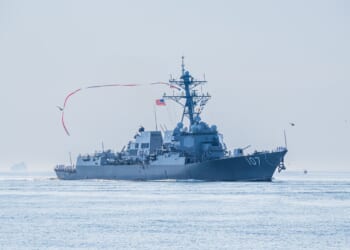
Now, as US Navy warships, submarines, and some 15,000 Marines position themselves off Venezuela’s coast, the world braces for a conflict that could erupt with a single miscalculation. But there’s another scenario that some analysts believe is very possible: Maduro simply cuts and runs in the dead of night, just when everyone thought he was hunkering down to fight to the last militiaman. Reports already indicate that Turkey has offered itself as a transit point, should Maduro choose exile. Speculation has swirled that Maduro’s final destination could be the Islamic Republic of Iran.
If he bolts, Maduro won’t just be fleeing American military pressure. He’ll be ripping open a political vacuum inside Venezuela that could initiate a wider regional catastrophe—that President Trump is apparently not even considering.
That’s because the moment Maduro disappears, his inner circle will scramble to install a successor before the rest of the world even realizes he’s gone. And make no mistake: this isn’t about preserving democracy—it’s about preserving the regime’s criminal empire.
Cabello’s Shadow Coup—and Foreign Intervention
The most likely figure to seize power is Diosdado Cabello, the regime’s ruthless number two henchman. He just also happens to be the linchpin of Venezuela’s infamous Cartel del Soles (Cartel of the Suns), the state-owned drug-trafficking network. Cabello would attempt what’s known as a “stability coup,” declaring himself head of a provisional leadership council to prevent the regime from fragmenting under US pressure.
But Maduro has long served as the regime’s reluctant referee—the one man whose presence kept rival factions from tearing each other apart. Without him, Venezuela becomes a battlefield of competing power centers: Cabello loyalists, Delcy Rodríguez’s technocratic clique, ambitious generals, skittish Cuban intelligence operatives, and vicious cartel enforcers who would now answer to no one.
This is not a transition. It’s a knife fight.
Making matters worse, Venezuela is now a forward operating base for hostile foreign powers in this hemisphere. Russia has deployed hundreds of commandos from its elite Equator Task Force (ETF). Meanwhile, Russian energy giant Rosneft controls key energy assets throughout Venezuela. Iran, too, operates unmanned aerial vehicle (UAV) facilities in the country and may have elements of its Revolutionary Guard Corps on the ground.
Then there’s China. Beijing’s forces have embedded themselves through surveillance architecture, critical infrastructure investments, and likely has several military advisors on the ground.
All three of those regimes will move aggressively to shape the post-Maduro order—not out of love for Venezuela but to deny the United States any strategic victory. A sudden vacuum in Caracas is an opportunity for them to consolidate influence, unless Washington acts faster and smarter than it has so far.
Maduro’s Exit Would Leave a Hemisphere on the Brink
If Maduro flees, the US intelligence community would detect it almost instantly. But detection is not prevention. A decapitated Caracas would unleash instant instability: breakdowns in command authority, violent clashes between military commands, cartel turf wars, and Cuban attempts to salvage their decades-long project of ideological control over Caracas—as well as access to its immense oil and mineral wealth.
The humanitarian fallout would be severe. Venezuela’s collapse would send at least hundreds of thousands of migrants fleeing toward Colombia, Brazil, and ultimately the United States. The US southwestern border would face a surge that would compete with the worst surges that occurred during the Biden administration.
The global economy couldn’t escape this blast radius, either. Crude exports from oil-rich Venezuela would halt. Oil prices globally would spike—padding Russia’s war machine while hammering an already uneasy American economy.
Ironically, the foreign actor most threatened by Maduro’s fall may be Cuba. Since the early 1990s, Havana has treated Venezuela like a colonial lifeline, exploiting its oil wealth and embedding Cuban personnel at every level of the Venezuelan state. Losing Caracas would plunge Cuba’s already fragile economy into the abyss and could even trigger a political collapse on the island.
Such a collapse would be good for those longing to see Cuba’s dictatorship fall, but bad for regional stability. It would, in turn, create yet another failed state in America’s near-abroad. That’s something that Washington cannot absorb easily.
Venezuela’s Collapse Would Create a Storm in the Americas
Even if Cabello or another Chavista heavyweight emerges to replace Maduro by creating a provisional government following his potential escape, it won’t prevent a broader conflict with the United States. Trump appears ready to break the regime—a dramatic pivot from his earlier aversion to nation-building wars abroad.
Regime change is rarely clean. Venezuela’s armed Bolivarian militias, trained for years to wage guerrilla warfare, would launch an immediate campaign of chaos to ensure the country remains ungovernable for whoever Washington wants to install in Caracas. Russian commandos are almost certainly preparing to coordinate this effort, turning Venezuela into another quagmire designed to bleed America.
If Maduro flees, Venezuela doesn’t stabilize. It detonates.
Unless Washington is prepared for that first 48-hour window—the only moment when real strategic influence is possible—the US risks stumbling into another regime-change disaster that mirrors the worst excesses of Iraq, Afghanistan, and Libya.
The stakes could not be higher. The storm is already forming offshore. The only question remains: what will Trump do next…and when will he do it?
About the Author: Brandon J. Weichert
Brandon J. Weichert is a senior national security editor at The National Interest. Recently, Weichert became the host of The National Security Hour on America Outloud News and iHeartRadio, where he discusses national security policy every Wednesday at 8pm Eastern. Weichert hosts a companion book talk series on Rumble entitled “National Security Talk.” He is also a contributor at Popular Mechanics and has consulted regularly with various government institutions and private organizations on geopolitical issues. Weichert’s writings have appeared in multiple publications, including The Washington Times, National Review, The American Spectator, MSN, and the Asia Times. His books include Winning Space: How America Remains a Superpower, Biohacked: China’s Race to Control Life, and The Shadow War: Iran’s Quest for Supremacy. His newest book, A Disaster of Our Own Making: How the West Lost Ukraine is available for purchase wherever books are sold. He can be followed via Twitter @WeTheBrandon.
Image: Shutterstock / Golden Brown.