The Senate Can Stop Fed Packing
On Wednesday, the Supreme Court heard arguments in Trump v. Cook, the case testing whether President Trump can fire Federal Reserve Governor Lisa Cook based on allegations of mortgage fraud. Justice Brett Kavanaugh expressed concern that granting the president too much deference in removal decisions would effectively create at-will firing authority, rendering the Federal Reserve Act’s “for cause” requirement meaningless.
But Kavanaugh’s worry overlooks the law’s actual check on presidential abuse: the Senate confirmation process.
The “for cause” standard isn’t meaningless simply because courts should defer to the president’s stated reasons for removal. The requirement serves a crucial function by instructing the president that Fed governors cannot be removed over policy disagreements. The president must identify cause relating to conduct, competence, or fitness for office. This distinguishes Fed removals from purely at-will appointments and constrains how presidents think about their removal authority.
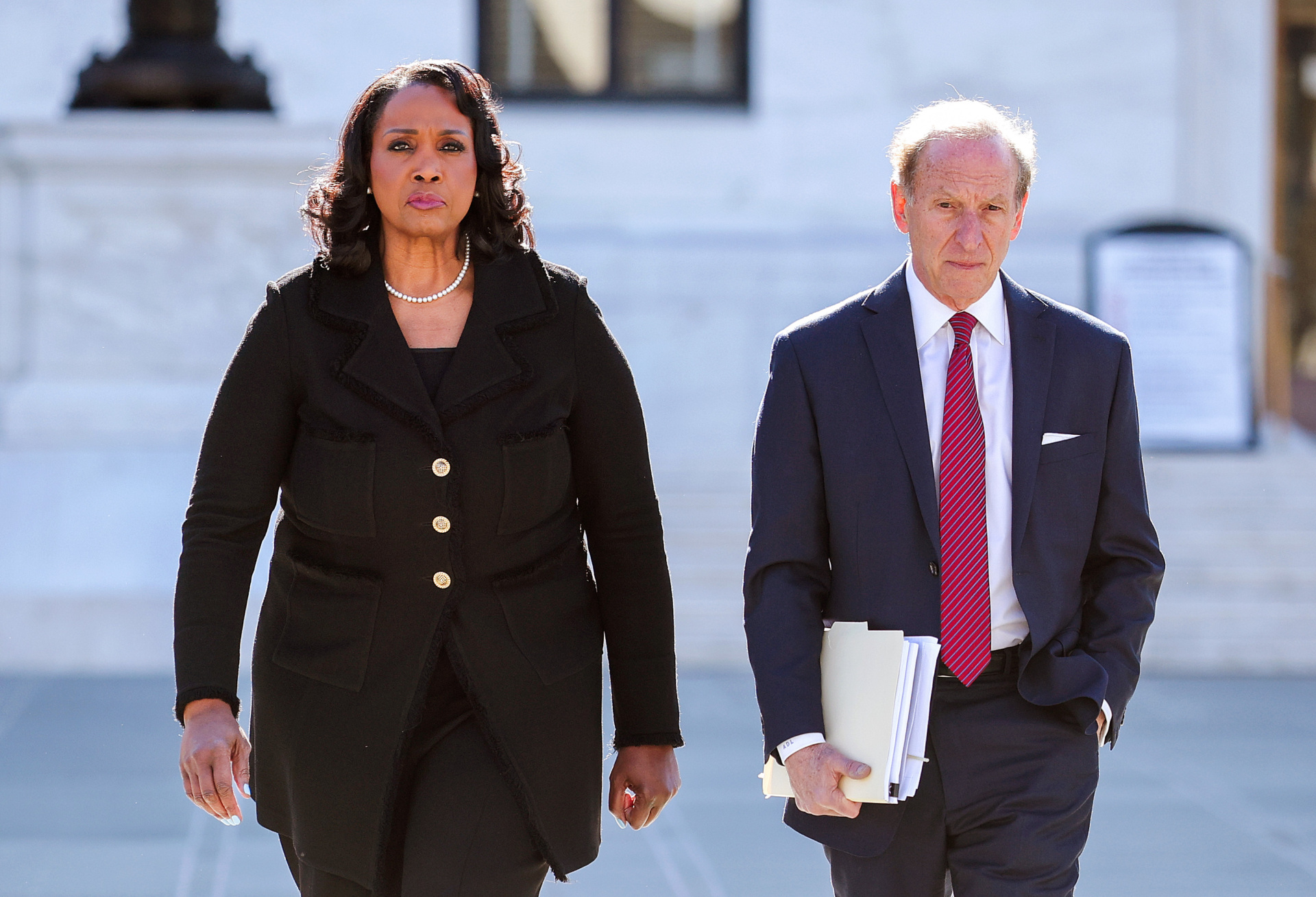
Federal Reserve Governor Lisa Cook and attorney Abbe Lowell leave the U.S. Supreme Court on January 21, 2026, in Washington, DC, after the Supreme Court heard oral arguments in Trump v. Cook. (Kevin Dietsch/Getty Images)
The real check against pretextual removals, however, isn’t judicial review. Instead, it is the Senate’s confirmation power. A president can only replace a Fed governor if the Senate confirms his nominee. If a president abusively removes governors for pretextual reasons in an attempt to pack the Fed with policy loyalists, the Senate can simply refuse to confirm the replacements. This denies the president control over monetary policy without requiring courts to parse the sufficiency of removal allegations.
The Powell Mess Shows Senate Power Has Teeth
We’ve seen this legal structure work in practice. When the Justice Department recently subpoenaed Fed Chair Jerome Powell, at least two Republican senators immediately announced they would refuse to confirm any Trump nominees to the Fed. The president got the message. The Senate didn’t need to hold hearings about whether the subpoena constituted improper pressure or to litigate the boundaries of Fed independence. The threat to withhold confirmations was sufficient.
This approach respects the Constitution’s allocation of checks and balances and the process created by the Federal Reserve Act. The framers of the constitution gave the Senate a role in who sits in important offices of the government, including the executive branch, precisely to provide political accountability for personnel decisions. They understood that the most effective constraints on executive power often come from within the political branches, not from judicial intervention. The Federal Reserve Act put this into practice for officers of the central bank.
Having courts deeply involved in parsing whether specific allegations constitute adequate “cause” for removal puts judges in an awkward position. They must second-guess executive personnel judgments and potentially referee ongoing disputes between the president and Fed governors. This transforms Article III courts into personnel review boards, a role for which they’re poorly suited and which the Constitution doesn’t clearly assign them. It incentivizes Fed officials to build relationships with federal judges to protect their jobs, opening both the central bank and the judicial branch to corruption.
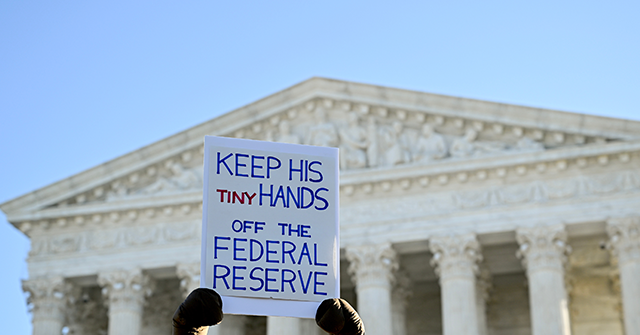
A demonstrator holds a sign outside the U.S. Supreme Court in Washington, DC, on January 21, 2026, as the court hears oral arguments in a case regarding President Donald Trump’s firing of Cook over mortgage-fraud allegations. (Graeme Sloan/Bloomberg via Getty Images)
The Senate, by contrast, can make holistic judgments about whether a president is respecting institutional norms around Fed independence. Senators don’t need to determine if mortgage fraud allegations are credible or whether past conduct provides sufficient cause. They simply ask: Is the president trying to politicize monetary policy? If the answer is yes, they can refuse confirmations until the president changes course.
This doesn’t mean the Senate will always exercise this check responsibly. But the same could be said of any constitutional mechanism. The question is which institution the Constitution and the law empower to provide this check, and the texts are clear: the Senate advises on and consents to appointments.
The administration is right that the Federal Reserve Act’s broad “for cause” language gives the president substantial discretion. But this discretion operates within a constitutional structure that prevents its abuse. The president must state a cause. The Senate must confirm any replacement. And if the president’s pattern of removals suggests he’s trying to control monetary policy through personnel manipulation, the Senate can deny him the confirmations needed to succeed.
Justice Kavanaugh’s concerns about at-will removal authority are understandable. But the constitutional answer isn’t expansive judicial review of removal decisions. It’s trusting the Senate to do the job the framers assigned it: serving as a check on presidential attempts to pack independent agencies with loyalists. That check exists, it has teeth, and we’ve seen it work.
Unfortunately, Solicitor General John Sauer did not mention this during oral arguments. The Supreme Court justices, however, should take notice.