The Season of Christmas
Christmas isn’t just one day, but rather a season—a season that started with Evening Prayer on December 24th and ends on the feast of the Baptism, which was this last Sunday. Within that season there is an octave, from December 25th to January 1st, which mystically is the same day stretched out into eight. Since 1970, January 1st is a holy day of obligation for Mary, the Mother of God; for centuries before that, January 1st was the feast of the circumcision, as Christ was circumcised on the 8th day.
There are also the Twelve Days of Christmas, which end on the traditional date of the Epiphany, January 6th. That date, January 6th, since around 300 AD in the East, was celebrated as the Lord’s Baptism. In the West, it became January 13th, at the conclusion of an eight-day Epiphany octave. The feasts of the Epiphany and the Baptism now float to the nearest Sundays. This was meant to bring on a more orderly liturgical experience, but in the process we’ve lost the special dates of January 6th and January 13th. They don’t really mean anything anymore, which is sad.
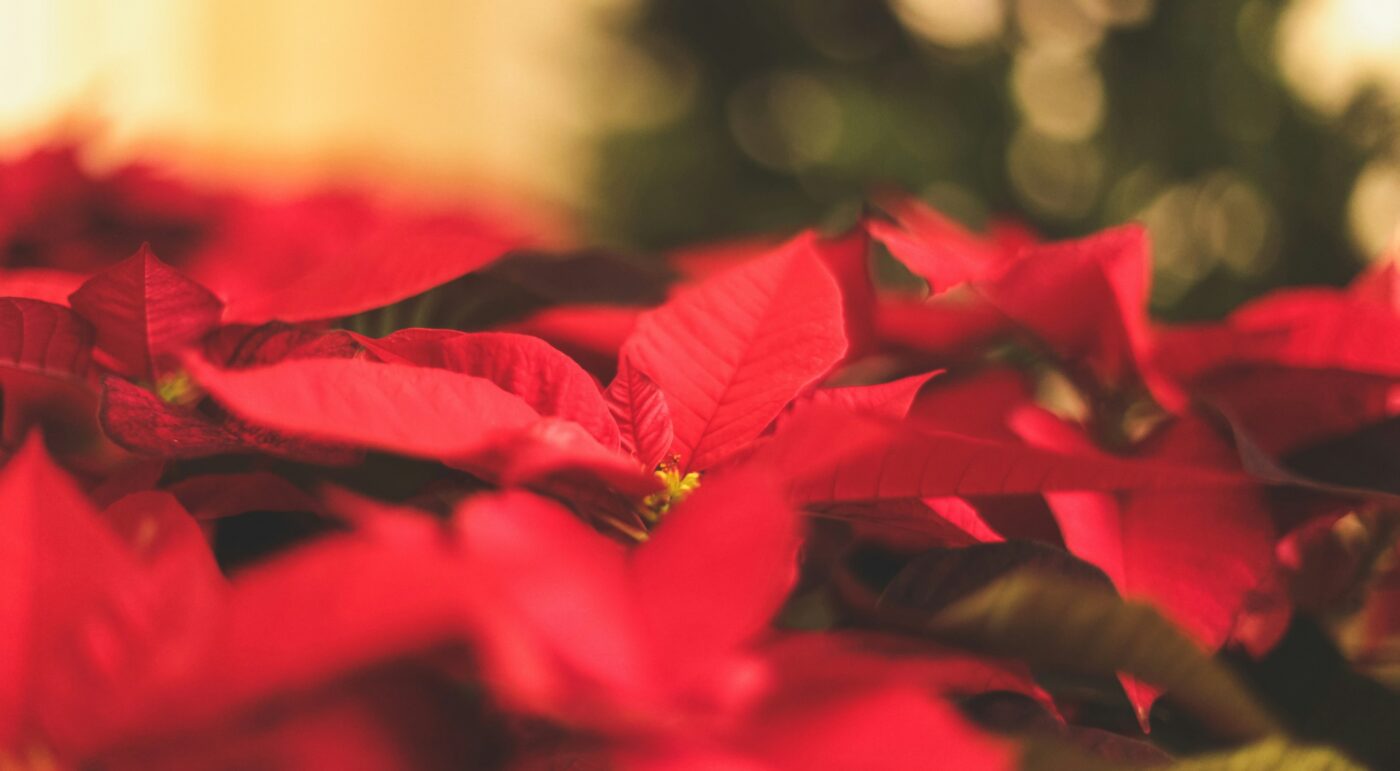
So, this Sunday was the official end of Christmas. We are now in the first week of Ordinary Time. I have to wear green again, which I have not worn since last November. My consolation is that the green will look good with all the red poinsettias still in my church. It won’t look “ordinary”—it’ll look rich and festive, like the Holly and the Ivy.
Is Christmas Really Over?
With all this said, there is a traditional window, a custom that keeps Christmas going beyond the Baptism of the Lord. Throughout the centuries, people were encouraged to keep up the merriment until the ancient feast of the Purification of Mary (since 1970 called the Presentation of Jesus) on February 2nd, known as Candlemas.
At the Presentation of the Lord, the old man Simeon said that Christ would be a light to the nations, so on this feast day we bless candles and have a candlelit procession. It was always a fitting way to end Christmas, as February 2nd, the feast of the Presentation, ended the infancy narratives in the Gospel.
Of course, problems can occur with celebrating Christmas all the way to February 2nd. There was a liturgical season (a very short one) that started in Rome at the end of the 6th century. It was called Septuagesima, which means “seventieth,” as in seventy days out from Easter. It was what one could call a “warm up,” a pre-season for Lent. The readings for Mass were penitential; there was no Gloria or Alleluia, and the priest wore violet (penitential) vestments, but fasting and abstaining were not yet required. Again, it was just a way to prepare, to ease into Lent. This pre-Lent was celebrated for around 1500 years, until 1970.
One of the reasons Septuagesima was suppressed was that it sometimes arrived when we were still celebrating Christmas. For example, this year, Septuagesima begins on February 1st, the day before Candlemas. So, there’s a bit of a disconnect. Since Easter Sunday floats between March 22nd and April 25th, Septuagesima can start as early as January 18th.
Why Keep Celebrating?
Now, I know much of what I just said sounds convoluted and may have confused many. It may sound like a jumbled mess. And it kind of is. But here’s the bottom line: these things I’ve mentioned are really not all that important. They are just part of the fun, the organized chaos of being a member of Christ’s one, holy, catholic, and apostolic Church.
What is important? It is important to know that the holy season of Advent in late fall is a time to prepare for Christmas. That is why in Advent I wear violet, strip down the altar, and get rid of all the beautiful flowers. People get annoyed with me every December for telling them not to party during Advent. “The world is partying during Advent, and Fr. Drew says not to.” Who are you going to believe?
The first two weeks of Advent are about Christ coming back to judge the living and the dead. I’m not sure that fact really merits a party. Do you? Partying during Advent reminds me of Moses coming down the mountain with the Ten Commandments, while Aaron and the rest of the Israelites were partying in front of the golden calf. That was not a good moment for Aaron and company…
The world is pretty much deaf and blind to what I’ve just shared. But let me ask: what does that have to do with you? Christ has called you out for the victory of justice. You’ve opened your eyes and ears and have heard Christ call you to follow Him, not a world headed for hell.
The partying then starts with the Nativity, when the light shines in the darkness. And since it’s cold and dark out, we might as well keep partying during the rest of January. This is the genius of the Catholic Church. When the rest of the world is depressed in the cold and dark of a modern-day, soul-less January, we keep our decorations up and chase the winter blues away by feasting.
A Time of Feasting
Every year during Advent, I get accused of being a Scrooge. And then each January I get accused of being a “party priest,” for encouraging people to celebrate and keep hosting parties. Ha! The confused people who say things like this don’t know any better. But you do. And that is important.
It is important to fast at the right times and feast at the right times, for as Scripture states, “There is a time for everything.” That is why the Church gives us these beautiful seasons that keep us focused on the One—Jesus Christ—who is our light and salvation.
Benedicamus Domino! Let us bless the Lord.
Wherever the Catholic sun doth shine,
There’s always laughter and good red wine.
At least I’ve always found it so.
Benedicamus Domino!– Hilaire Belloc, 1953
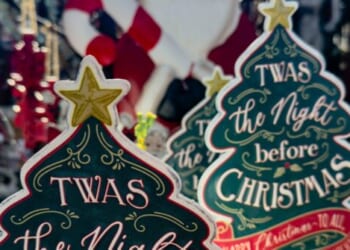
Photo by Jessica Fadel on Unsplash